Vegan travel doesn’t have to mean simply finding another plant-based restaurant. Across Europe, travellers can now get behind the counter and learn how to make everything from Portuguese custard tarts and Tuscan pasta to Belgian chocolate and Italian gelato.
Food is one of the best ways to experience a destination, but for vegan travellers, cooking classes can sometimes be surprisingly difficult to navigate. Traditional recipes often rely heavily on butter, eggs, cream or cheese, and “vegetarian” doesn’t necessarily mean vegan.
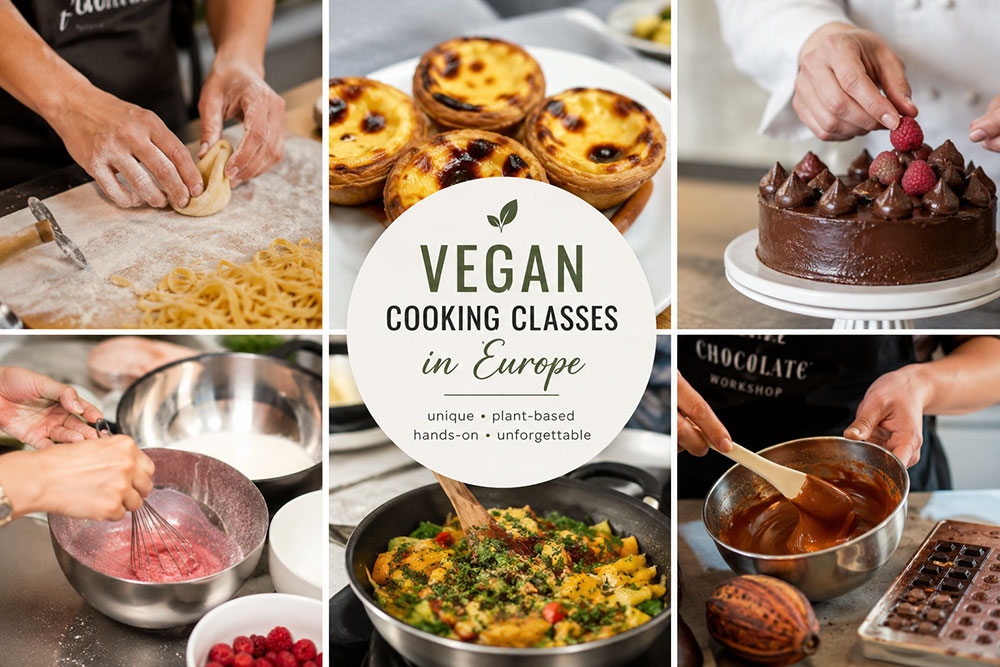
Thankfully, there are some wonderful hands-on experiences across Europe that are either completely plant-based or specifically designed around vegan cooking and baking.
From making Portugal’s famous pastel de nata without eggs or dairy to learning the science behind vegan gelato in Italy, here are some of the most interesting vegan culinary experiences to add to a European itinerary.
1. Make Vegan Pastéis de Nata in Lisbon, Portugal
🇵🇹 Lisbon Cooking Academy
What you’ll make: Vegan pastéis de nata
Duration: 2 hours
Language: English
Price: From €53 per person
Group size: 2–8 people
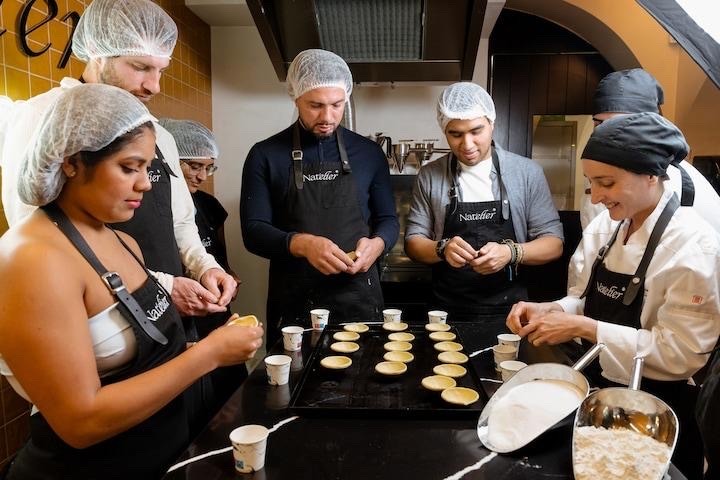
Few culinary experiences are as closely connected to their destination as making pastéis de nata in Lisbon.
The Lisbon Cooking Academy offers a dedicated vegan version of its pastel de nata workshop, and this isn’t simply a traditional class with the eggs removed. The entire pastry is plant-based, including both the laminated puff pastry and custard filling.
During the two-hour hands-on class, participants make the pastry from scratch using plant-based butter before preparing the dairy- and egg-free custard. The instructor also explains the science behind the substitutions and why the different ingredients work.
The finished tarts are baked until the tops are caramelised and then eaten warm, accompanied by coffee, tea or juice. Participants also receive the recipe to recreate them at home.
No previous baking experience is required, making this a particularly accessible experience for travellers who want to learn something genuinely Portuguese rather than simply take a generic baking class.
Why it’s special: You get to recreate one of Portugal’s most recognisable pastries while making it entirely plant-based.
Website: Lisbon Cooking Academy – Vegan Pastel de Nata Class
The academy also offers a Vegan Portuguese Cooking Class, so travellers interested in savoury Portuguese food can make an entire plant-based meal rather than concentrating only on dessert.
2. Cook Vegan Tuscan Food in a Florentine Home
🇮🇹 Traditional Tuscan Pasta, With a Vegan Heart
Location: Florence
Duration: 3 hours
Maximum: 6 guests
Language: Italian and English
Price: €153 per guest; €77 per child
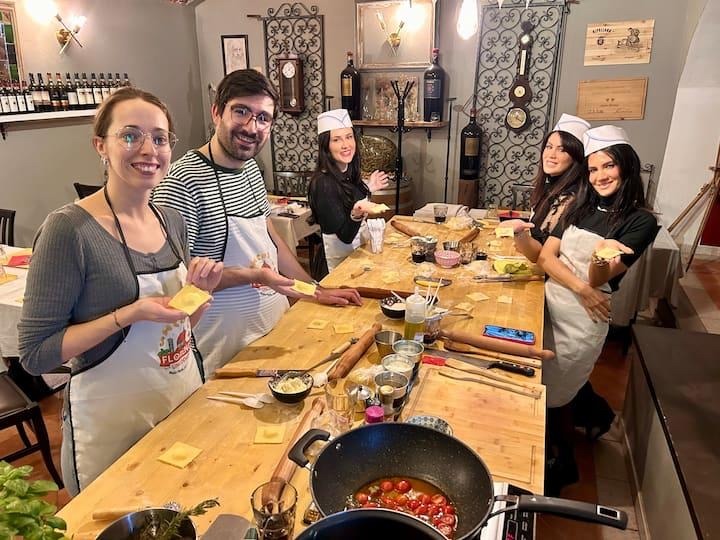
This is one of the more personal experiences on the list because the class takes place in a local host’s home in Florence.
The menu has been designed specifically to combine traditional Tuscan flavours with vegan cooking. Guests prepare beans all’uccelletto, bruschetta, egg-free tagliatelle, egg-free pumpkin gnocchi and vegan cantucci.
The pasta-making is particularly appealing because traditional fresh Italian pasta often contains eggs. Here, the tagliatelle are deliberately made without them, allowing participants to knead and shape the dough themselves.
The experience ends around the table eating what you’ve prepared — very much in the spirit of an Italian home meal rather than a formal cooking-school demonstration.
There is also a child price, making this an interesting option for families travelling with children.
Why it’s special: You’re not just learning a vegan recipe; you’re experiencing Tuscan food culture in a local home while learning how classic dishes can be made without animal products.
Website/bookings: Cesarine – Traditional Tuscan Pasta, With a Vegan Heart
3. Take a Private Four-Course Vegan Cooking Class in Florence
🇮🇹 ArtViva
Location: Florence
Format: Private experience
Price: From €450
For something more luxurious, ArtViva offers a private four-course vegan cooking class in Florence.
The experience takes place in a Florentine kitchen with a professional chef. Participants prepare a complete plant-based menu using fresh ingredients, including dishes inspired by traditional Tuscan cuisine, handmade egg-free pasta, a main course and a plant-based dessert.
The emphasis is on showing how Italian culinary traditions can be reinterpreted in a vegan format without losing their character.
After cooking, participants sit down to enjoy the meal they’ve prepared together.
At €450 starting price, this is considerably more expensive than a shared cooking class, but it could make sense for a family, couple or small group wanting a private culinary experience.
Why it’s special: It’s an intimate way to combine Italian food, cooking and the leisurely tradition of sitting down together for a multi-course meal.
Website: ArtViva – Vegan Cooking Class in Florence
4. Go From Cocoa Bean to Chocolate Bar in Brussels
🇧🇪 Bean to Bar Chocolate Workshop
Location: Central Brussels
Duration: 1 hour
What you’ll make: Three chocolate bars
Languages: English, French and Spanish
Price: €34 adults / €29 children aged 6–12
This is one of the most unusual experiences for anyone who loves chocolate.
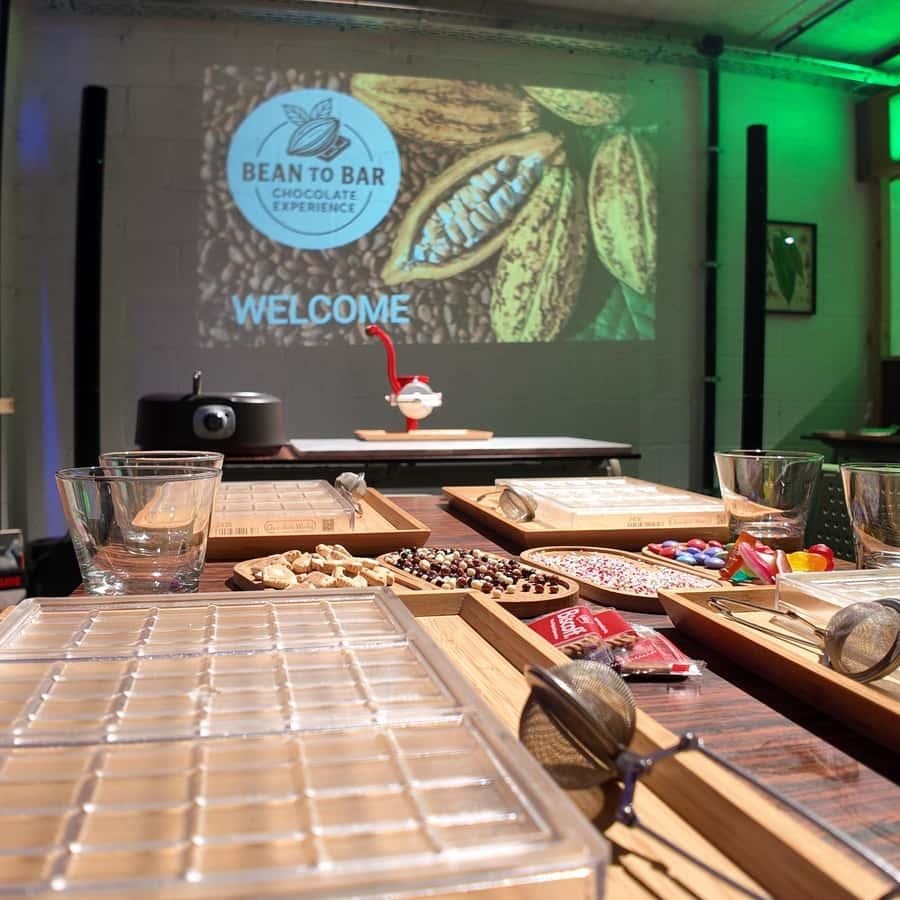
Rather than starting with ready-made chocolate, the Bean to Bar Chocolate Workshop introduces participants to cocoa itself. You grind a cocoa bean, learn about its origins and make your own chocolate bars to take home.
The workshop is vegan and gluten-free, making it particularly straightforward for plant-based travellers.
There is also a fascinating educational element: participants taste cocoa in its original form and make cocoa tea while learning about the history and uses of the cacao bean. While the chocolate sets, there’s even an opportunity to make a cocoa-based skincare product.
At around an hour, it is also easy to fit into a busy Brussels sightseeing itinerary.
The workshop accepts children aged six and above, making it an appealing family experience as well.
Why it’s special: Instead of simply learning how to decorate chocolates, you get to explore where chocolate actually comes from.
Website: Bean to Bar Chocolate Workshop Brussels
5. Make Vegan Chocolate Pralines and Mendiants in Brussels
🇧🇪 Belgian Chocolate Workshop
If you’d rather focus on the finished chocolate than the bean-to-bar process, Brussels has another excellent option.
The Belgian Chocolate Workshop teaches participants to make Belgian pralines and mendiants. The workshop can be adapted to make vegan or lactose-free chocolates on request, and the organisers note that the workshop is suitable for vegetarians and contains no eggs.
The experience also includes homemade hot chocolate.
This is a good option for travellers who want the classic Belgian chocolate experience but need a plant-based version.
Why it’s special: You get to make the kind of chocolates Belgium is famous for, rather than simply visiting a chocolate shop.
Website: Belgian Chocolate Workshop
Visit Brussels also lists the workshop among its culinary experiences and confirms that vegan or lactose-free versions can be requested.
Tip: If you have a strict allergy rather than a dietary preference, always confirm cross-contact procedures directly with the organiser before booking.
6. Learn the Art and Science of Vegan Gelato in Tuscany
🇮🇹 Gelato Naturale Academy, Grosseto
Location: Tuscany, Italy
Duration: 2 days / 10 hours
Language: English
Price: €800
This one is for the serious food enthusiast rather than someone looking for a casual two-hour holiday activity.
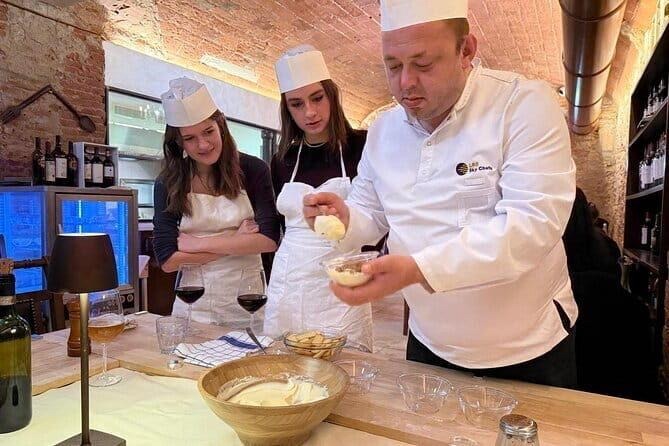
The Gelato Naturale Academy in Grosseto offers a dedicated Totally Vegan Gelato Course taught in English. The two-day course focuses entirely on plant-based gelato and covers ingredients, balancing sugars and other components, nut pastes, plant milks, chocolate and fruit-based recipes.
The academy describes the course as an intensive programme for understanding how to create creamy vegan gelato with proper structure and flavour rather than simply replacing dairy milk with a plant alternative.
The curriculum includes ingredients such as rice, almond and coconut drinks, seasonal fruit, Sicilian pistachio, Piedmont hazelnut, vanilla and Fair Trade cocoa.
The academy currently lists multiple two-day English-language vegan gelato courses, including dates in September and October 2026.
Why it’s special: Gelato is one of Italy’s great culinary traditions, and this experience explores the technical side of making it entirely plant-based.
Website: Gelato Naturale Academy – Totally Vegan Gelato Course
Note: Because this is a professional-style course rather than a sightseeing activity, check the schedule before planning an itinerary around it.
7. Spend an Afternoon Learning Vegan Baking in the Netherlands
🇳🇱 Vegan Academy, Amersfoort
Location: Amersfoort
Duration: 4 hours
Price: €125 for the currently listed workshop
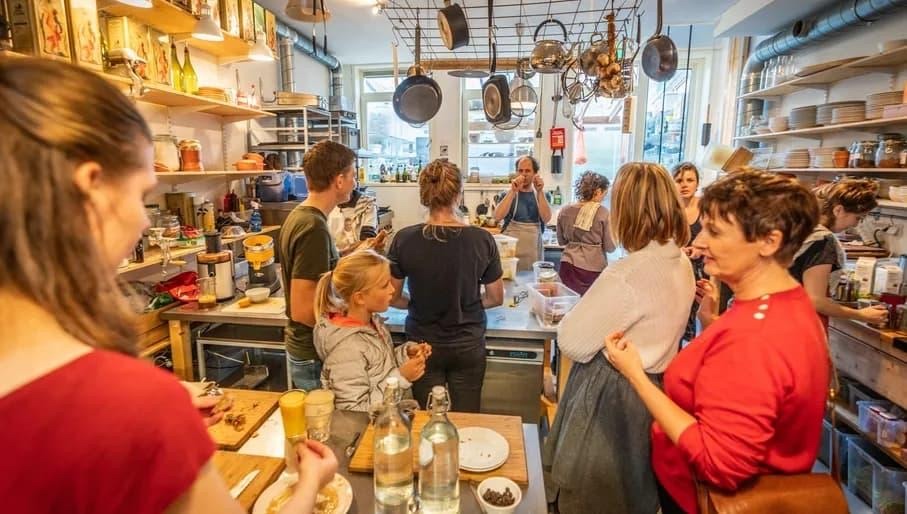
If you’re looking for a broader vegan baking experience rather than a destination-specific recipe, the Vegan Academy in the Netherlands runs hands-on Vegan Baking Workshops.
The workshops explore the fundamentals of plant-based baking, including egg substitutes, layered cakes, glazing and the functions of different baking ingredients.
The currently listed workshop also provides access to an online vegan pastry course containing additional recipes, including lemon meringue pie, chocolate cake, cookies, strawberry pie, pancakes and sweet breads.
The academy’s wider programme also includes vegan street-food, Italian, curry, fermentation and Ottolenghi-inspired workshops, with studios in Amersfoort and Amsterdam.
One thing travellers should know: the academy says its live workshops are generally conducted in Dutch. An English recipe booklet can be provided on request, so this is worth confirming before booking if you don’t speak Dutch.
Why it’s special: Rather than teaching a single recipe, the workshop aims to explain the principles behind vegan baking so that you can adapt recipes yourself.
Website: Vegan Academy Netherlands
8. Learn Modern Vegan Pastry in Barcelona
🇪🇸 Wildslice Vegan Pastry Academy
For travellers who are particularly interested in vegan pastry, Barcelona has something a little different.
Wildslice Vegan Pastry Academy offers classroom courses covering basic and advanced vegan pastry and baking techniques. The courses are designed to teach participants how to recreate classic pastry favourites in plant-based versions while understanding how vegan ingredients behave.
The school also offers courses associated with Toni Rodríguez, a prominent figure in modern vegan pastry, and focuses on techniques rather than simply providing a collection of vegan recipes.
This is more of a specialist pastry-school experience than a casual tourist cooking class, so it’s best suited to travellers who are genuinely enthusiastic about baking and are happy to dedicate more time to the experience.
Why it’s special: Barcelona becomes the setting for exploring modern vegan pastry techniques rather than simply learning another traditional vegan dish.
Website: Wildslice Vegan Pastry Academy
Which Vegan Cooking Experience Should You Choose?
Not all of these experiences are aimed at the same traveller.
🍮 For the quintessential destination experience
Lisbon – Vegan Pastel de Nata
It’s difficult to beat the combination of an iconic Portuguese food, a hands-on pastry workshop and eating the results fresh from the oven.
🍝 For food + culture
Florence – Traditional Tuscan Pasta
Cooking in a local home and learning to make egg-free pasta makes this much more than a standard pasta class.
🍫 For families
Brussels – Bean to Bar Chocolate
It’s short, hands-on, completely vegan and welcomes children from six, so it works particularly well for a family itinerary.
🍨 For serious food lovers
Tuscany – Vegan Gelato Academy
This is the most technical experience on the list and is better suited to someone who is genuinely interested in the craft of gelato.
🧁 For passionate bakers
Netherlands – Vegan Academy
A broader baking workshop is a better choice if you want to return home with techniques you can use to veganise your own recipes.
👩🍳 For an indulgent private experience
Florence – ArtViva
A private four-course class combines cooking with the pleasure of a long Italian meal afterwards.
A Different Way to See Europe: Eat It, Don’t Just See It
One of the things I love about cooking experiences while travelling is that they give you something a museum or sightseeing tour can’t quite provide.
You don’t just eat a pastel de nata in Lisbon — you learn why its pastry works.
You don’t just buy Belgian chocolate — you grind the cocoa bean yourself.
You don’t just eat pasta in Florence — you knead the dough and learn how to make it without eggs.
And you don’t simply order gelato in Italy — you can learn the science behind creating a creamy plant-based version.
For vegan travellers, these experiences also offer something particularly valuable: they turn dietary restrictions into an opportunity to discover new techniques, ingredients and interpretations of traditional European food.
So on your next European trip, consider swapping one restaurant reservation for an apron. You may come home with a recipe, a new skill and a much better food story to tell.
Leave a Reply