Some children’s books have a straightforward story to tell. Others leave you thinking about the things we take for granted, the lives we imagine for ourselves, and the possibility that what we think we want might not be quite what we need. Bird/Dog belongs to the latter category.
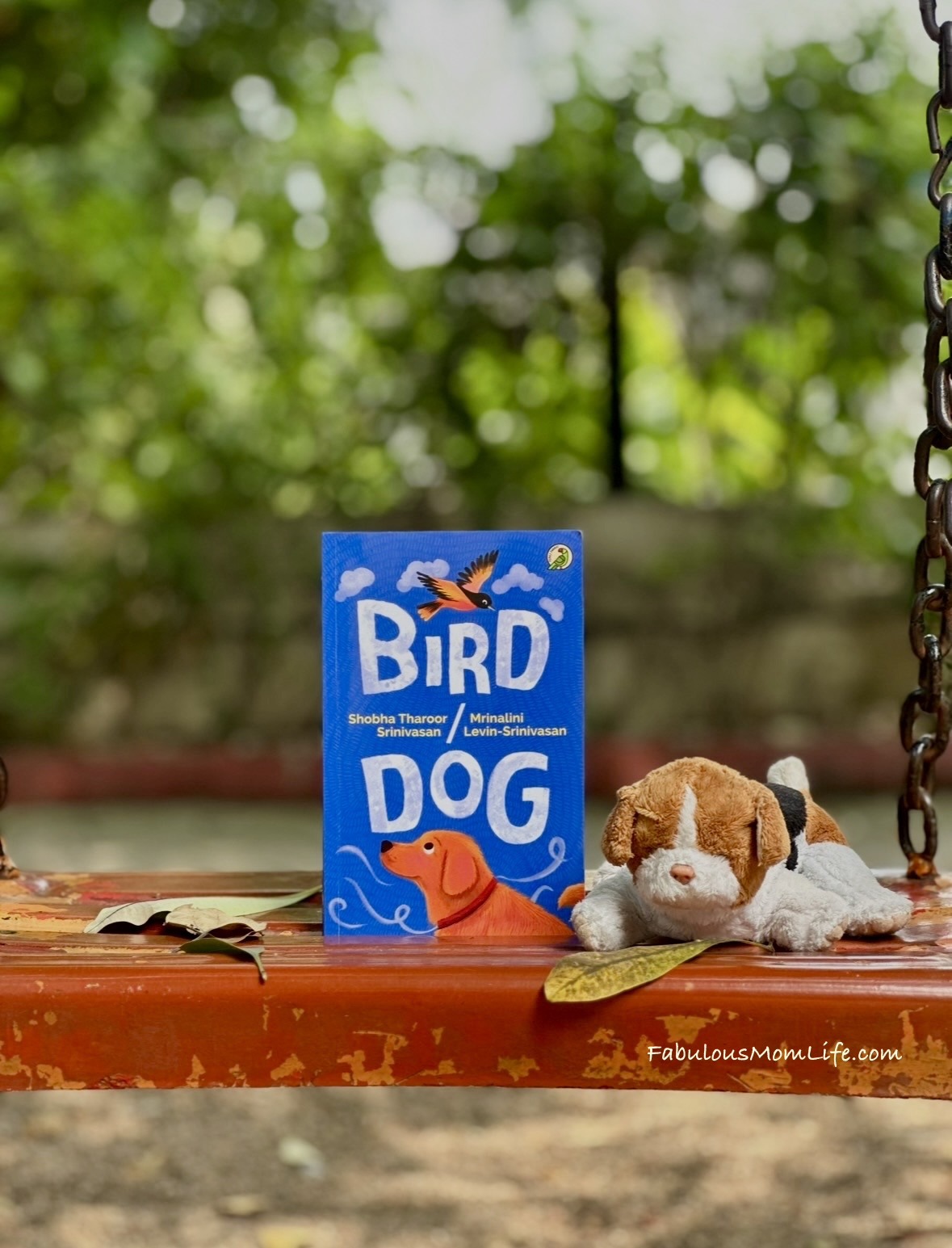
Written by Shobha Tharoor Srinivasan and illustrated by Mrinalini Levin-Srinivasan, Bird/Dog is a story about two very different creatures who begin to wonder whether the other has a better life. A bird enjoys the freedom of the skies but sometimes longs for the comforts of a home. A dog has a home, a family and all the things a bird might envy, yet finds himself yearning for independence when life as he knows it begins to change.
It is a simple premise, but one that opens up some interesting questions about freedom, security, belonging and the tendency to imagine that the grass really is greener on the other side.
And, as I discovered while reading this book, there are some thoughtful little details tucked into its pages that make the experience even more enjoyable.
Two very different lives
The story begins with Bird, who is quite content with her life. She has a comfortable nest in a tree, knows where to find food, and enjoys the exhilaration of flying wherever she pleases. She is observant, independent and rather particular about her preferences. She has her favourite feeding spots, takes pride in her surroundings and has no particular desire to be a pet.
Yet, from her perch, she can see the life of Dog across the street. He has a home, a family, regular meals and the attention of his humans. His world seems to offer a different kind of comfort from her solitary existence.
Dog, meanwhile, is having a difficult time adjusting to changes in his own household. The arrival of a new baby has disrupted the familiar rhythms of his life. His humans are tired, their attention is elsewhere, and the walks and affection he once enjoyed no longer seem quite as assured. He feels neglected and begins to question whether the life he has always known is really the one he wants.
What makes the premise work is that neither character is entirely wrong in what they feel. Bird genuinely enjoys her independence, but she is also curious about companionship and the security of domestic life. Dog genuinely loves his family, but he is struggling with the loss of his former place in it.
Both begin to look beyond their own circumstances, imagining the possibilities that the other’s life might offer.
When the grass really does look greener
As their dissatisfaction grows, Bird and Dog find themselves in circumstances they could hardly have anticipated.
Bird experiences the loss of her freedom when she is captured and kept in a cage. The bird who once delighted in swooping through the sky must now contend with confinement, unfamiliar surroundings and the frustration of being unable to do what comes naturally to her. An injury makes her recovery more complicated, and she has to depend on the care of others.
Dog, on the other hand, takes matters into his own paws and runs away. The independence he has been craving is finally within reach. But life outside the familiar comforts of home turns out to be rather different from what he imagined. Finding shelter, navigating unfamiliar surroundings and dealing with the uncertainties of life on his own bring their own challenges.
I liked the way these parallel experiences allow the story to explore its central idea without relying entirely on a moral being spelt out for the reader. Bird and Dog have to experience the consequences of their circumstances for themselves.
Children may not consciously identify this as a lesson about perspective or the illusion that the grass is always greener. They may not pause to analyse the contrast between freedom and uncertainty, or comfort and restriction. But these ideas can still settle quietly through the story, absorbed through Bird and Dog’s experiences rather than presented as a teaching point. They kind of imbibe them as they follow the characters, feel their frustrations and see their assumptions change.
There is also something recognisable in their restlessness. How often do we look at somebody else’s life and see only the attractive parts of it? We see the freedom but not the uncertainty, the comfort but not the restrictions, the companionship but not the compromises. Bird and Dog are learning, in their own ways, that every kind of life comes with its own difficulties.
Their journeys eventually bring them together, and an unusual friendship begins to take shape. They find companionship in each other, even though their instincts, needs and ways of moving through the world are quite different.
I won’t recount the rest of the story here. Part of the pleasure lies in discovering how their experiences change their understanding of themselves and what home and freedom mean to them.
A story about belonging without losing yourself
One of the things I appreciated about Bird/Dog is that its message is not simply that we should be grateful for what we have.
Dog’s adjustment to the new baby is a particularly relatable starting point. Children who have experienced the arrival of a younger sibling may recognise some of the emotions involved: the feeling that something familiar has changed, that attention is being redirected, and that the place one once occupied is no longer quite the same.
Dog’s frustration is understandable. His world has changed, and he doesn’t know how to make sense of it. The story gives him room to feel that resentment rather than immediately dismissing it.
Bird’s experience raises a different question. She is accustomed to making her own choices, and the loss of that freedom is frightening. Although she receives care and attention, those things do not automatically make captivity acceptable. Being looked after and being free are not interchangeable.
Together, the two perspectives offer an interesting way to talk to children about the difference between having our needs met and feeling that our lives are meaningful. They also open up conversations about empathy: understanding that somebody else’s circumstances may look attractive from the outside while still having challenges we cannot see.
The friendship between Bird and Dog adds another dimension. They do not need to be alike to care about each other. Their differences become part of what makes their relationship interesting, and their companionship helps each of them see the world a little differently.
The story also touches on our relationship with nature. Bird notices the effects of construction and changing landscapes on the places where she finds food. Trees, orchards, worms, seeds and other elements of her environment are not merely decorative details; they are essential to her life. This provides a gentle opportunity to talk about habitats and the ways human activity affects the creatures with whom we share our surroundings.
The writing: vocabulary that respects young readers
A particular highlight for me was the language.
Children’s books need not be simplistic to be accessible. There is a tendency in some contemporary writing for younger readers to rely on very basic vocabulary, even when the story and its audience could accommodate something more challenging. Bird/Dog offers a welcome alternative.
Bird’s narration, in particular, has a distinctive voice. She is articulate, observant and occasionally rather grand in the way she expresses herself. Words such as exhilarating, constitutional, repast and perambulations appear naturally in the narrative. The descriptions of flying, the landscape and Bird’s thoughts offer plenty of opportunities for a young reader to encounter words that may be unfamiliar.
I particularly enjoyed that the vocabulary is not confined to a glossary or an obvious vocabulary-building exercise. The words belong to the character and the way she sees the world. Bird’s slightly formal, expansive manner of speaking becomes part of her personality.
This is a useful distinction. Children are more likely to engage with unfamiliar words when they arise in a context that makes their meaning understandable. They can infer meaning from the action, the surrounding description or the character’s mood, rather than having to stop and look up every new word.
Dog’s narration offers a contrast. His thoughts are immediate, emotional and often humorous, reflecting his frustrations, impulses and changing understanding of his circumstances. The shift between the two points of view gives the book variety and helps distinguish the characters without needing to explain their personalities repeatedly.
I would also recommend reading the book aloud. The more elaborate vocabulary can become a talking point between parent and child, and the contrasting voices give an adult plenty to work with when bringing the characters to life.
Nature is more than a backdrop
The natural world has a substantial presence in Bird/Dog, and I think this is one of the reasons the book would be particularly lovely to read outdoors.
There are trees, nests, flowers, fruits, worms, seeds, birds and the changing light of the day. The descriptions evoke a world that is full of small details to notice, from the places where Bird finds food to the shelter offered by a tree and the familiar landscape around Dog’s home. References to flowering trees, including jacarandas, add to the sense of a living environment that changes with the seasons.
These details give the setting a life of its own. For Bird, a tree is a home, a feeding ground and a place of refuge. The loss of trees and natural habitats has practical consequences for her, rather than being an abstract environmental concern. The story makes it possible for children to begin thinking about what a neighbourhood looks like from the perspective of the creatures that live in it.
That is why I would happily take this book to a children’s park, find a bench surrounded by greenery, and read it there. The setting would complement the story beautifully. Children could look around at the trees, listen for birds, notice the plants growing nearby and think about the little lives that share those spaces with them.
It might even be fun to pause occasionally and ask: if you were a bird living in this park, where would you build your nest? Where would you find food? What would you think of the humans walking past?
A book like this can become a starting point for noticing the world, rather than simply a story to finish and put away.
The illustrations and a delightful little discovery
The illustrations by Mrinalini Levin-Srinivasan complement the narrative, and I particularly enjoyed the small line drawings that appear in the margins of the pages. They feature Bird and Dog in different poses, adding a playful visual element without competing with the text.
But the detail that delighted me most was something my daughter noticed.
When you flip through the pages, the little illustrations begin to behave like a miniature flip book. Bird, appearing along the right-hand margin, gradually flies down the page, while Dog, illustrated near the bottom, moves forward. As the pages turn, their movements carry them towards each other, until the two finally meet.
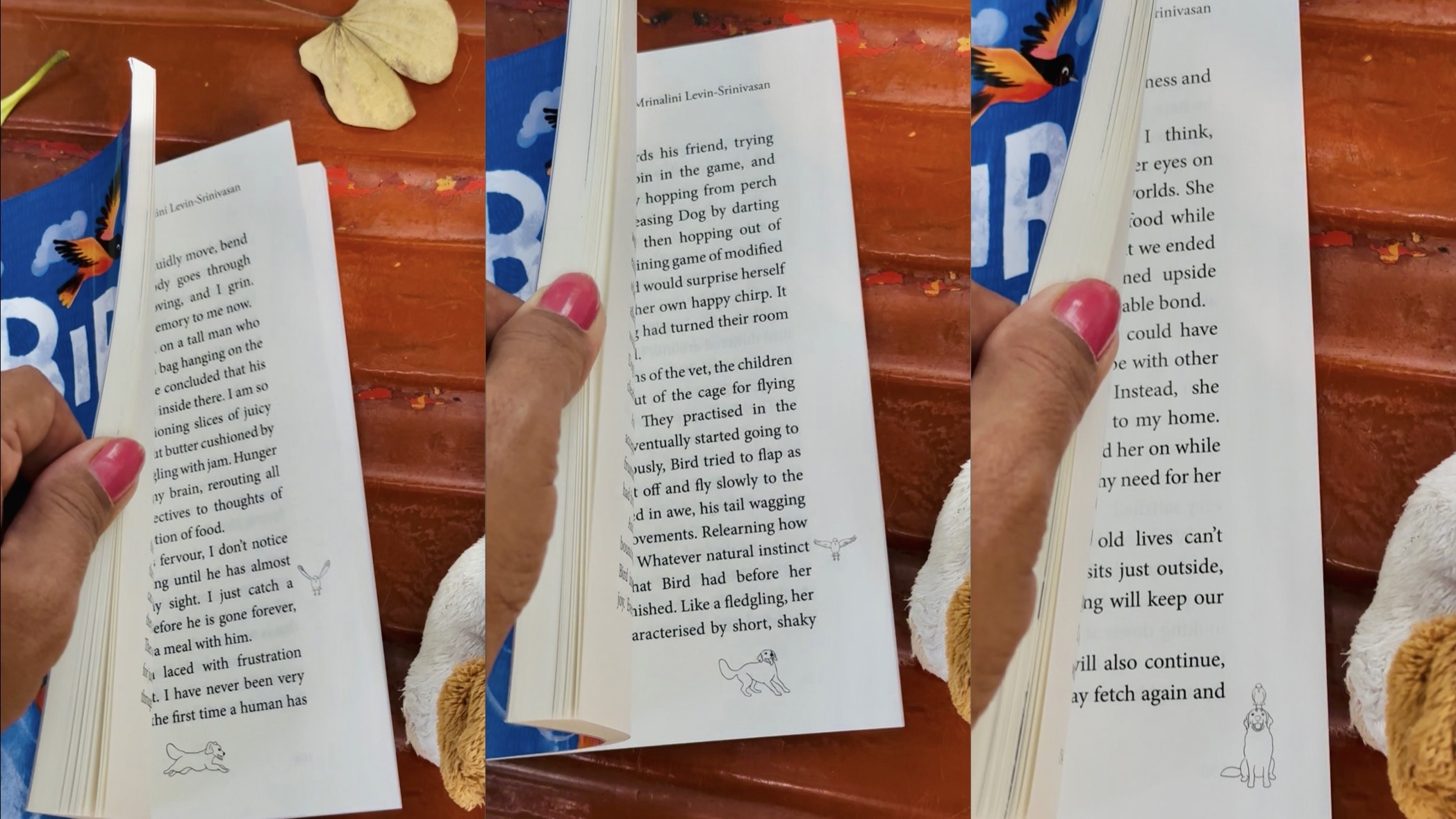
It is such a simple idea, but a brilliant one. It is details such as these that make a book a generational favourite on the bookshelf. The illustrations are not merely little decorations placed around the text. They have their own tiny sequence of movement, and the reader discovers it by physically turning the pages.
I love details like this in children’s books because they reward curiosity. A child might notice them on the first reading, or they might be discovered only after the book has been read once and somebody starts flipping through it again. Either way, the discovery adds another layer of enjoyment.
It also feels particularly appropriate for this story. The characters’ journeys unfold separately before their paths cross, and the little animation created by the page margins mirrors that gradual movement towards each other.
My daughter spotted it, and I might well have missed it had she not pointed it out. It was a lovely reminder that children often engage with books in ways adults don’t immediately think of. Sometimes the smallest design decisions become the most memorable parts of a reading experience.
Who would enjoy Bird/Dog?
I would recommend Bird/Dog for children who enjoy character-driven stories, animal protagonists and books that offer something to think about beyond the immediate plot.
Ages 6–8: This would work well as a read-aloud book, particularly for children who enjoy discussing characters and asking questions about their choices. An adult can help explain unfamiliar vocabulary and explore the emotions that Bird and Dog experience.
Ages 8–10: Children in this age group who are comfortable reading independently should be able to enjoy the parallel narratives and the changing circumstances of the two animals. The more advanced vocabulary will also provide a worthwhile challenge.
Ages 10–12: Older readers may appreciate the themes of independence, family dynamics, belonging and environmental change. They may also enjoy discussing whether Bird and Dog’s assumptions about each other’s lives were reasonable, and what they learn from their experiences.
These are broad suggestions rather than strict age limits. Reading confidence and familiarity with longer prose vary considerably between children. A younger child who enjoys listening to chapter books may be perfectly happy with it, while a confident reader may appreciate the language and themes at an older age.
I would particularly recommend it to parents who want to encourage children to stretch their vocabulary without making reading feel like a school exercise.
Final thoughts
What I took away from Bird/Dog was the idea that the lives we imagine for ourselves are often built around the things we feel we are missing. Bird sees the comfort and companionship of a home; Dog sees the freedom of the open sky. Neither initially has a complete understanding of what the other life involves.
Their experiences bring them to a different understanding of freedom, security and connection. And their friendship suggests that our lives can become richer when we make room for relationships beyond the familiar boundaries of our own world.
I also appreciated the attention given to language and the natural environment, along with the playful illustration detail that my daughter discovered while flipping through the pages. These elements make the book interesting to return to, rather than something that offers only a single, straightforward reading experience.
Most of all, I like the fact that Bird/Dog leaves room for conversation. It offers opportunities to talk about jealousy, changing family dynamics, independence, empathy, wildlife and the meaning of home without reducing everything to a single lesson.
It is a book I would enjoy reading with a child outdoors, with trees overhead and birds calling somewhere nearby. It feels like the sort of story that might make a child look up from the last page and take a second look at the world around them.
And that, to me, is one of the nicest things a children’s book can do.
Book details
- Title: Bird/Dog
- Author: Shobha Tharoor Srinivasan
- Illustrator: Mrinalini Levin-Srinivasan
- Publisher: Niyogi Books
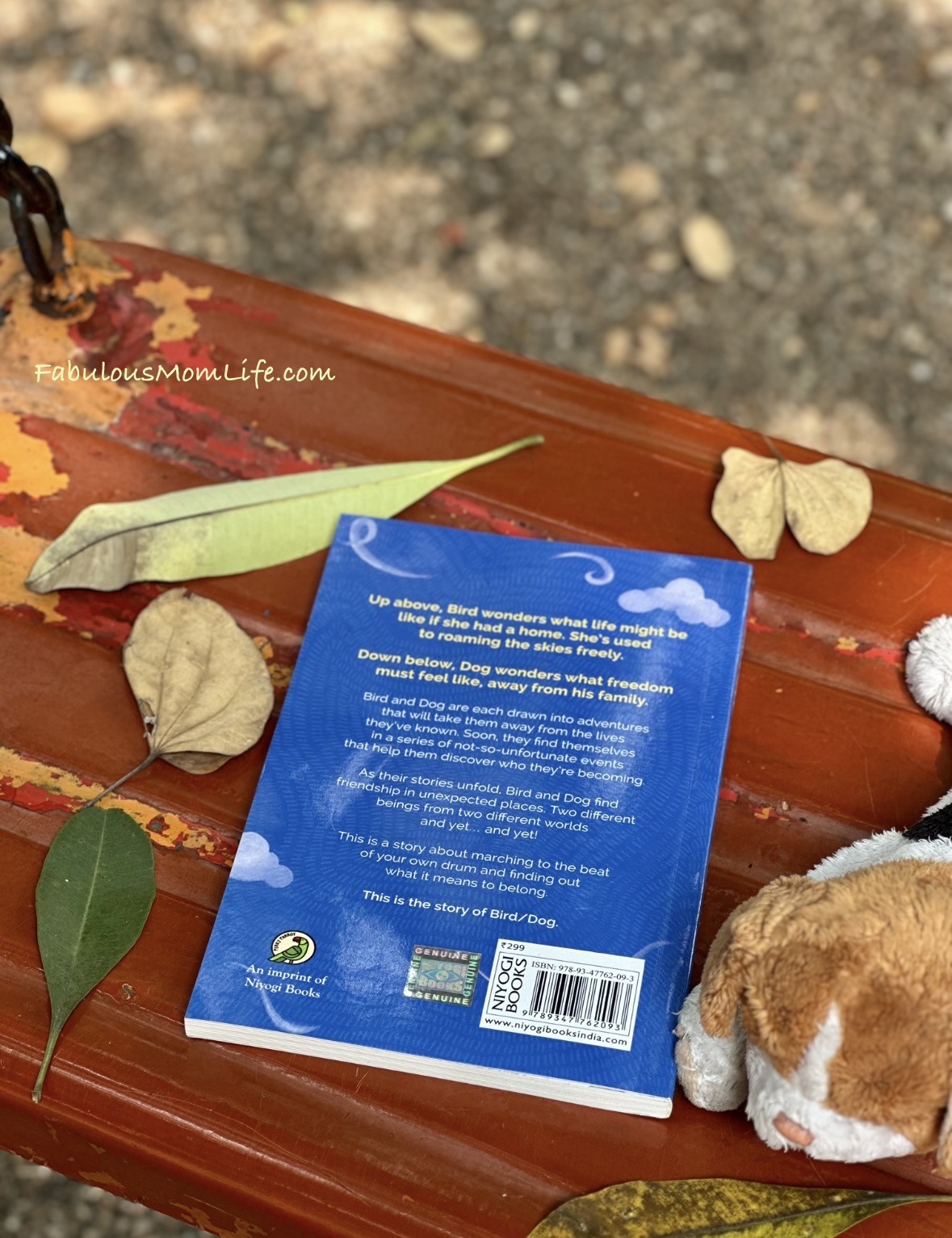
- ISBN: 978-93-47762-09-3
- Listed price: ₹299
Leave a Reply