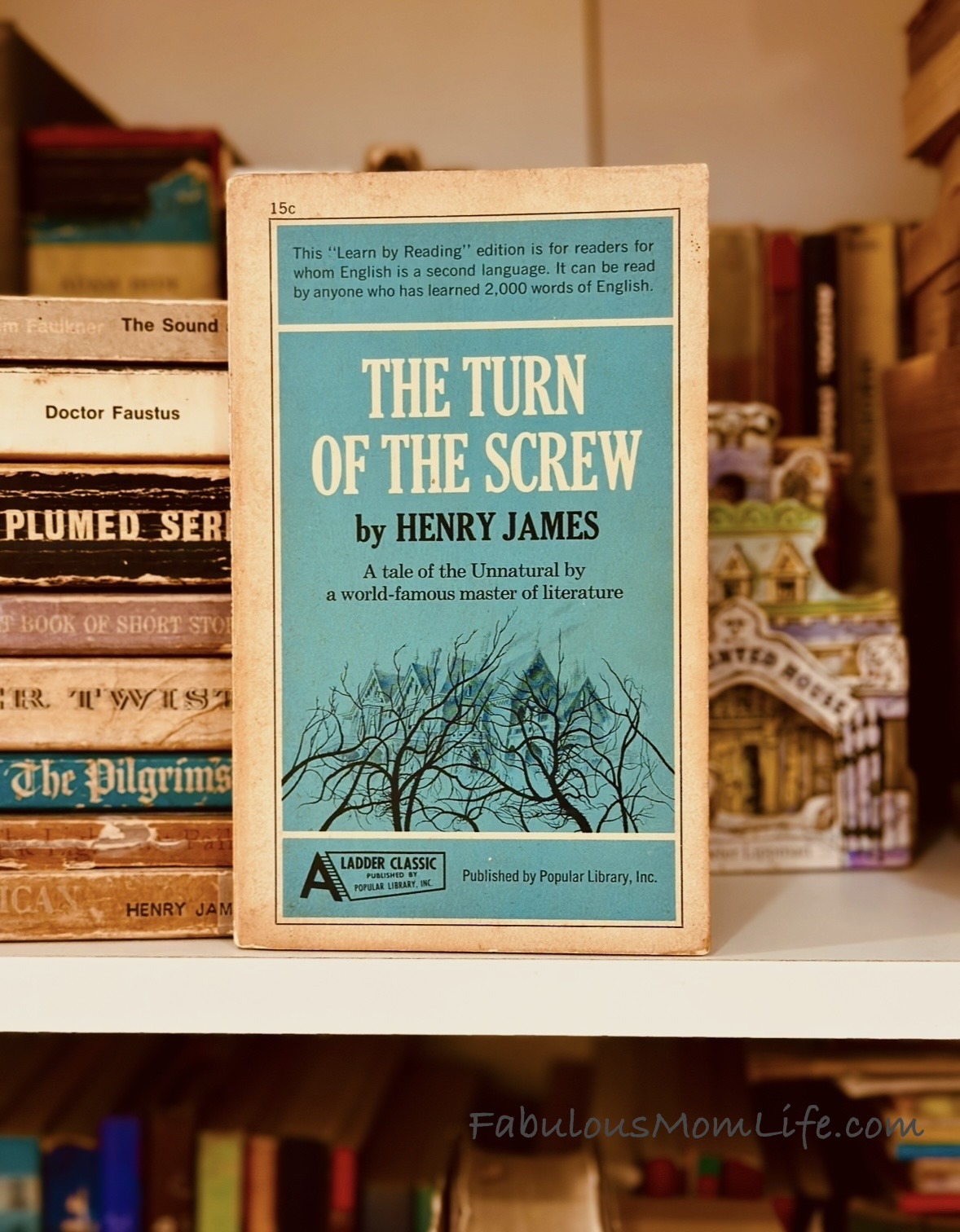
I found this 1965 edition of Henry James’s The Turn of the Screw in my father’s personal library. What I discovered inside led me down a fascinating little publishing-history rabbit hole.
Old books can be full of surprises.
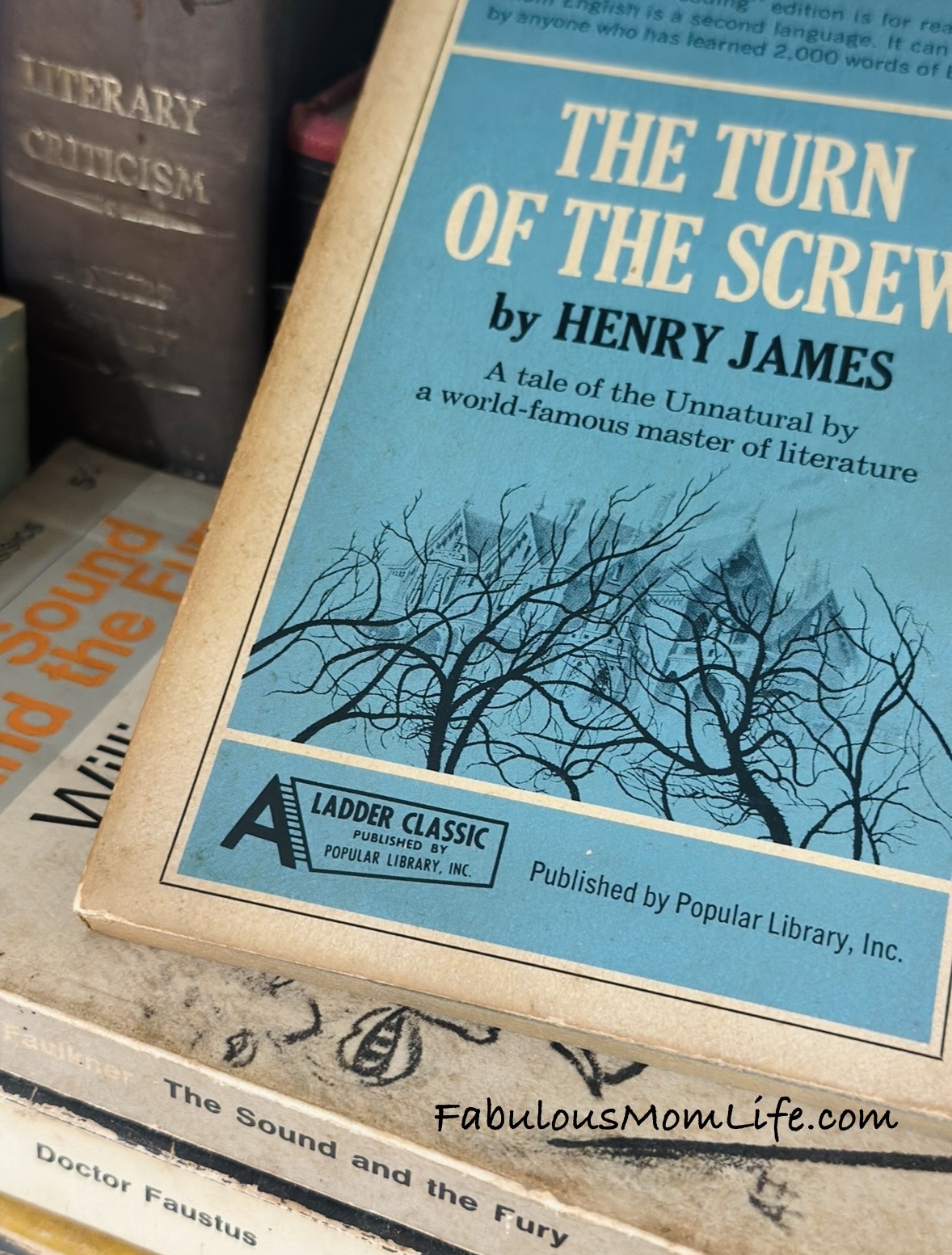
I recently came across this small, not-too-battered paperback in my father’s impressive personal library. It is a 1965 edition of Henry James’s The Turn of the Screw, published by Popular Library in New York.
The book itself is interesting enough. But when I opened it, I discovered that it wasn’t simply an old paperback edition of a classic.
It was a Ladder Classic.
And the idea behind the series was brilliant.
What was a Ladder Classic?
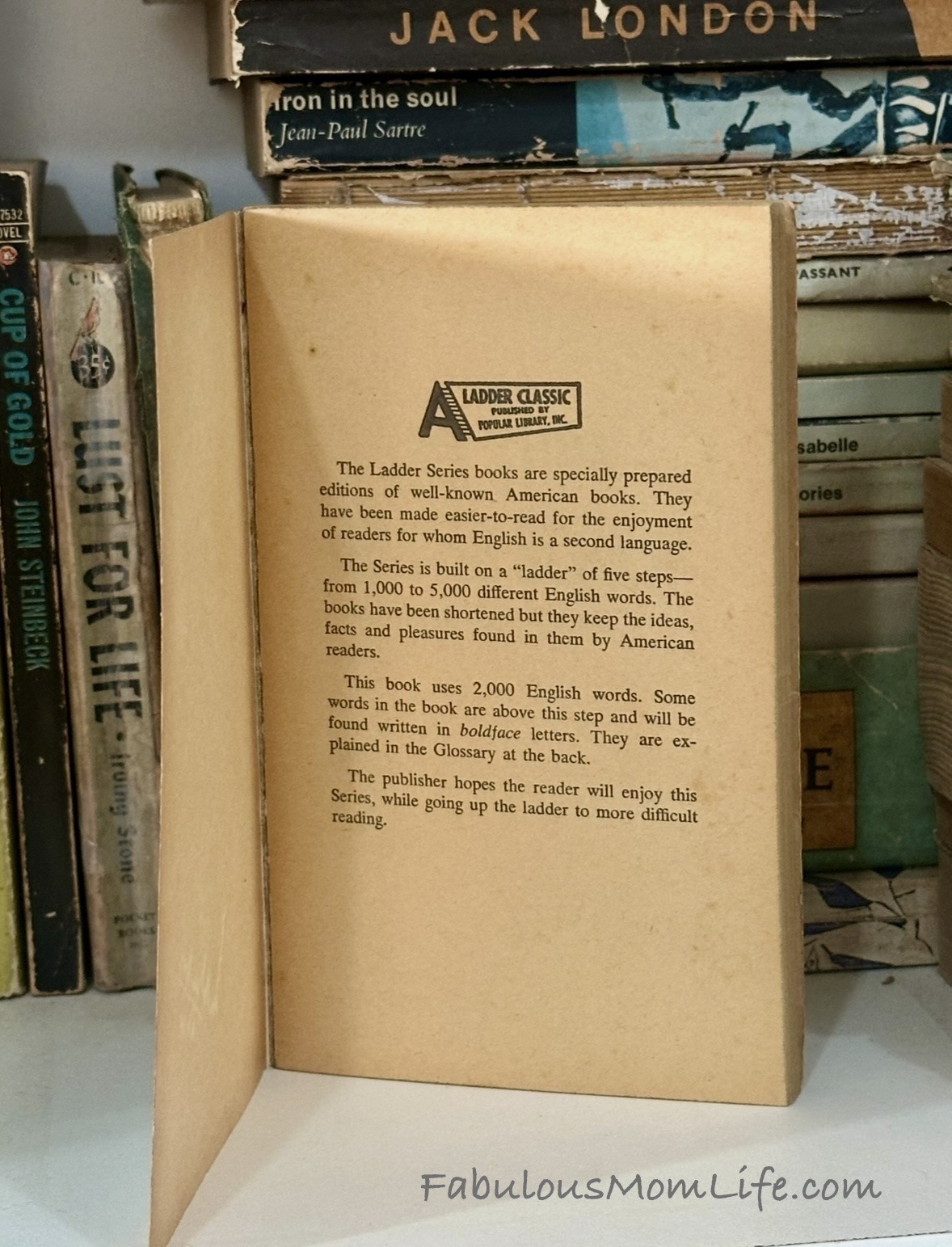
The Ladder Series was created for readers who were learning English as a second language.
The idea was to take well-known works of literature and make them easier to read without losing the essential story and ideas.
Instead of treating all readers as though they had the same level of English, Popular Library created a five-step “ladder”:
1,000 words → 2,000 → 3,000 → 4,000 → 5,000 words
Readers could begin at a level they were comfortable with and gradually move upwards to more difficult books.
The publisher explained the idea right inside the book:
“The Ladder Series books are specially prepared editions of well-known American books.”
The books were shortened, but were intended to retain the ideas, facts and pleasures of the originals.
This Henry James edition was at the 2,000-word level
That is what makes this particular copy so interesting.
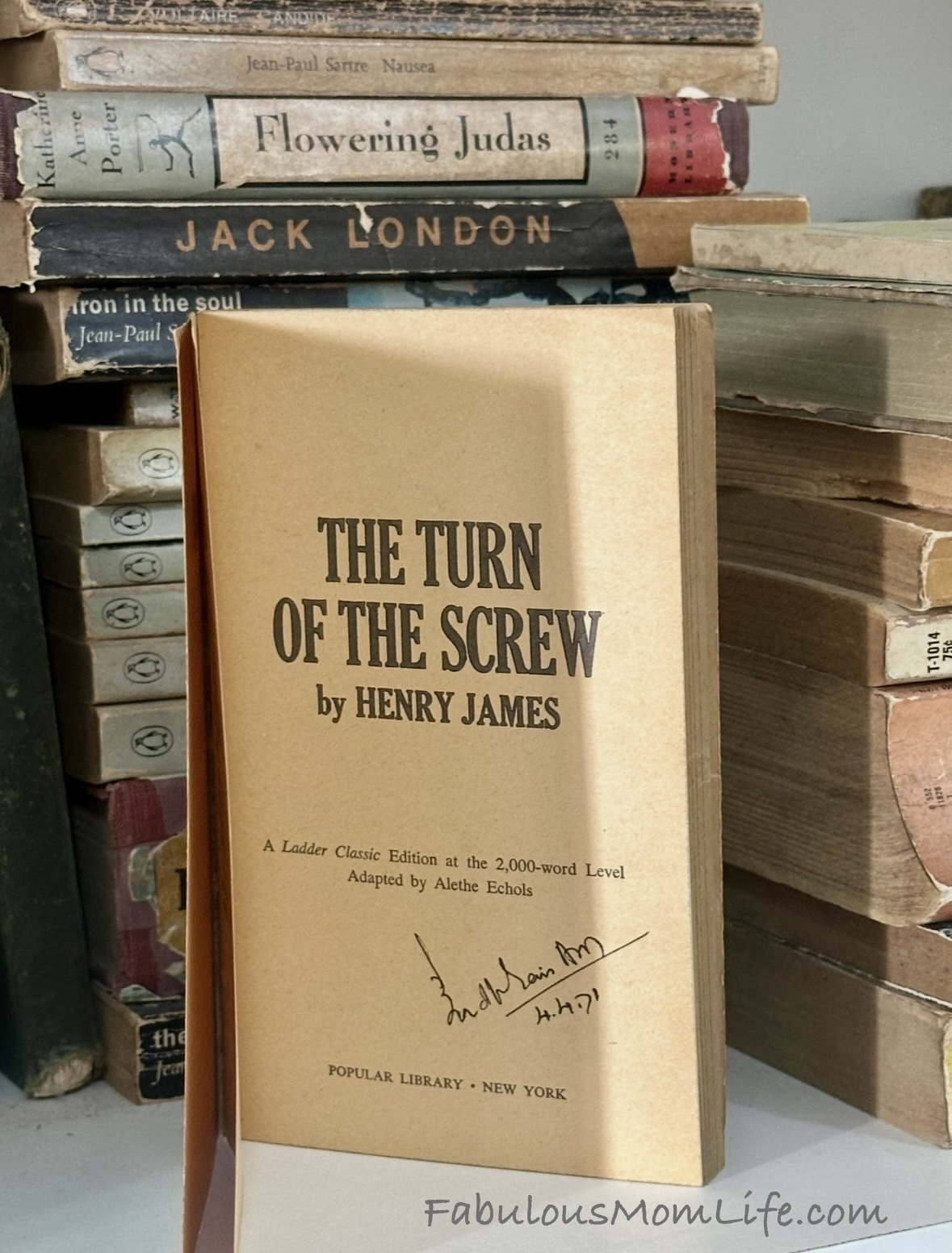
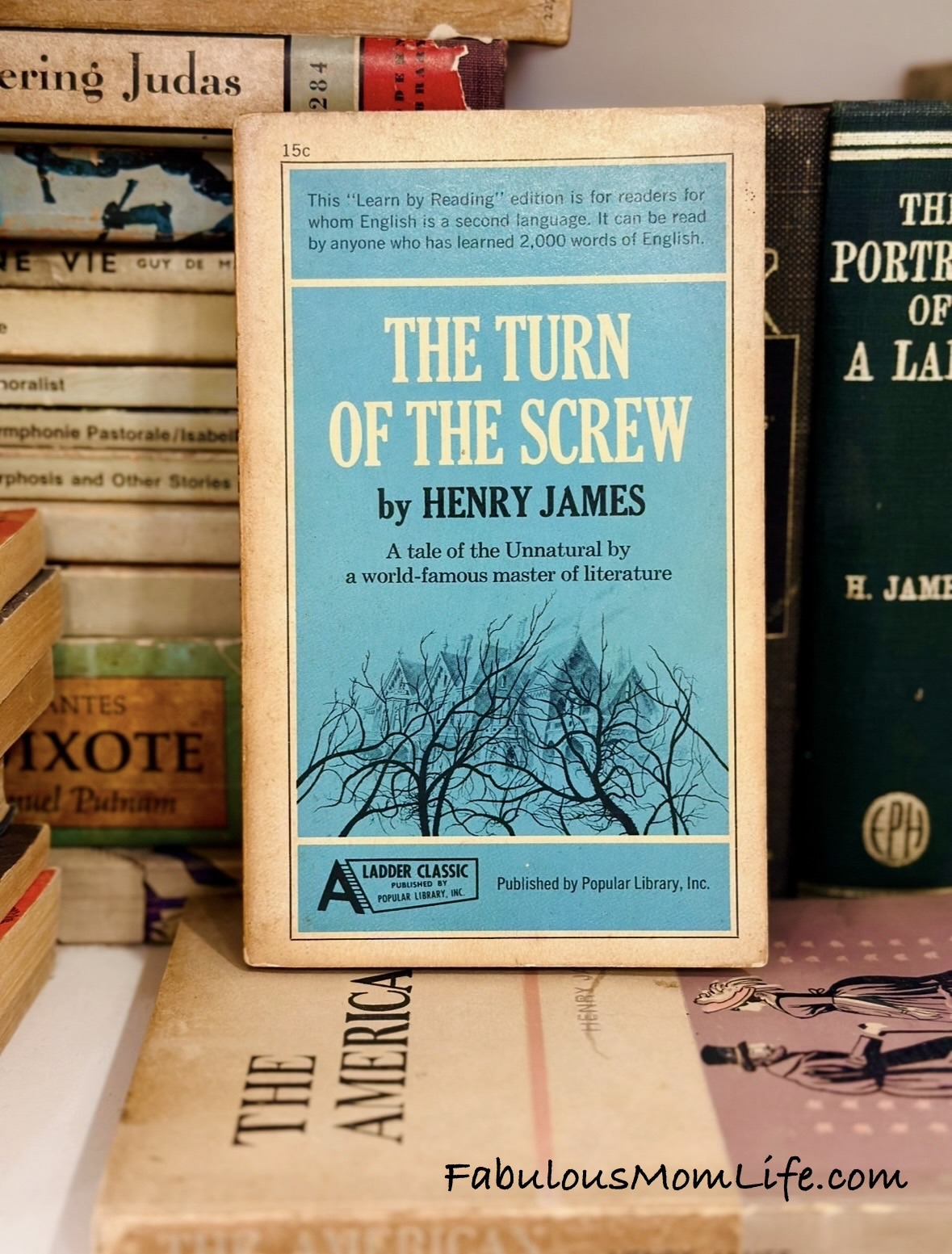
The Turn of the Screw I found is described as:
A Ladder Classic Edition at the 2,000-word Level
Adapted by Alethe Echols
It was therefore not intended for someone approaching Henry James’s original prose with an advanced vocabulary.
It was intended for someone who knew around 2,000 English words and wanted to read a classic novel.
And Popular Library had a clever way of helping them do that.
And for readers outside the United States, this must have been particularly useful. In countries such as India, where English was widely taught and used but access to a large range of original English-language books could be limited, a book like this offered a practical way to read classic literature without needing an advanced command of English. And this was long before the internet, e-books or Kindle made almost any book instantly accessible. A reasonably priced paperback that combined a famous story with built-in vocabulary help could be a very useful little learning tool.
The same would have been true for readers in many countries where English was learned as a second or foreign language. The Ladder Classics could travel much more easily than a classroom, a tutor or a large English-language library could.
You could learn new words without stopping the story
This is probably my favourite part of the whole idea.
The book tells the reader that words above the 2,000-word level would appear in boldface.
Those words could then be looked up in the glossary at the back.
So instead of constantly reaching for a dictionary, the reader could continue reading and learn the more difficult vocabulary along the way.
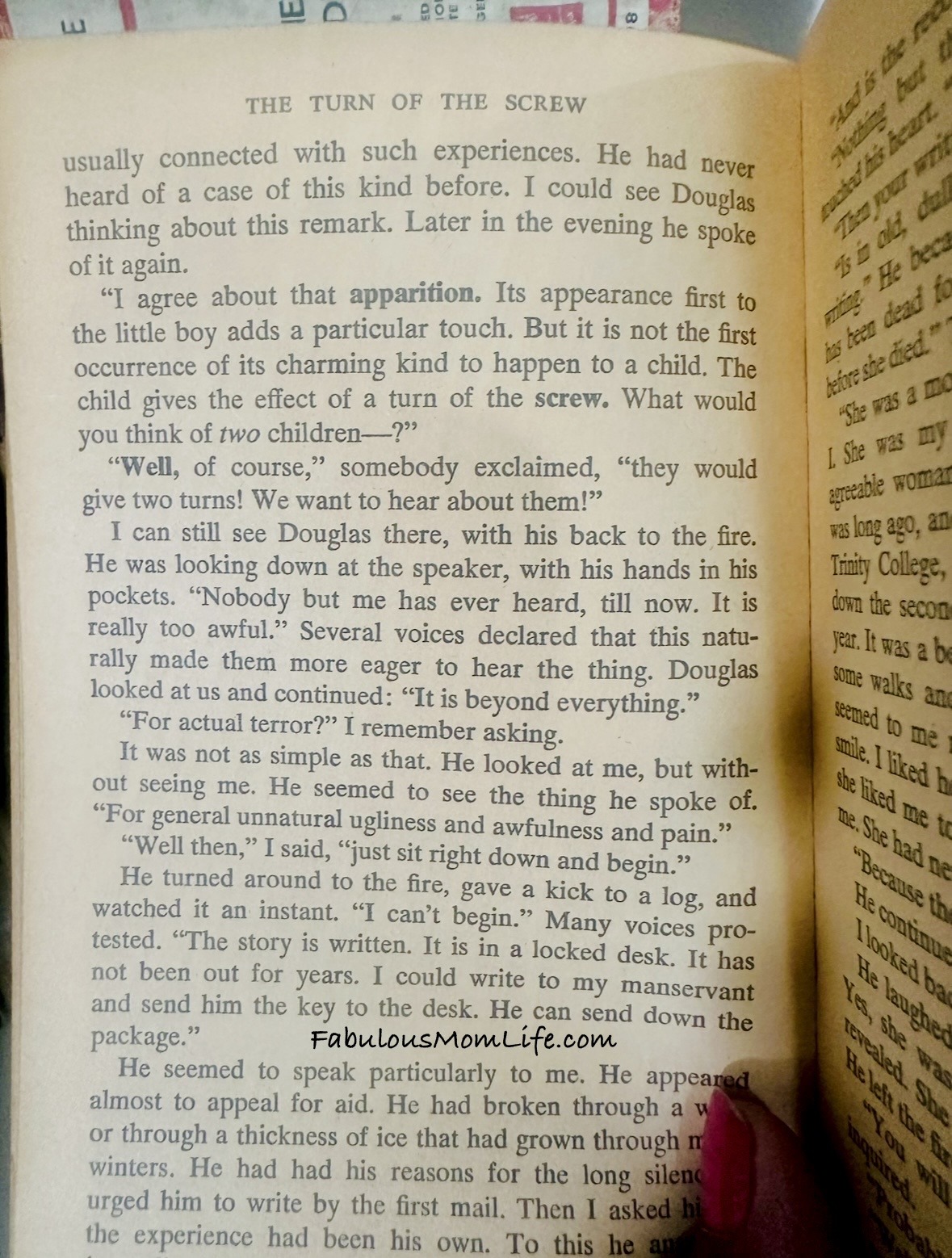
You can actually see the system working in the book.
On this page, words such as apparition and screw are printed in bold.
Turn to the back of the book and there is a small glossary explaining them.
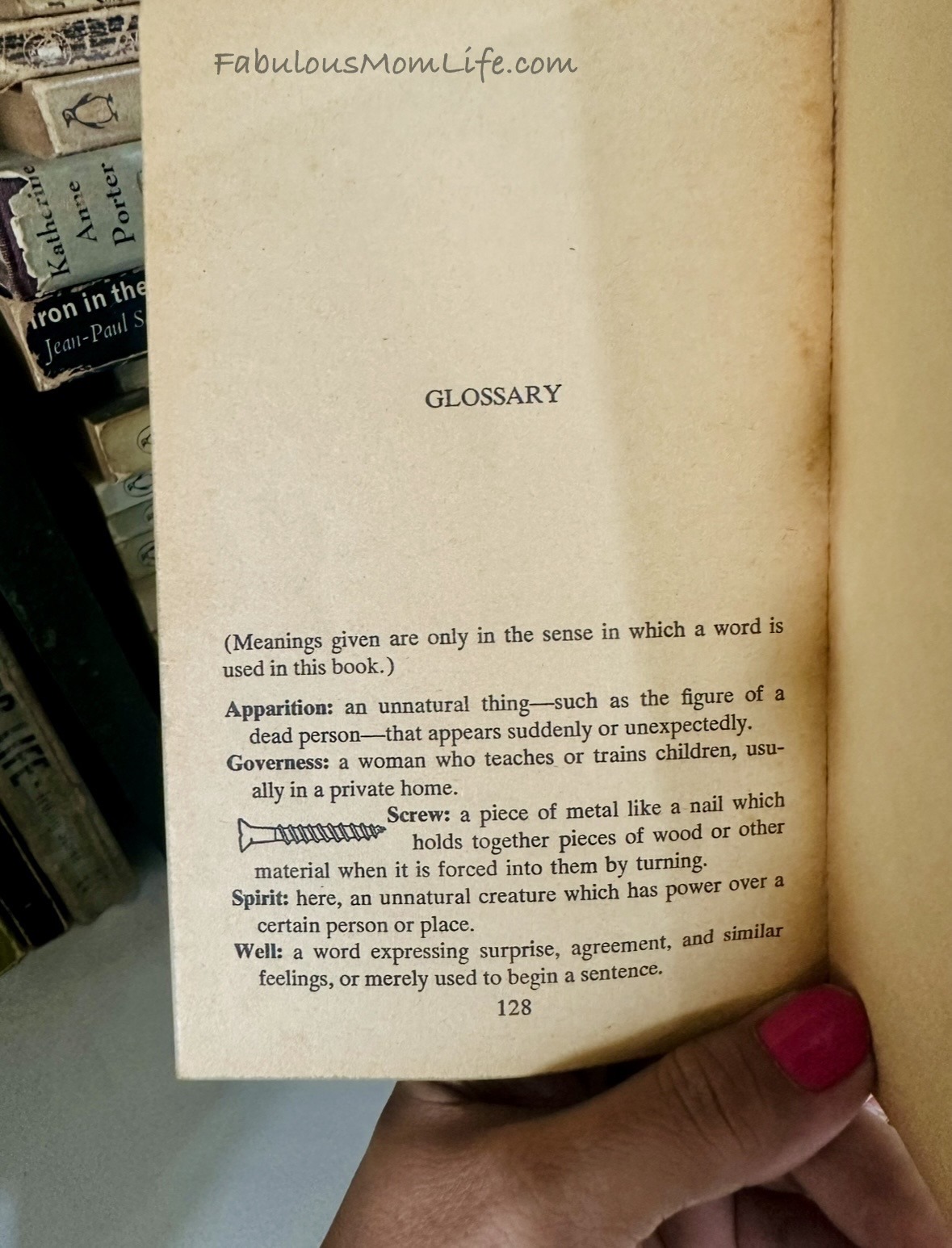
And the glossary comes with a useful little clarification:
“Meanings given are only in the sense in which a word is used in this book.”
I particularly like that.
The reader isn’t just being handed a dictionary definition. The word is being explained in the context in which they have encountered it.
A 2,000-word Henry James
Making The Turn of the Screw accessible in this way must have been quite an undertaking.
Henry James isn’t exactly famous for writing in the simplest English.
His sentences can be long, his prose intricate and his meaning deliberately ambiguous. The Turn of the Screw, in particular, is a story that leaves readers debating what they have actually witnessed.
The Ladder Classic retains the basic story while considerably simplifying the language.
The back cover describes it as a tale of unnatural experiences surrounding a young woman who becomes a teacher-companion to two children. Strange things begin happening, and the reader is left to decide whether the governess is encountering something supernatural or imagining it.
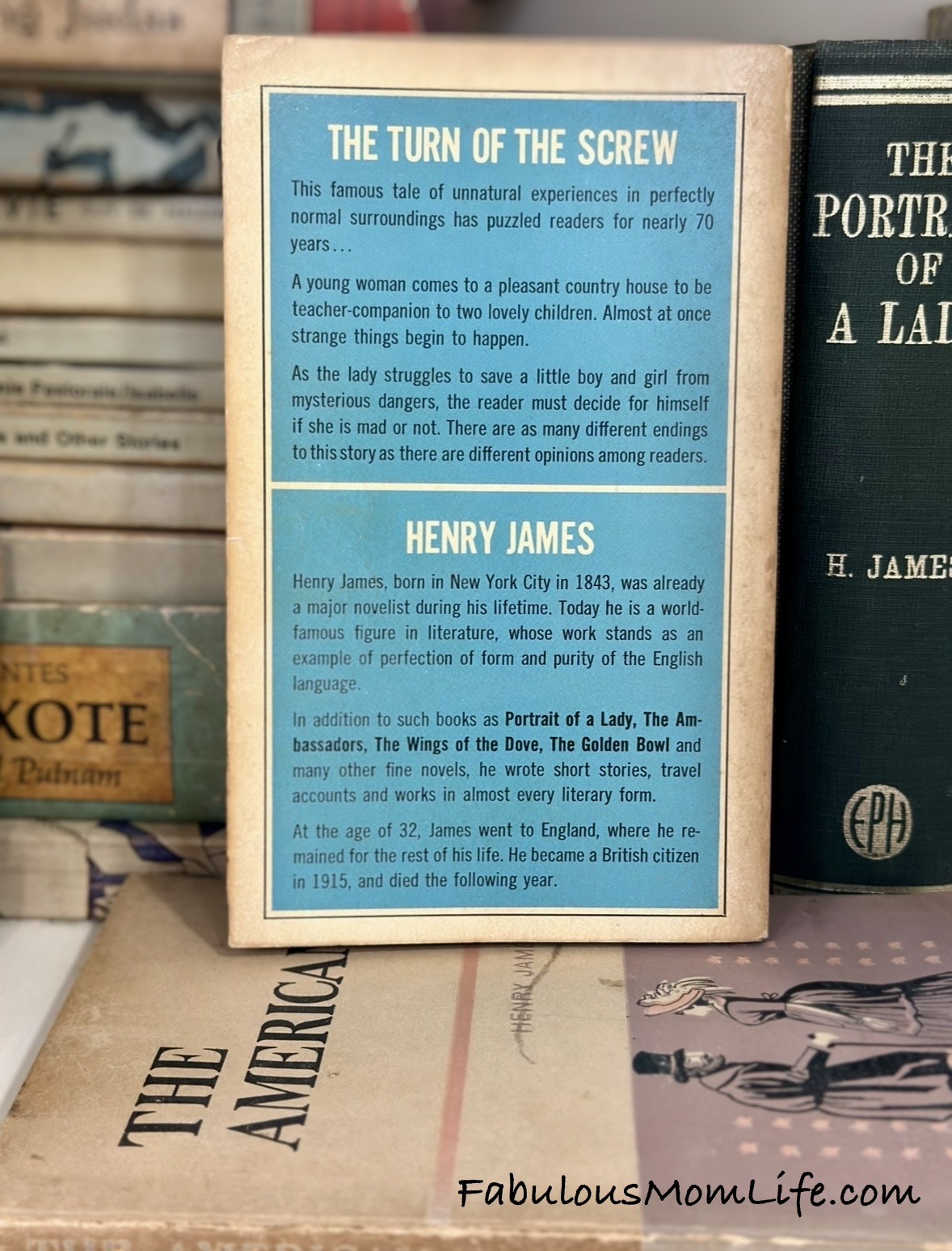
It is a remarkably ambitious choice for a language-learning reader.
Rather than giving learners a specially written story designed around simple vocabulary, the Ladder Classics allowed them to encounter real literature.
Just at a level they could manage.
Who was Alethe Echols?
The title page gives another name that caught my attention:
Adapted by Alethe Echols.
Echols was responsible for adapting this edition of The Turn of the Screw, and library records show her name on other Ladder Classic titles as well.
She was essentially doing the difficult work behind the scenes: taking established literary works and reshaping them for readers who were still developing their English vocabulary.
Today, graded readers are a familiar concept for people learning languages.
But seeing this system in a paperback published in 1965 made me stop and think about how carefully it had been designed.
The publisher wasn’t simply saying, “Here’s an easier version.”
It had created a progression.
Start with 1,000 words.
Climb to 2,000.
Then 3,000.
And eventually, work your way up to 5,000.
The “ladder” wasn’t just the name of the series. It described the whole philosophy behind it.
Popular Library’s little experiment
Popular Library was a New York paperback publisher that published the Ladder Classics alongside its other books.
And The Turn of the Screw wasn’t alone.
Other well-known works were adapted into Ladder editions at different vocabulary levels, creating a collection of classics that could be approached by readers at different stages of English proficiency.
That makes these little paperbacks more interesting than they initially appear.
They weren’t simply cheap editions of famous books.
They were part of an effort to open up literature to people who might otherwise have found the original language too difficult.
And there is something quite appealing about that idea.
You didn’t have to wait until your English was “good enough” to read great literature.
You could start reading the literature while learning the language.
A publisher that disappeared, but not its books
Popular Library is no longer an independent publishing house. Like many mid-century American publishers, it eventually became part of larger publishing companies and its identity disappeared through a series of acquisitions.
But its books are still around.
Some survive in library collections and second-hand bookshops. Others, like this one, have ended up quietly sitting on private bookshelves for decades.
This particular copy travelled from Popular Library’s New York offices in 1965 to my father’s library, where it stayed for years.
And now it sits on mine.
That is perhaps what I find most fascinating about old books. The companies that printed them may disappear, the bookshops that sold them may be gone, and the original readers may no longer be around.
I don’t know why my father bought this particular edition. I don’t know whether it was the Henry James story, the unusual edition, the language-learning concept, or simply another book that caught his attention. He had a PhD in English Literature so it wasn’t a lack of vocabulary.
But his signature tells me that, at some point in 1971, this little 1965 paperback was worth keeping.
And now it is part of my library.
Can you imagine how beautiful it feels to trace the timeline of a book?
- 1898 — Henry James writes/publishes The Turn of the Screw
- 1890s — the story is essentially set in
- 1965 — the Popular Library Ladder Classic adaptation is published
- 1971 — my father’s signature/date appears so it was bought at that time
- 2026 — I read it and fall down the rabbit hole of interpretations 🙂
Why I love old books like this
What fascinates me about old books isn’t necessarily whether they are rare or valuable.
Sometimes it’s the things you discover around the book.
A forgotten publisher.
An unusual edition.
A publishing experiment.
An old price printed on the cover.
A glossary that tells you something about how people learned.
A handwritten name or date.
A book can be a little time capsule of how people read, learned and published books at a particular moment.
This particular one introduced me to the Ladder Classics, a series I had never heard of before.
And now that I know what they were trying to do, I think the idea deserves to be remembered.
A little ladder into literature
There is something wonderfully straightforward about the concept.
You don’t have to begin at the top.
You begin where you are.
You read.
You learn.
You encounter a few more difficult words.
You look them up.
And then you climb another step.
From 1,000 words to 2,000, then 3,000, 4,000 and eventually 5,000.
All the while, you’re reading stories that people have been reading for generations. That seems like a pretty good way to learn a language. And I’m rather glad that a little 1965 paperback in my father’s library introduced me to it.
Leave a Reply