Some people return from Paris with designer handbags.
Some bring home macarons.
I came back with a canvas tote bag, a beautifully published copy of The Hunchback of Notre-Dame, and the memory of standing inside one of the world’s most legendary bookstores.
Like many travelers, I had seen Shakespeare and Company countless times on Instagram. Photos of its green façade, overflowing bookshelves and handwritten signs seemed to appear on every Paris itinerary. I wondered whether it had become one of those places that were more famous than meaningful.
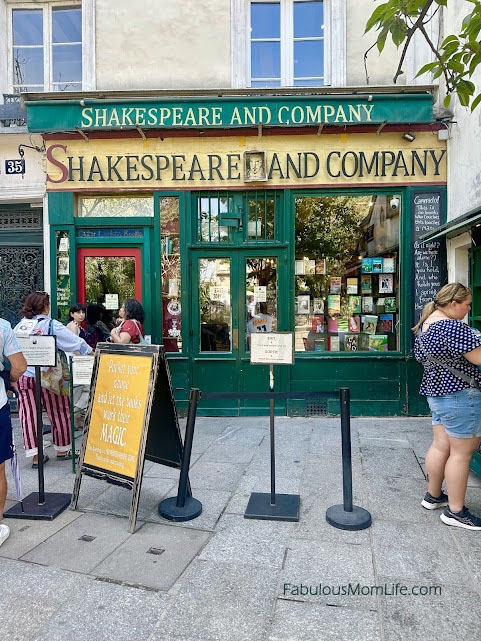
It has certainly become busy. There was a queue outside when I visited, and the bookstore discourages photography inside so visitors can immerse themselves in the experience rather than documenting it. It felt less like discovering a hidden gem and more like joining a pilgrimage.
And perhaps that’s exactly what it is.
Because Shakespeare and Company isn’t famous simply because it’s beautiful.
It’s famous because, for more than a century, it has been a sanctuary for readers, writers and dreamers.
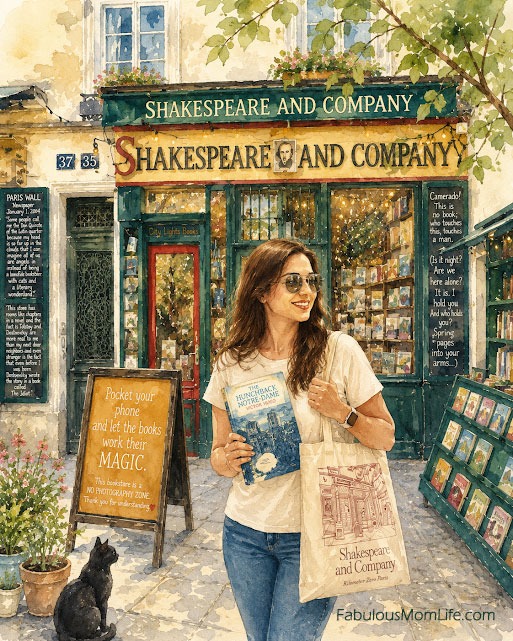
A Bookshop That Changed Literary History
The story of Shakespeare and Company actually begins with another bookshop.
In 1919, American bookseller Sylvia Beach opened an English-language bookstore in Paris. At a time when the city had become a magnet for artists, writers and intellectuals from around the world, Beach created much more than a place to buy books.
She created a home.
Her little bookstore quickly became the gathering place for writers including Ernest Hemingway, James Joyce, F. Scott Fitzgerald, Gertrude Stein, Ezra Pound and T. S. Eliot. Authors borrowed books they couldn’t afford, debated literature, discovered new writers and found encouragement among friends.
The shop cemented its place in literary history when Sylvia Beach made an extraordinary decision.
Unable to find a publisher willing to take on James Joyce’s controversial Ulysses, she published it herself in 1922.
Without that act of courage, one of the greatest novels of the twentieth century might have remained unpublished for years.
The original Shakespeare and Company eventually closed during the Second World War, but its spirit never disappeared.
The Shakespeare and Company We Know Today
The bookstore visitors see today wasn’t opened by Sylvia Beach.
In 1951, another American, George Whitman, opened an English-language bookstore called Le Mistral on Rue de la Bûcherie, just across the Seine from Notre-Dame Cathedral.
Like Sylvia Beach before him, Whitman believed a bookstore should be much more than a shop.
He invited aspiring writers and travelers to sleep among the books in exchange for helping around the store.
These guests became affectionately known as “Tumbleweeds.”
Thousands of writers have slept between the bookshelves over the decades, reading, writing and becoming part of the store’s remarkable history.
In 1964, on the 400th anniversary of Shakespeare’s birth, Whitman renamed the bookstore Shakespeare and Company in honour of Sylvia Beach and her original shop.
Today, the tradition continues.
The bookstore still hosts writers, literary events and readings, remaining one of the world’s few bookstores that feels like a living literary community rather than simply a retail space.
A Pilgrimage for Book Lovers
It’s impossible to ignore how popular Shakespeare and Company has become.
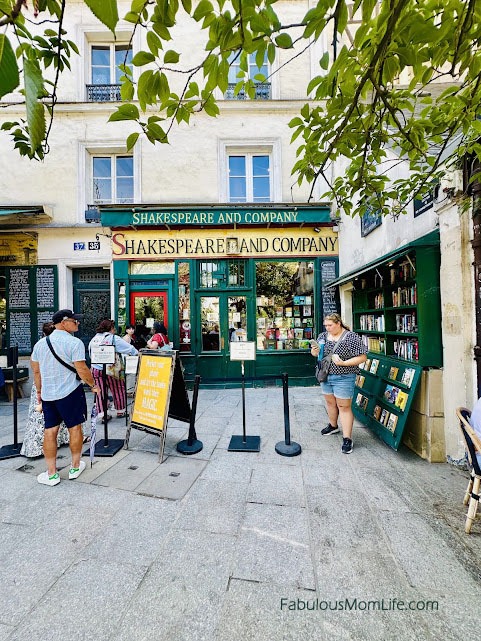
When I visited, there was a long queue stretching outside the entrance.
Some people came for photographs.
Others came because it had appeared on every “Things to Do in Paris” list.
Yes, it has become touristy.
But popularity doesn’t diminish significance.
The Louvre is crowded.
Notre-Dame is crowded.
The Eiffel Tower is crowded.
Some places attract visitors because they’ve earned their place in history.
Shakespeare and Company belongs firmly in that category.
For anyone who has ever loved books, dreamed of writing one, or simply found comfort inside a library, walking through these doors feels almost like a rite of passage.
A Bookshop Designed for Readers
One of my favourite discoveries wasn’t downstairs.
It was upstairs.
Many visitors browse the ground floor and leave without fully exploring the upper rooms.
That would be a mistake.
Upstairs, the atmosphere changes completely.
Comfortable chairs invite visitors to sit and read.
Small reading nooks are tucked between towering shelves filled with old books.
Every wall is lined from floor to ceiling with literature.
You can spend as long as you like reading, thinking or simply absorbing the atmosphere.
It feels less like a commercial bookstore and more like someone’s wonderfully eccentric private library.
George Whitman once said he built the shop “like a man would write a novel, building each room like a chapter.”
Walking through the upstairs rooms, that description feels perfect.
Why Photography Is Discouraged
One thing first-time visitors often notice is the bookstore’s policy on photography.
While photographs outside are perfectly fine, visitors are generally asked not to use phones inside.
At first, this feels surprising.
Then it becomes refreshing.
Instead of everyone viewing the shop through a camera screen, people browse slowly.
They pull forgotten classics from shelves.
They sit quietly reading opening chapters.
They discover books they weren’t looking for.
In an age where nearly everything is photographed before it’s experienced, Shakespeare and Company gently encourages the opposite.
And somehow, it works.
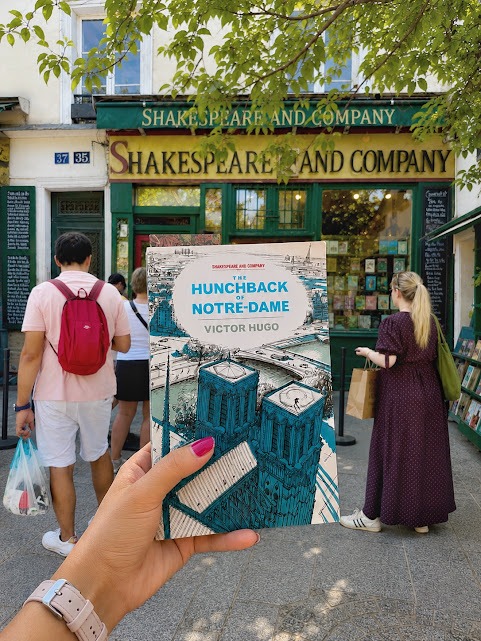
The Hunchback of Notre-Dame by Victor Hugo – Shakespeare & Co. Edition
Choosing the Perfect Book
Buying a book here almost feels obligatory.
But if you’re visiting, I’d encourage you to think carefully about what you buy.
Of course, you’ll find plenty of books from well-known publishers.
But what makes Shakespeare and Company especially special is its own publishing imprint.
The bookstore publishes beautifully designed editions of classics and contemporary works that you simply won’t find elsewhere.
You can browse many of these titles on the bookstore’s official website before your visit, along with its dedicated collections celebrating Paris, France and English-language literature.
When I was choosing a book, I knew I wanted one published by Shakespeare and Company itself.
I could easily buy another publisher’s edition back home in India – probably for much less.
But I wanted a copy that could only have come from this bookstore.
That made all the difference.
Why I Chose The Hunchback of Notre-Dame
The choice became obvious after my morning.
I had just spent several hours exploring Notre-Dame Cathedral.
Walking around its magnificent Gothic façade, I couldn’t help imagining Victor Hugo’s story unfolding within those walls.
Quasimodo.
Esmeralda.
Claude Frollo.
The cathedral itself.
It felt impossible to separate the building from the novel.
So when I found Shakespeare and Company’s own beautifully designed edition of The Hunchback of Notre-Dame, I knew I’d found my souvenir.
The cover is unlike any edition I’d seen before – simple, elegant and unmistakably theirs.
I already own an older copy of the novel that once belonged to my father.
I’m one of those readers who happily collects multiple editions of favourite books, especially when each copy has its own story.
This Shakespeare and Company edition instantly became one of the most treasured books in my collection.
The Famous Shakespeare and Company Stamp
Every book purchased at the bookstore receives the famous Shakespeare and Company stamp.
To most visitors, it’s simply a nice souvenir.
To book collectors, it’s something much more meaningful.
That little stamp records exactly where your book came from.
Years from now, when I open my copy, I’ll remember standing in the queue, wandering those tiny rooms upstairs, browsing shelves beneath handwritten signs and carrying my purchase back into the Paris sunshine.
It’s a tiny detail that transforms a book into a travel memory.
(Insert photograph of your stamped book here.)
The Tote Bag That Travels With Me
The tote bag wasn’t a planned purchase.
Now I take it almost everywhere.
It’s become my regular book bag.
I carry it to book club meetings, author events, bookstores and cafés.
Every now and then, someone recognises the familiar Shakespeare and Company design and asks if I’ve been there.
Those little conversations remind me that the best souvenirs aren’t the ones that stay on a shelf.
They’re the ones that become part of everyday life.
Tips for Visiting Shakespeare and Company
If you’re planning a visit, here are a few suggestions:
- Arrive early if you’d like to avoid the longest queues.
- Allow at least an hour to browse slowly.
- Don’t skip the upstairs reading rooms.
- Buy one of Shakespeare and Company’s own publications if you’d like a truly unique souvenir.
- Browse their Paris and France sections if you’re looking for books that connect you more deeply with the city.
- Remember to have your purchase stamped before leaving.
- Spend some time outside too – the handwritten signs, book carts and little details are all part of the experience.
More Than Just Another Tourist Stop
It’s easy to dismiss famous places once they become crowded. But Shakespeare and Company isn’t famous because social media discovered it. Social media simply introduced it to another generation. Long before Instagram existed, readers were crossing oceans to visit this tiny bookshop.
They came because of its history.
Because of the writers who gathered here.
Because of the books it published.
Because it proved that a bookstore could be far more than somewhere to buy books.
As I walked away carrying my Victor Hugo edition and canvas tote, I realised I hadn’t just visited another Paris attraction. I’d visited a place that continues to celebrate reading in an increasingly distracted world. Some places deserve their reputation. Shakespeare and Company is one of them.
Book Places
This post is part of my Book Places series, where I explore beautiful bookshops, libraries, literary cafés and bookish destinations around the world. If your travels are guided as much by stories as by sightseeing, I hope you’ll enjoy following along as I discover more literary corners, one city at a time.
[…] A book from Shakespeare and Company. […]