By the second baby, my whole wardrobe strategy had shrunk to one drawer and two categories.
Before my first was born I bought a tiny denim jacket. It had a corduroy collar and little brass buttons and I remember standing in the store holding it and feeling like I was finally doing this properly.
He wore it once, to a family lunch, for about forty minutes, until he spat up down the front of it and I discovered that a denim jacket with a corduroy collar cannot be thrown in the washing machine at 60 degrees like literally everything else a baby owns. It went in a drawer. It is, as far as I know, still in that drawer.
By the second baby something had shifted. I did not become a more disciplined shopper through willpower. I became one because I had run the experiment and seen the results. The clothes that got worn had almost nothing in common with the clothes I had enjoyed buying, and once I understood why, the whole wardrobe collapsed down to about a drawer and a half.
Here is what survived the cut, and the reasoning behind it, because the reasoning is the transferable part.
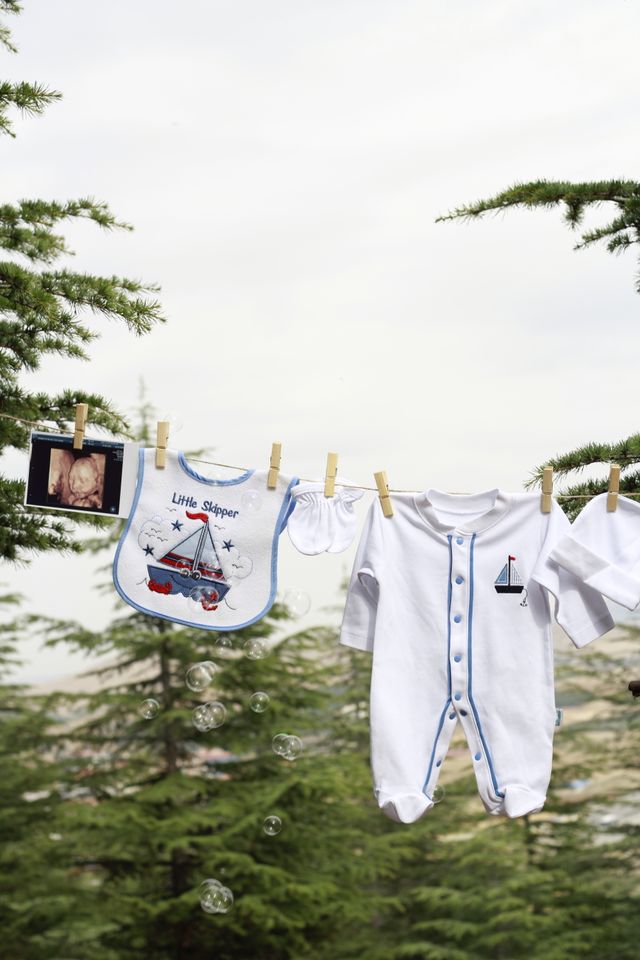
Rule one: if it has more than one piece, it will not get worn
A two-piece outfit on a baby is a design that fights the wearer. The top rides up. The pants roll down over the diaper. Every time you lift the baby under the arms, the whole assembly redistributes itself and you are tugging a waistband back into place with your spare hand while holding a wriggling human in the other.
Then there is the laundry arithmetic. One outfit becomes two items in the hamper. Multiply by four or five changes a day, which is a conservative estimate in month one, and the two-piece outfit is quietly generating an extra load of washing a week for no benefit whatsoever.
One piece covers the whole baby, changes in one motion, and washes as one item. That is the entire argument and after about six weeks it wins on its own. A baby romper is the workhorse version of this, and by the second baby it was roughly eighty percent of what my son wore in daylight hours.
Rule two: zippers, and I will not be taking questions
I want to be measured about this and I cannot be. Snaps are fine in the afternoon. Snaps at 3am in a deliberately dark room with a baby who has just started kicking are a nightly small defeat. You line them up, you work down, you get to the bottom and there is one snap left over, which means you are one out at the top and the whole thing is diagonal and you have to start again.
A zipper takes one second and requires no light and no accuracy. If you can find a two-way zipper, better again, because you can open from the bottom for a diaper change without exposing the top half of a sleeping baby to the cold air, which is the fastest known method of un-sleeping a baby.
This is also the thing to look for when you are being handed hand-me-downs and trying to decide what to keep. Snaps go in the donate pile no matter how nice the print is.
Rule three: buy for the season the baby will be in, not the one you are in
I bought a beautiful stack of long-sleeved winter things in my third trimester, in winter, for a baby who was born in February and spent his entire first summer at a size those clothes did not cover. The stack went to a cousin, unworn, still folded.
Babies grow through a size in roughly two months and they do not do you the courtesy of aligning that with the weather. So work it out on paper before you shop: what size will this baby be in four months, and what will the temperature be doing then? Buy for that. It removes the entire category of clothing that fits perfectly in the wrong weather.
Related, and this is the tip I give everyone: skip newborn sizing almost entirely. Everyone else buys it, it arrives from every direction, and the baby is out of it before you have finished the thank-you notes. Start at 3 to 6 months and up.
Rule four: separate daytime clothes from sleep gear completely
This is the one that took me longest and made the biggest difference. For months I treated sleepwear as just clothes you happened to be wearing at night, so I put the baby down in whatever soft thing was clean.
The problem is that loose bedding is not safe in a crib, so if the baby’s clothes are not doing the warmth job, nothing is. That leaves you either over-dressing the baby in layers that shift around, or waking up at 1am to a cold baby, or doing the thing I did, which was lying awake running the temperature question over and over in my head.
A sleep sack resolves it by being a wearable blanket the baby cannot kick off. The baby stays the same temperature all night, nothing loose goes in the crib, and you stop having to think about it, which is the underrated part. Brands like Love to Dream label theirs by TOG rating, which is a warmth number, and once you know the number you are matching it to room temperature instead of guessing. It turns a nightly judgment call into a lookup.
The other thing it does, which nobody mentions, is act as a signal. Going into the sleep sack means sleep is happening. By four months my son would settle the moment the zipper went up, purely from repetition. That is not a clothing benefit, it is a routine benefit, and it is a good argument for keeping sleepwear as its own separate category rather than letting it blur into the rest of the drawer.
What the drawer looks like now
Six or seven one-piece rompers with zippers, all one size up from wherever we are. Two sleep sacks, so one can be in the wash. A stack of plain bodysuits for layering. One nice outfit, kept for photos, which everyone is allowed and which I am not going to pretend I skipped.
That is it. It fits in a drawer and a half, it does not generate decisions, and getting dressed takes one motion instead of four. I do sometimes think about the denim jacket, and I understand now that I was not buying it for the baby. I was buying it because it made the whole thing feel real while I waited. That is a legitimate reason to buy one thing. It is not a good reason to buy a wardrobe.
Leave a Reply