Children can find information about almost anything within seconds. A homework question, a health claim, a viral video, or a strange fact from social media can quickly lead them to dozens of websites offering different answers.
The problem is that appearing online does not make information reliable. UNICEF has highlighted how children can encounter misinformation through social media, friends, family members, and other everyday sources. Teaching children how to check online information therefore matters just as much as teaching them how to search for it.
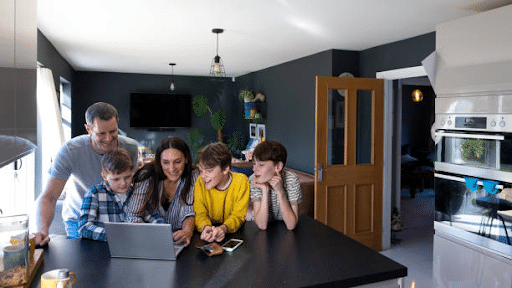
Here are seven practical habits parents can teach without turning every internet search into a research project.
1. Read Beyond the Headline
Headlines are designed to get attention, which means they often leave out important context. Children can easily read a dramatic headline and assume they already know the whole story.
Encourage them to open the page and read enough to understand what is actually being claimed. Common Sense Media also recommends checking whether headlines and captions match the content itself.
For example, a headline might say a certain food is “bad for children,” while the full article refers only to excessive consumption or a particular age group.
A simple habit helps: read first, react second.
2. Find Out Who Created the Content
Children often pay attention to information without thinking about who produced it. Knowing the source gives them useful clues about why the content exists.
Teach children to check:
- Is an author named?
- What organisation published the page?
- Does the author have relevant knowledge or experience?
- Is the page providing information, selling something, or expressing an opinion?
- Are sources provided for important claims?
None of these checks proves that a page is correct. Together, however, they help children decide whether it deserves further attention.
3. Compare Important Claims With Another Source
One website should rarely be the end of the search, especially when children are using information for schoolwork or making sense of an important issue.
Ask them to look for the same claim on another reliable source. Depending on the topic, that might mean checking a university, government department, museum, established educational organisation, or recognised news outlet.
Stanford’s Civic Online Reasoning resources teach students to investigate who is behind information and compare sources rather than judging credibility only from how a webpage looks.
This comparison habit is particularly useful because professional-looking pages are not automatically accurate.
4. Check When the Information Was Published
Some information remains useful for years. Other information becomes outdated surprisingly quickly.
A publication date matters particularly when children research:
- Technology and software
- Health recommendations
- Current events
- Travel rules
- Scientific research
- Product information
Ask children, “Would it matter if this information were five years old?”
For a history assignment, an older educational article might still be perfectly useful. For current software instructions or recent news, a newer source could be necessary.
5. Use Digital Checking Tools With Human Judgment
Online tools can provide another way to examine content, especially now that AI-assisted writing has become common. However, no single automated result should replace checking the actual claims and sources.
For instance, parents helping older children review written material may come across an AI checker free as one additional step in examining text. The useful lesson for children is to treat such results as a clue rather than final proof.
After using any checking tool, ask:
- Are factual claims supported by reliable sources?
- Can the important points be confirmed elsewhere?
- Does the text clearly distinguish facts from opinions?
The real goal is not simply identifying how content was produced. It is working out whether the information is dependable.
6. Question Photos and Videos Too
Children may be more cautious about written claims while trusting photographs or videos immediately. Visual content needs checking as well.
An authentic image can be shared with the wrong date, place, or description. A short video can also remove the events that happened immediately before or after the clip.
Encourage children to ask where an image originally came from and whether reliable sources provide the same context.
This teaches an important rule: seeing something does not automatically explain what happened.
7. Practise Fact-Checking Together
Digital literacy becomes much easier when children see adults using the same habits.
When someone in the family finds a surprising story, strange statistic, or viral claim, check it together. Ask who published it, when it appeared, and whether another credible source confirms it.
Keep the exercise casual. A two-minute check during an everyday conversation can teach more than a long lecture about unreliable websites.
Conclusion
Helping children check online information more carefully does not require parents to know every answer. What matters is teaching children what questions to ask.
Reading past headlines, checking authors, comparing sources, noticing dates, questioning visual content, and using digital tools carefully can all become normal habits. With regular practice, children can learn that finding an answer online is only the beginning. The next task is deciding whether that answer deserves to be trusted.
Leave a Reply