If you’ve ever taken a cruise on the Seine, you’ve probably admired the giant clock on the façade of the Musée d’Orsay. It’s one of those unmistakable Paris landmarks that catches your eye as you glide past.
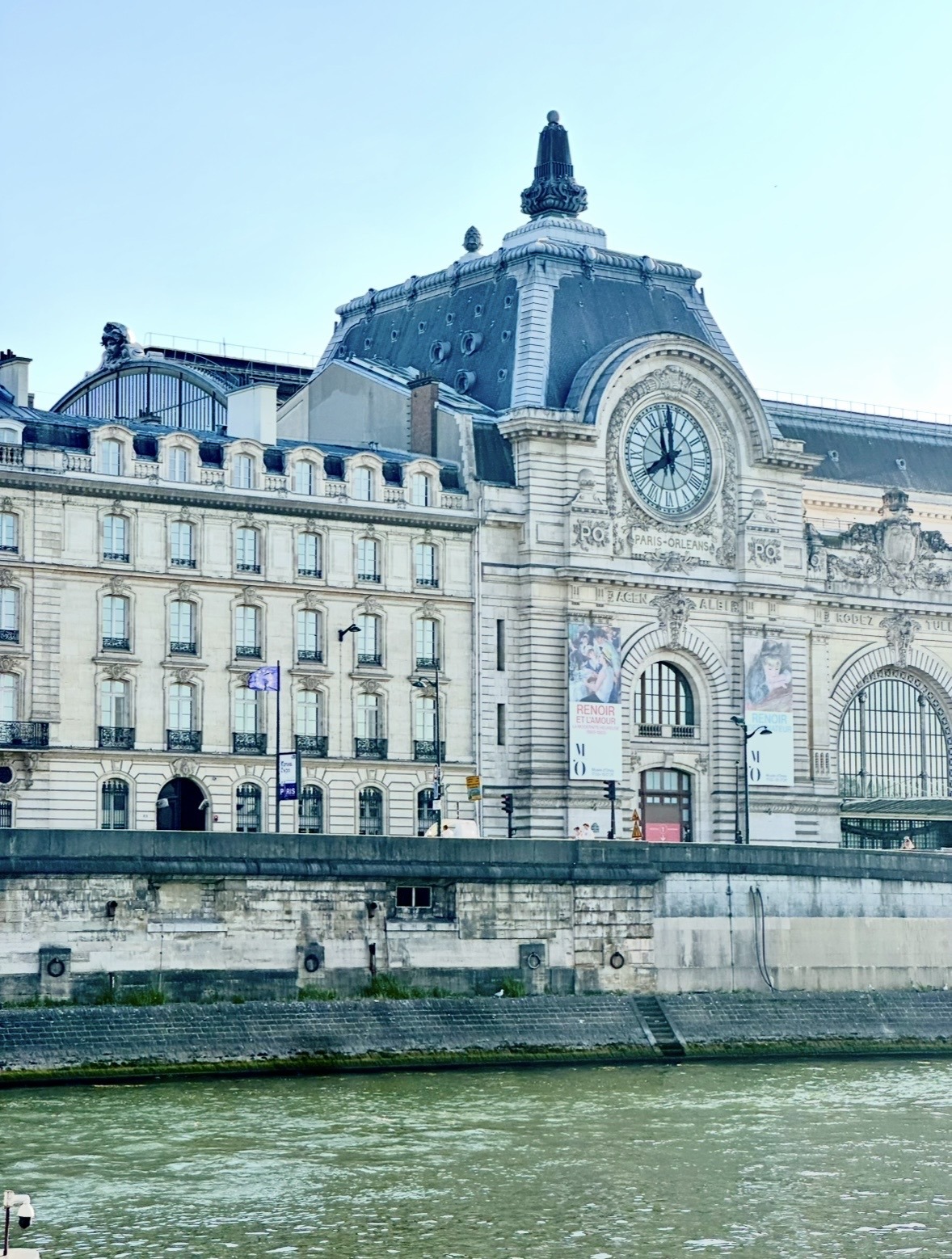
Musée d’Orsay Clock seen from the Seine River cruise
What many visitors don’t realize is that you can actually stand behind that very clock.
And the view is every bit as magical as you’d imagine.
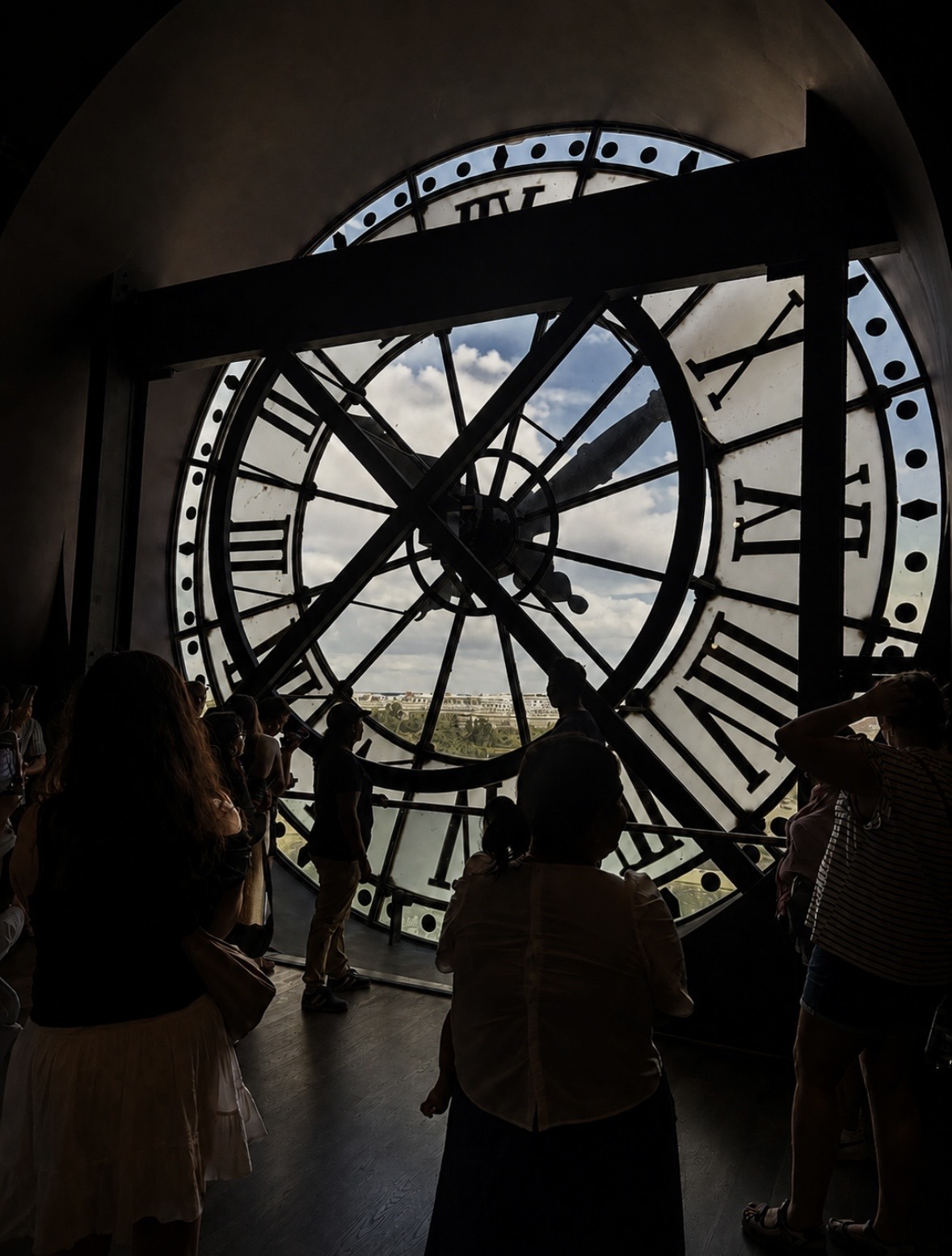
Standing behind the Musee d’Orsay clock
The Clock Everyone Photographs
Originally built as the Gare d’Orsay railway station for the 1900 Exposition Universelle, the building featured enormous clocks so travelers could easily keep track of train departures. When the station was transformed into the Musée d’Orsay in 1986, these iconic clocks became part of the museum’s identity.
Today, millions of visitors photograph the grand clock from outside, especially from the banks of the Seine or on a river cruise.
But that’s only half the story. You can step behind it!
Before you go searching for it, it’s worth knowing that the Musée d’Orsay has two iconic clocks.
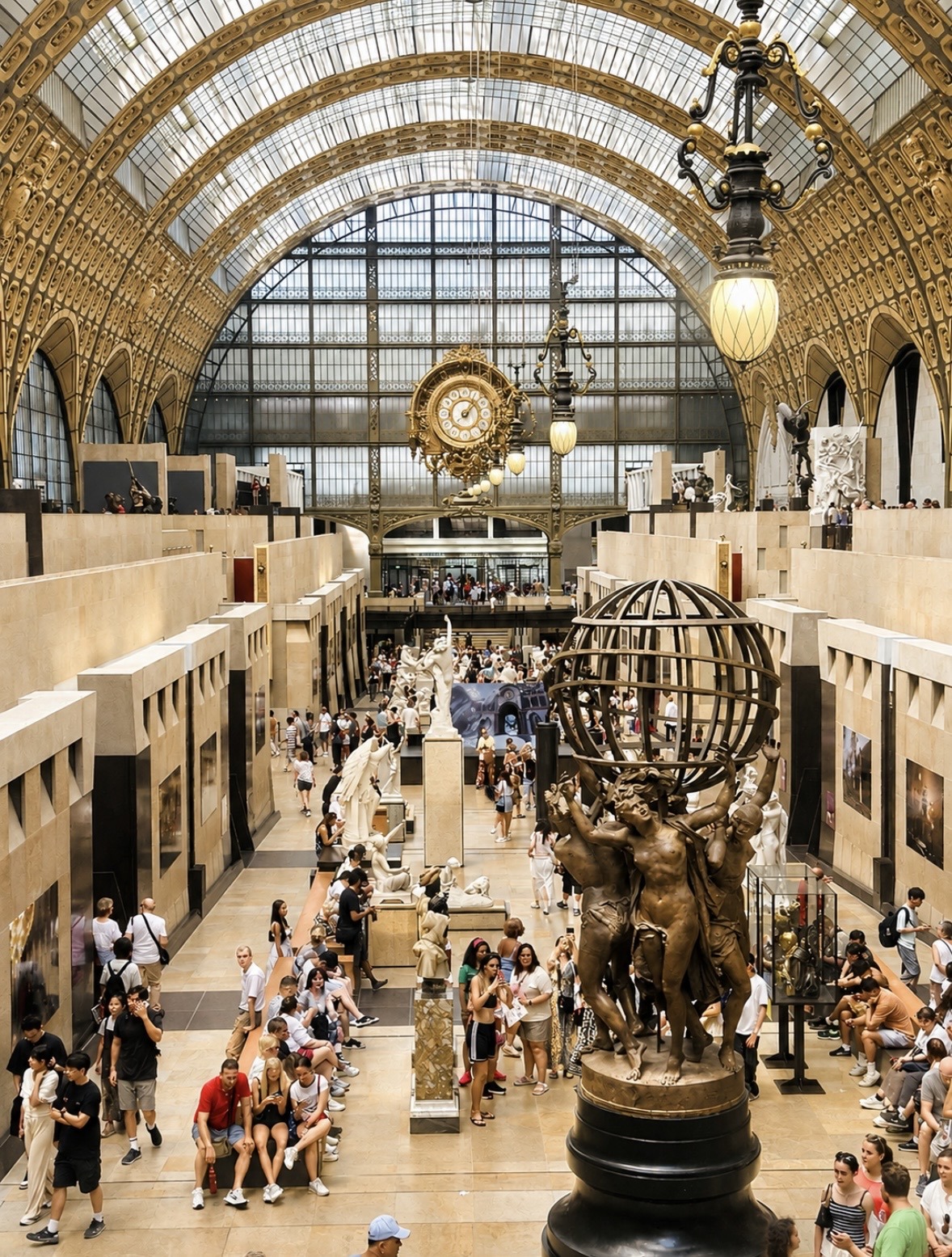
The beautiful Musée d’Orsay which was once Gare d’Orsay
The elegant ornamental clock inside the galleries is often photographed, and for good reason – it’s beautiful.
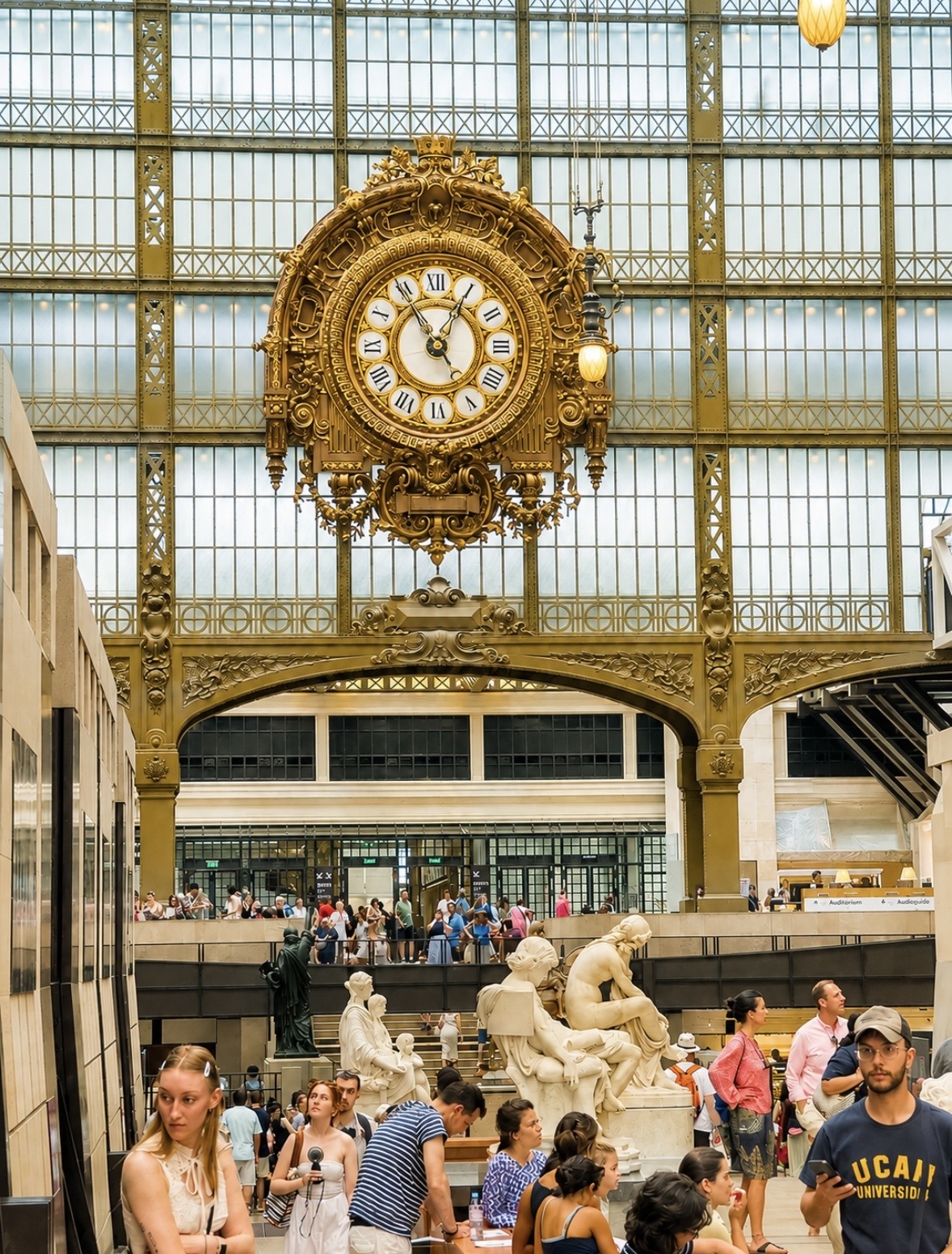
The beautiful ornamental clock inside the museum
But the clock we’re talking about here is the museum’s massive exterior clock, the one overlooking the Seine. Most visitors admire it from outside without realizing they can actually stand behind it and enjoy one of the most unique views in Paris.
Step Behind the Clock
Inside the museum, make your way to the fifth floor. You won’t miss it!
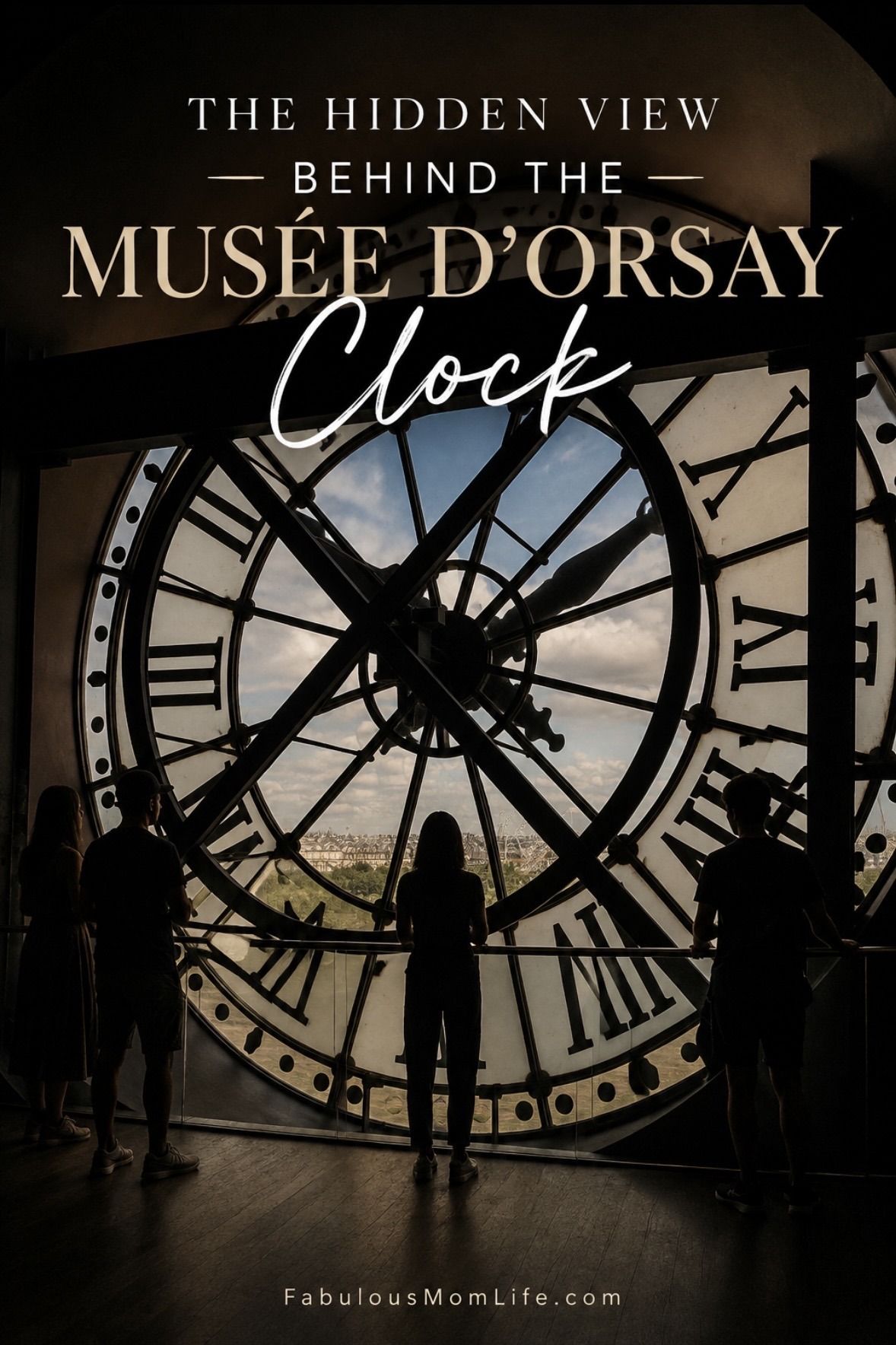
As you approach, you’ll first notice the daylight filtering through the translucent glass. Then, suddenly, Paris appears through the Roman numerals.
The Seine winds below.
The rooftops stretch into the distance.
The Louvre sits directly across the river.
It’s one of those rare moments where architecture becomes a picture frame.
Unlike observation decks, this isn’t about height. It’s about perspective.
The giant clock transforms an ordinary city view into something cinematic.
Seeing the Same View From Both Sides
One of my favorite travel moments in Paris happened almost by accident.
Earlier in the day, I was on a Seine river cruise, admiring the famous clock from outside.
A little later, while exploring the Musée d’Orsay, I found myself looking back at the Seine through that very same clock.
The realization was strangely satisfying.
From the river, you’re looking at the clock.
From the museum, the clock is looking back at the river.
It’s the same place, viewed from two completely different perspectives.
Don’t Rush Past It
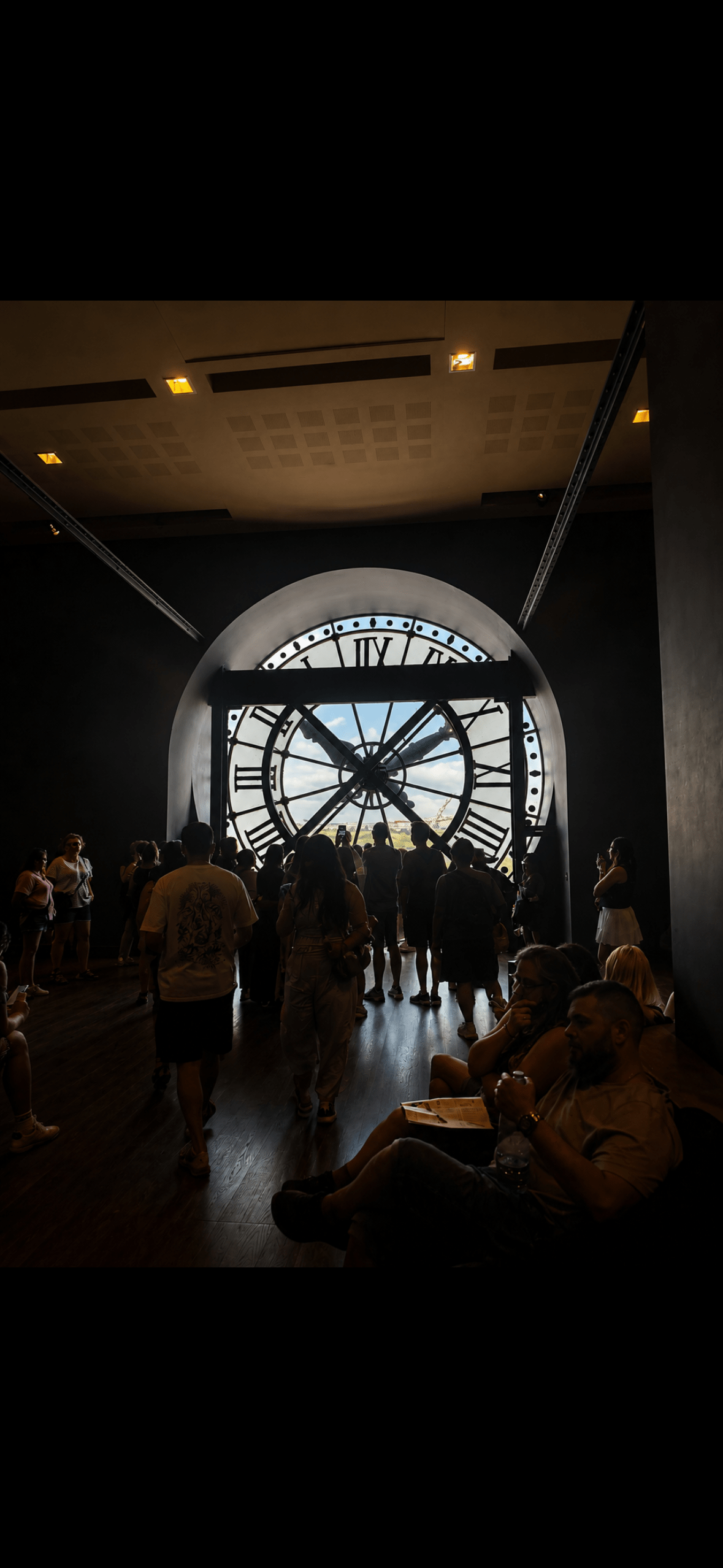
Behind the Musee d’Orsay clock on the 5th floor
Most people visit the Musée d’Orsay for its extraordinary collection of Impressionist and Post-Impressionist masterpieces by Monet, Renoir, Van Gogh, Degas and many others.
The artwork deserves every bit of its reputation. In fact, this has become my favourite museum in the world!
But before you leave, take a few extra minutes to visit the clock.
Stand there for a while. There will be a small crowd but not enough to ruin the experience. Everyone gets a chance to come up to the front and experience the view – watch boats drift along the Seine, see the Louvre and the Sacré-Cœur Basilica.
There Are More Than One Famous Clock at the Musée d’Orsay
One reason people get confused is that the museum has more than one spectacular clock. The giant clock overlooking the Seine is the one most people recognize from outside the museum and from Seine river cruises. It’s also the one you can stand behind for the famous Paris view.
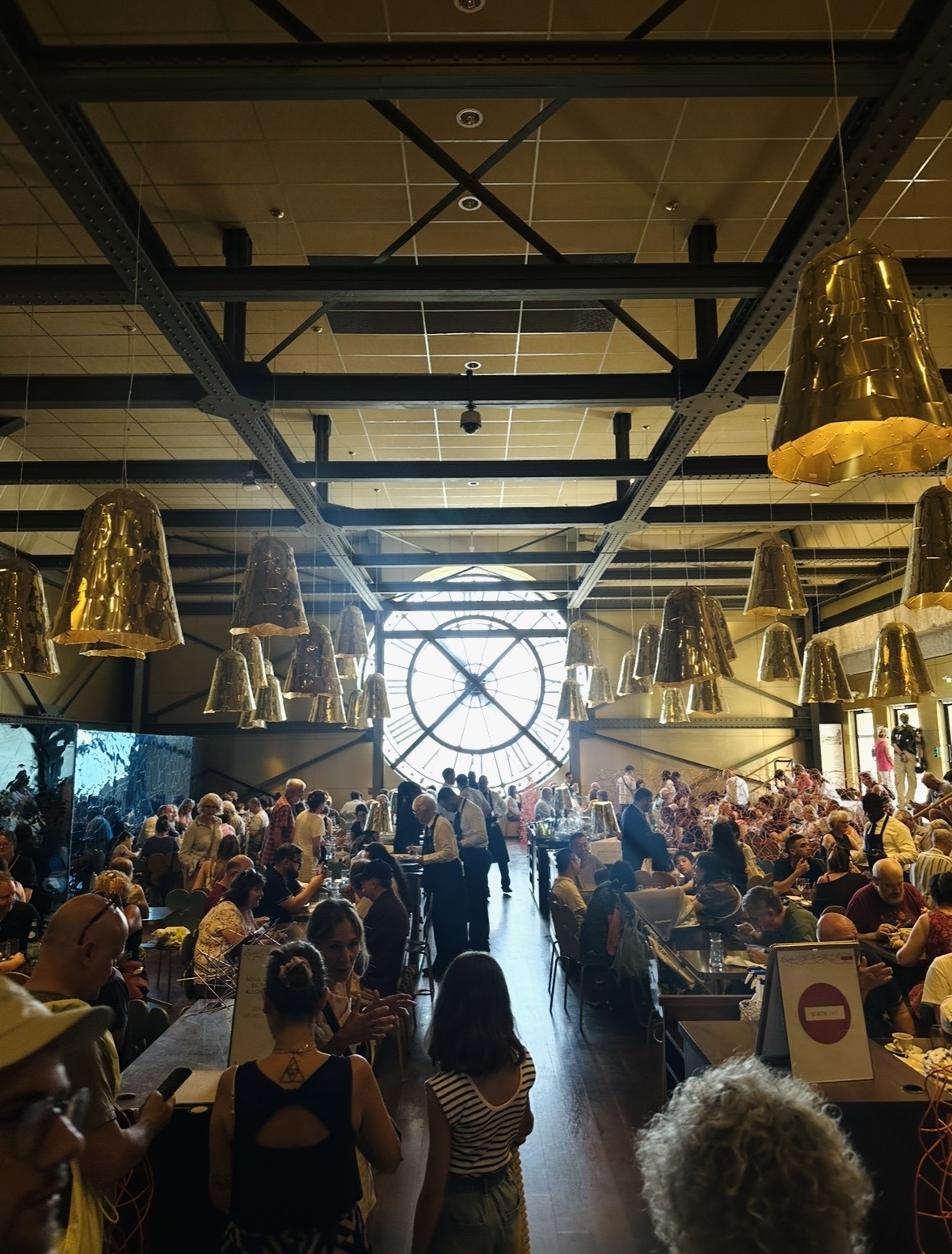
The clock inside Cafe Campana on the 5th floor
But don’t miss Café Campana on the upper floor either. The restaurant is centered around another magnificent station clock, creating one of the most beautiful dining atmospheres in Paris. You will walk past it when going to the Van Gogh exhibits. Even if you’re not stopping for a meal, you are sure to admire the clock and the unique setting!
Tips for Visiting the Musée d’Orsay Clock
- The clock is located on the museum’s upper level.
- Visit during daylight hours for the best views through the glass.
- Expect a small crowd, but people usually move quickly, making it easy to get photos.
- Try capturing both sides of the experience- photograph the clock from a Seine cruise or across the river, then recreate the view from behind it inside the museum.
Final Thoughts
Paris is full of famous viewpoints – the Eiffel Tower, the Arc de Triomphe, and the steps of Sacré-Cœur all come to mind.
Yet one of the city’s most memorable views is hidden inside a museum, behind a century-old clock that many visitors never think to explore.
It’s a simple reminder that sometimes, the best travel experiences aren’t about seeing a landmark.
They’re about seeing the world through it.
Leave a Reply