Turning up suction alone often does not help, which is why many parents still feel stuck even on a strict schedule. A breast pump for increasing milk supply works best as a tool for following a realistic pumping plan, not as a medical promise that output will rise on its own. This guide covers why frequency beats max suction, how to run a power pumping block, how flange fit limits output, and when to get help if a week of consistent effort still does not move your output.

A mother uses a hands-free wearable breast pump while working on her laptop.
Why frequency matters more than suction strength
When milk is taken out, whether by nursing or pumping, the body keeps producing to replace it. Leave the breast fuller for longer, and production slows to match. That’s the basic loop, and suction strength mostly misses the point.
Turning the pump up past a comfortable level causes tissue stress and pain. Pain triggers a stress response that works against the hormone responsible for letdown. A session running at maximum suction but starting in discomfort often produces less than a gentler session that actually empties the breast. A parent who adds an extra session before breakfast for four consecutive nights often sees a shift by day three. A parent who cranks the suction on existing sessions and runs them longer usually doesn’t.
The variable your body responds to is how often milk leaves, and how completely each time. Adding sessions, even short ones, stacks those removal signals across the day in a way that one longer session doesn’t replicate. An extra session at an inconvenient hour compounds over several days. Turning up the suction on the sessions you already have usually does not.
How power pumping works and what the schedule looks like
The idea behind power pumping is to stack removal signals inside a single hour rather than spreading extra sessions across the whole day. Babies do this naturally during growth spurts, nursing in short bursts over one to two hours until supply catches up. A common one-hour schedule looks like this:
The rest breaks matter. Turning the pump off and back on helps trigger letdown again, which a continuous hour does not replicate. Do not skip them.
How to run the block
|
Planning item |
What to do |
What to avoid |
|
Before you start |
Track normal session totals for a few days |
Judging results after one session |
|
How often |
1 block per day |
2 blocks per day without a clear reason |
|
How long |
3 to 5 consecutive days |
Running past a week without a break |
|
When to expect change |
Often by day 2 or 3; about ½ oz more per session vs baseline can be real progress |
Expecting an immediate jump |
|
If output still feels stuck |
Pause and recheck flange fit and comfort |
Pushing through soreness to add more blocks |
Why flange fit limits on how much you can express
Most pumps ship with a 24 mm or 28 mm default flange. Nipple diameter varies considerably between individuals, and a size that fits one person may not work for another. A flange that doesn’t match your anatomy creates problems that no amount of schedule adjustment or suction change can fix.
|
Issue |
Flange too large |
Flange too small |
|
What enters the tunnel |
Too much areola drawn in |
Nipple is pinched at the base |
|
Effect on tissue |
Friction, swelling, potential duct blockage |
Compression of milk channels |
|
Effect on session |
Feels less effective despite full suction |
Becomes painful early, limiting letdown |
|
Long-term risk |
Repeated soreness, reduced emptying |
Reduced flow, earlier fatigue |
If output hasn’t moved despite consistent sessions, fit is worth checking before adjusting anything else. Measure your nipple diameter while relaxed and compare it against the sizing chart for your pump model. The nipple should move freely inside the tunnel without rubbing the walls, with minimal areola tissue pulled in.
Discomfort during pumping is a signal worth taking seriously. The body doesn’t produce more in response to pain, and pushing through a poor fit rarely improves with time.
If you are replacing flanges or comparing pump models, measure first. A prime day breast pump deal only helps when you already know your flange size, not when you are guessing under a time limit.
Making more sessions sustainable with the right equipment
The most common barrier to pumping more often isn’t motivation. It’s that each session interrupts whatever else needs to happen. Setting up, sitting near a wall outlet, waiting for the session to finish, and cleaning up take time that many parents cannot spare every day. If the routine breaks down too much to sustain, frequency falls apart before the body has time to respond.
A wearable pump changes what a session actually costs. With the motor and cup inside the bra, there’s no visible setup, no chair required near an outlet, and no need to stop moving. A power pumping block can run during breakfast, a commute, or a meeting without adding a separate task to the morning.
If you are choosing gear for a higher-frequency plan, a double electric breast pump vs a single model is mostly a time question, while the double electric vs wearable breast pump choice is about where sessions happen. Singles empty one side at a time and add setup, doubles empty both sides but keep you at a chair and outlet, and wearables fit the extra session between meetings or on a commute. What matters is not the category on the box, but whether you can keep the schedule long enough for your body to respond.
The eufy Wearable Breast Pump S2 Pro fits into this kind of schedule. The hands-free design means less gear to manage between sessions, which matters when the day does not have obvious breaks. Heatflow™ 2.0 adds warmth to support letdown when a rushed schedule makes it harder to relax. The 7-day wireless charging case can top up both units between sessions, so you are not waiting on a wall outlet every time.
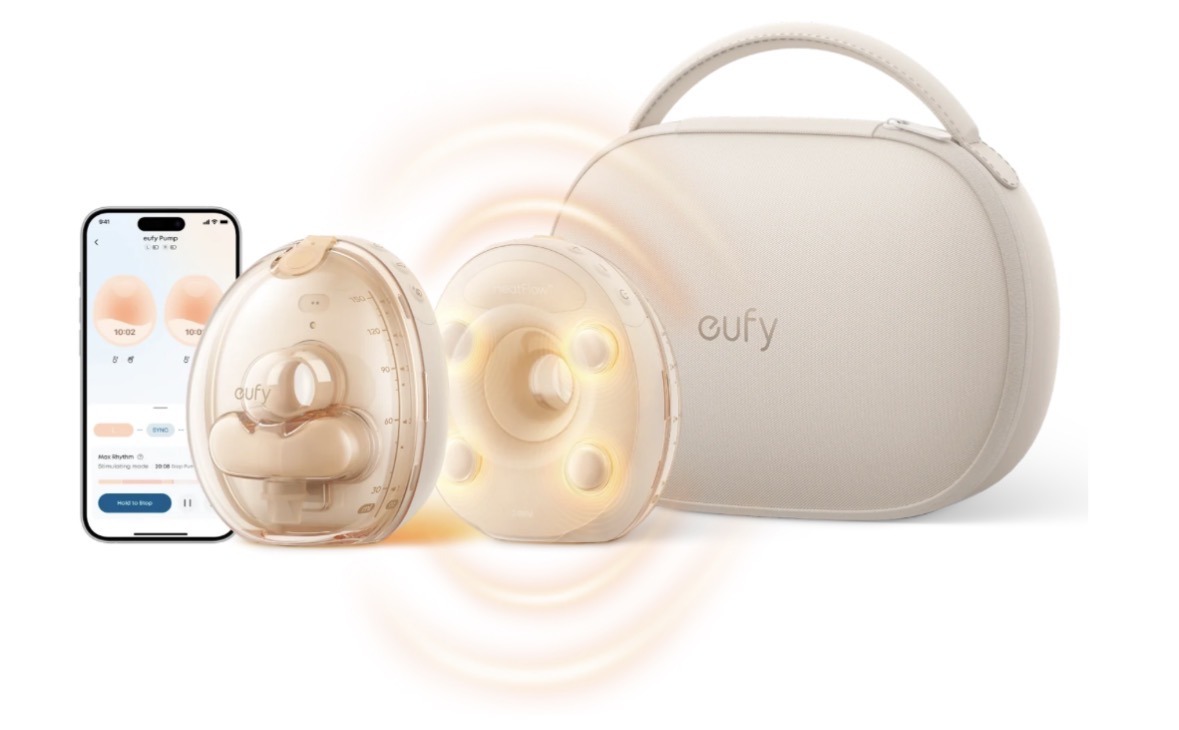
eufy Wearable Breast Pump S2 Pro
When to adjust your approach and when to ask for help
Pumping frequency is one input. Sleep, food, and hydration are others, and they affect production in ways an extra session can’t compensate for. A parent running on severely fragmented sleep, skipping meals regularly, or not drinking enough throughout the day is working against the demand signal that pumping creates. Addressing those basics sometimes produces more improvement than adding a session, and it’s worth being honest about them before concluding the pump isn’t working.
If a consistent week of power pumping, a correct flange fit, and reasonable attention to sleep and nutrition still don’t shift output, that’s worth noting rather than ignoring. It suggests the issue may lie outside what schedule adjustments can reach. Hormonal shifts, thyroid conditions, and certain medications can all affect supply in ways that pumping frequency doesn’t address.
An IBCLC can review session logs, latch quality if you are also nursing directly, flange sizing, and letdown patterns in a way that a general guide cannot. One week of consistent tracking gives a consultant enough data to work with. If that’s where you are, and output still hasn’t moved, reaching out is a more productive step than adjusting the schedule further on your own.
Pumping more often does move the supply for most people. The mechanism works when sessions are comfortable, the fit is right, and the schedule holds long enough to accumulate demand signals over several days. Frequency matters, but it’s not the only input, and adding sessions to a setup that’s already uncomfortable or unsustainable doesn’t change the underlying problem.
If the routine itself is a barrier, that’s worth fixing first. For parents comparing wearable and traditional options, the eufy breast pump collectionlists the main models with part counts, design differences, and accessories in one place.
Leave a Reply