A beautiful home should not require everyone to tiptoe around it.
The best family spaces feel polished, comfortable, and ready for everyday life. They make room for children, guests, pets, and changing routines without losing their sense of style.
When you are ready to update a room, Serena & Lily home furniture can inspire an elevated look through relaxed silhouettes, natural materials, and thoughtful details. The key is choosing pieces that support the way your household lives instead of decorating for an imaginary, perfectly tidy family.
Pic – Curtis Adams
Decide How the Room Needs to Work
Before thinking about colors or trends, list the activities that happen in the room. A living room may also serve as a play area, homework station, and place to entertain. A dining table might host crafts and laptop work as often as meals.
This helps you prioritize the right features. A deep sofa may suit movie nights, while firmer seating can be easier for older relatives to use. Storage may matter more than an extra chair. When function is clear, quality home furniture becomes easier to choose.
Measure More Than the Floor
Room dimensions are just the starting point. Measure doorways and hallways, window heights, and anything you need to pass or aim to draw attention to. Space plan keeping in mind your need for a clear path and consideration for drawers that must be pulled in and out or chairs that need to be pushed in and out.
Outline the space where a potential new piece will go with painter’s tape. Block walking paths? So will the piece of furniture. Proper scale will make a room look and feel bigger.
Choose a Flexible Palette
Adaptability matters in a family home. Think in terms of giving a wide berth to anything loud and new. Start with neutrals and warm woods, woven textures and shapes that everyone can agree on. Anchor your space with furnishings and materials that can absorb, not compete with, color.
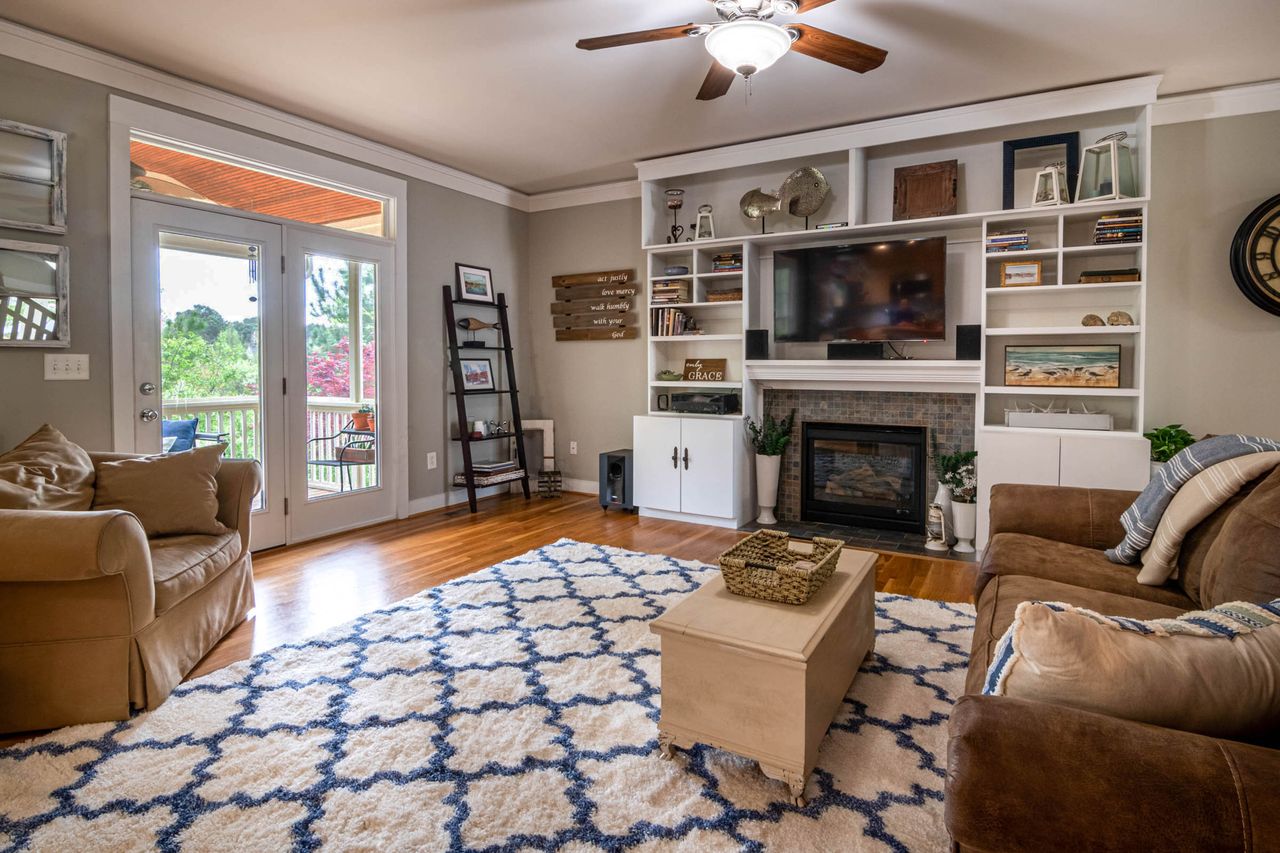
“Neutral” doesn’t mean cold or dull. The living room above includes cream, sand, and soft grey on the sofa; weathered blues on the chairs; rust, red and some brighter blues in the art. It’s the palette from which everything else can flow.
Let Texture Create Personality
Texture is a super easy way to make a room feel thoughtful without cluttering it up with stuff. Smooth wood with something woven. Crisp cotton with a fun, squishy throw. A tailored sofa with a floppy pillow. All of these things will keep your space feeling quiet and put-together.
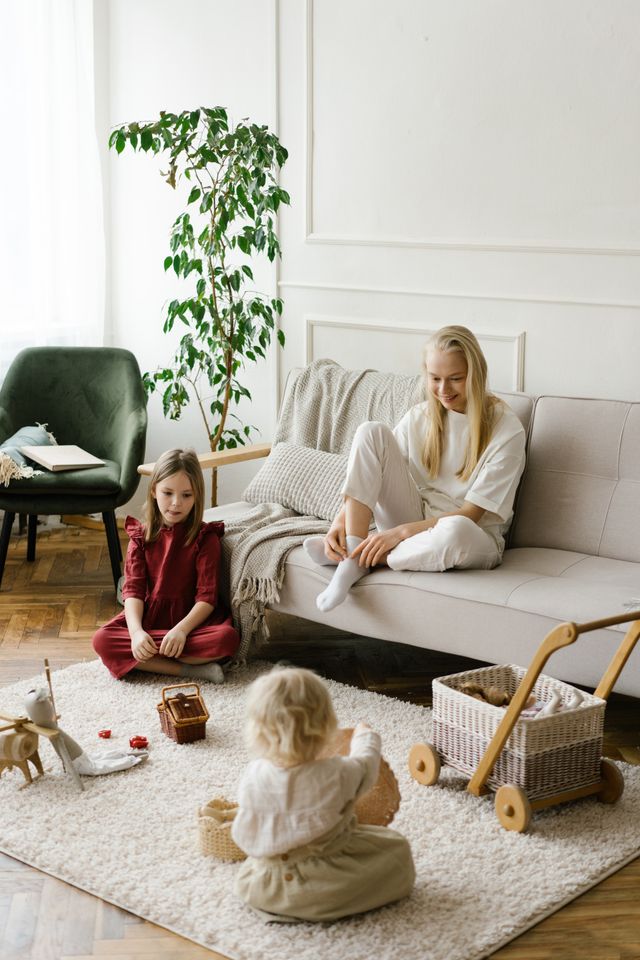
The utilitarian approach can also work. An open storage basket becomes a decorative element. A machine-washable rug keeps things cozy and provides a place for the kiddos to read.
Mikhail Nilov
Invest Where Family Life Is Hardest
You don’t have to spend a fortune on every item in your house. Just keep the majority of your budget to the things that get a lot of you in them. A well-made, comfortable sofa or bed is going to be more valuable than a fun side table or a throw pillow. Dining chairs and a bookshelf you use everyday are going to be worth more of your budget than a vase or seasonal decorations.
Make sure the construction is solid, the fabric is cleanable, the cushions are reversible/supportive, and that the maintenance isn’t a total hassle. When buying a sofa, focus on the things that you can fix or change (like the cover). The color won’t stain as easily and you’ll be able to enjoy your luxury home furniture in your actual home. You don’t have to buy curtains and couch protectors for everything or for every person who lives in your house.
Mix Pieces Instead of Buying a Set
Rooms often feel warmer when they look collected over time. Rather than buying every item from one matching range, connect different pieces through a repeating element. That might be a wood tone, curved shape, woven texture, or accent color.
Two or three main finishes are often enough. Repeating each finish helps the mix look deliberate, creating a space that feels personal but still organized.
Make Comfort Part of the Design
Comfort is not separate from style. Seat depth, arm height, cushion firmness, and fabric feel all influence whether people use a piece. When possible, test important furniture or compare its measurements with an item you already find comfortable.
Think about the least adaptable household member, too. Young children need stable pieces without fragile details. Older adults may appreciate supportive backs and arms. Pets can influence fabric and color choices. Designing around real needs creates a room that welcomes everyone.
Finish Slowly and Leave Space
Once the primary furnishings are in place, don’t be tempted to fill up every inch of your walls or flat surfaces all at once. Negative space allows the statement pieces to shine and for the space to become what it wants to be. Fill it in slowly with lighting, textiles, art and personal belongings.
A well-made, family-friendly home is built piecemeal, over time, with a balance of usefulness and comfort and allows for life’s changes and surprises. When your furnishings are suited to your family as well as to your space, living is easier, and your home will look fabulous as a matter of course.
Leave a Reply