Our recent trip took us from Nagpur to Wardha, where we first stopped to finish some work before heading to a place I had always wanted the kids to experience — Sevagram Ashram. Nestled in a quiet corner of Wardha, Sevagram is not just a historic site but a living reminder of Mahatma Gandhi’s philosophy of simplicity, truth, and self-reliance.
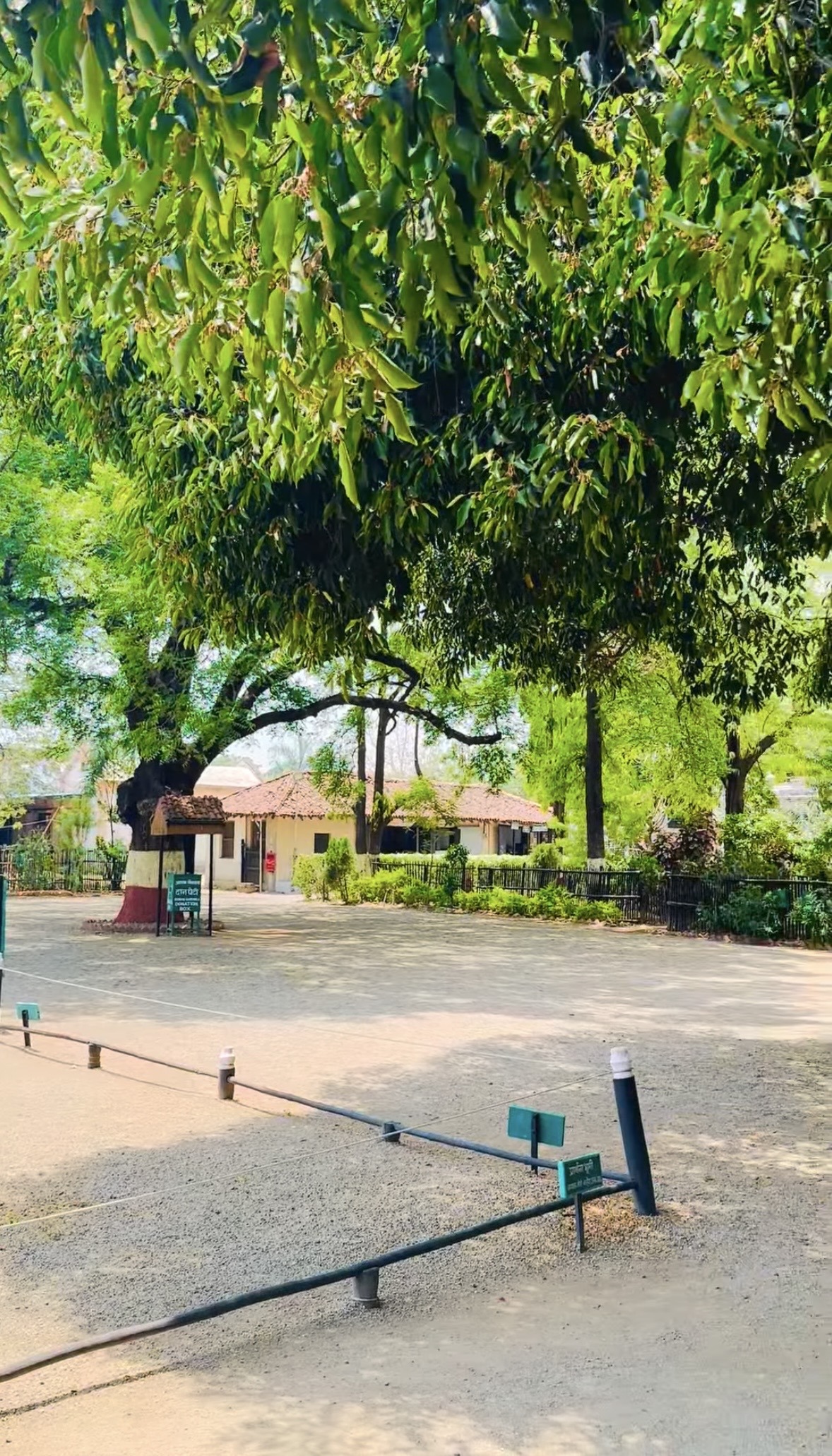
The Ashram Experience
As soon as we entered the premises, we were struck by the stillness of the place. It felt as though time had slowed down, and we had stepped into an era when khadi, charkhas, and mud huts symbolized a movement that changed India’s destiny.
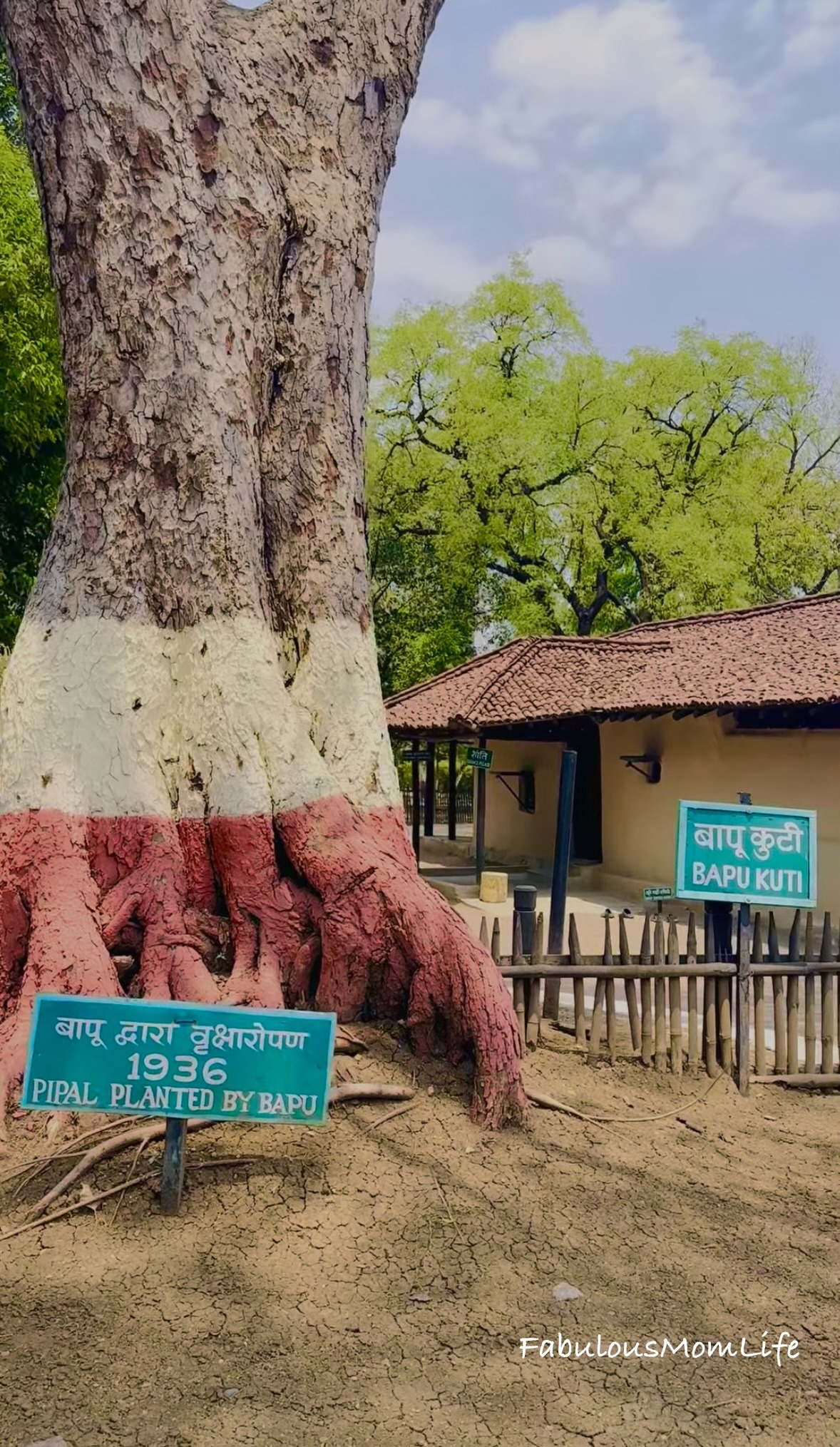
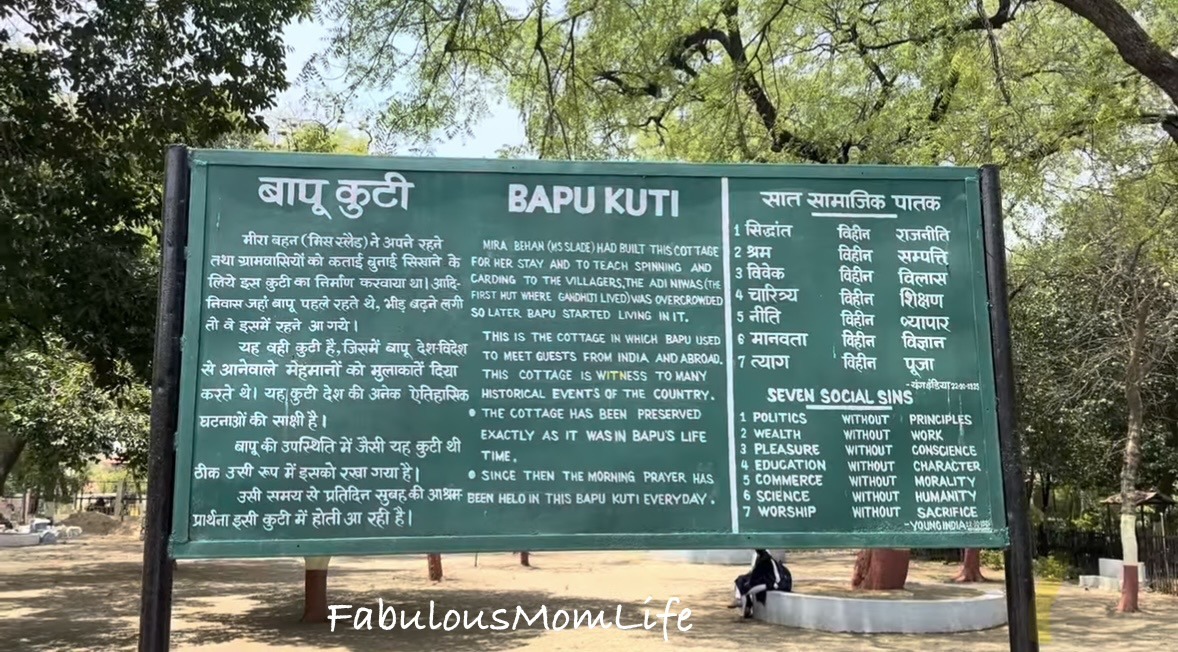
The ashram is made up of several kutis (cottages), each with its own story to tell. We walked through Bapu Kuti (Mahatma Gandhi’s own hut), Ba Kuti (where Kasturba Gandhi stayed), and others that once housed Gandhi’s companions, visitors, and followers.
What made the experience truly enriching were the dedicated volunteers stationed at each kuti. They welcomed us warmly and shared the stories of what had happened within those walls. These volunteers are not guides in the commercial sense — their work is entirely selfless, and the wealth of knowledge they carry makes them nothing short of living encyclopedias of Gandhiji’s life.
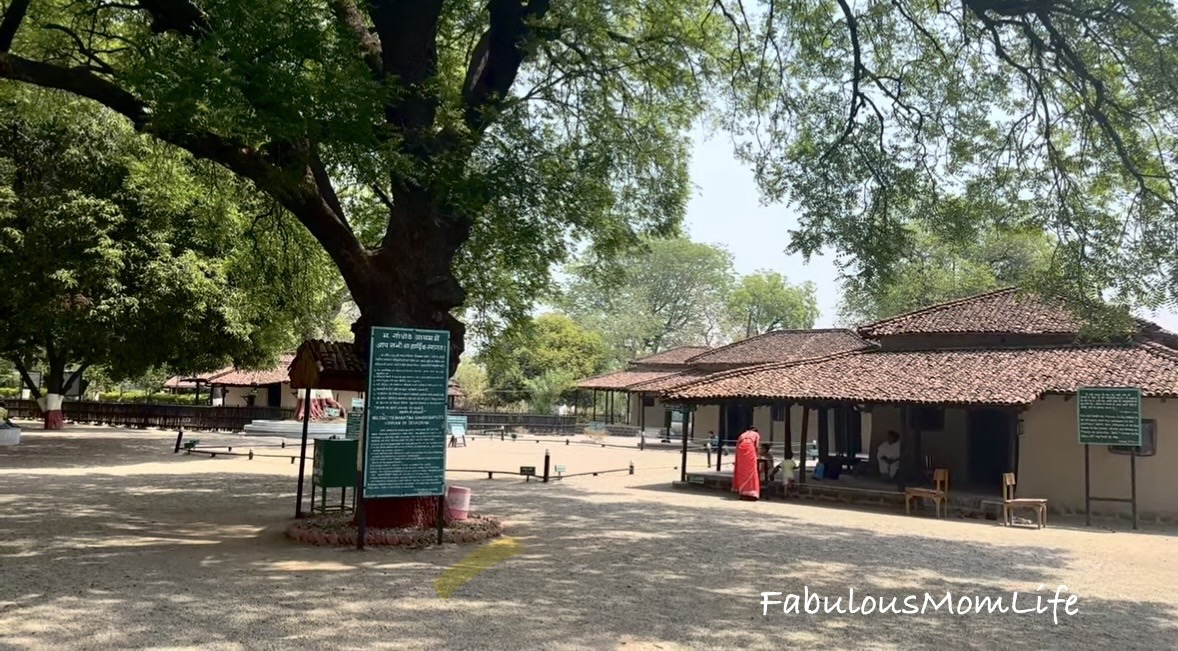
Stories that Stay with You
The highlight of our visit was the time we spent in Bapu Kuti. The volunteer there spoke to us — and especially to the kids — about Gandhiji’s everyday habits. She shared how, no matter how busy his day was, Gandhiji always set aside time to read a few pages and write something down daily. It was his way of nourishing both the mind and the spirit.
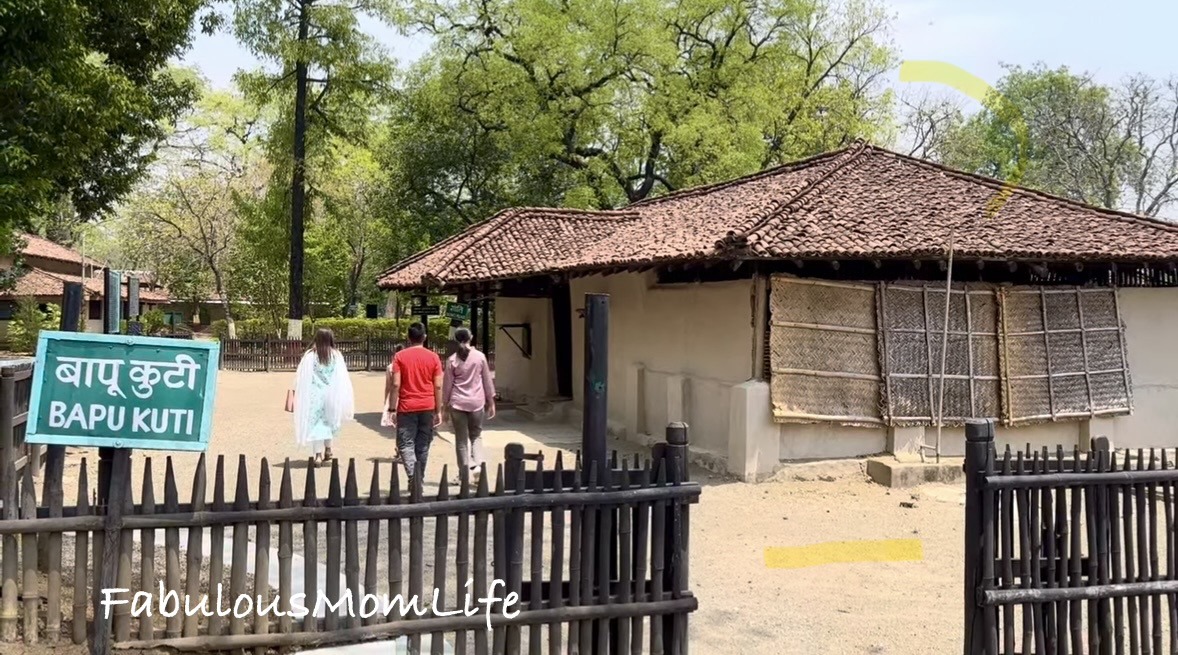
Listening to her, I could see the children’s eyes light up with inspiration. The simplicity of the lesson — to read and write something every day — felt timeless and immediately relatable. It was heartwarming to see history come alive for them in such a personal way.
Cotton to Cloth – A Living Legacy
Another memorable stop inside the ashram premises was the “Cotton to Cloth” workshop. Here, women are employed in spinning, weaving, and sewing — skills that Gandhi ji had encouraged as part of India’s journey to self-reliance. We watched cotton being transformed into threads and then into cloth, a process so closely associated with Gandhiji and the khadi movement.
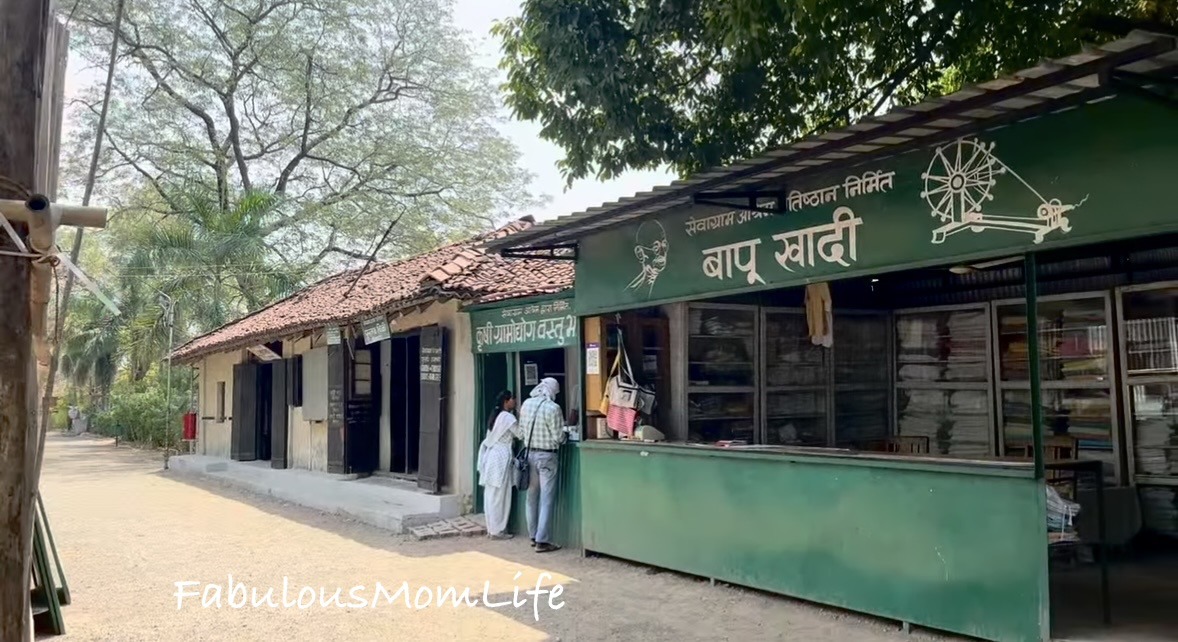
From there, we made our way to the ashram shops, which sell a variety of handmade products. We picked up a few books on Gandhi’s life and legacy, a khadi kurta for my son, and some other practical items like massage oil for pain relief, homemade pickles, and more. Each item felt like it carried a piece of Gandhian philosophy back home with us.
Lunch at Aahar Kendra – Tradition on a Plate
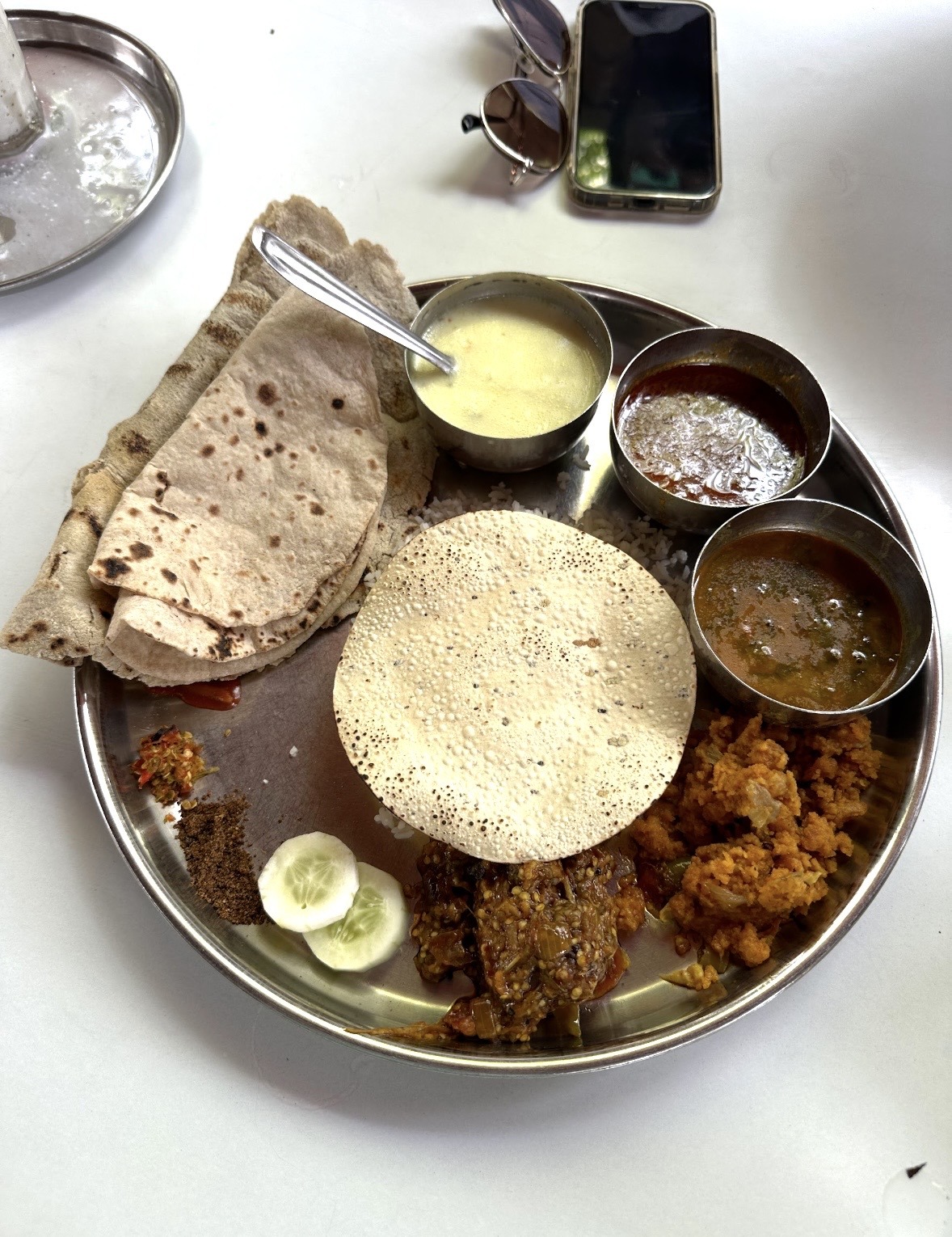
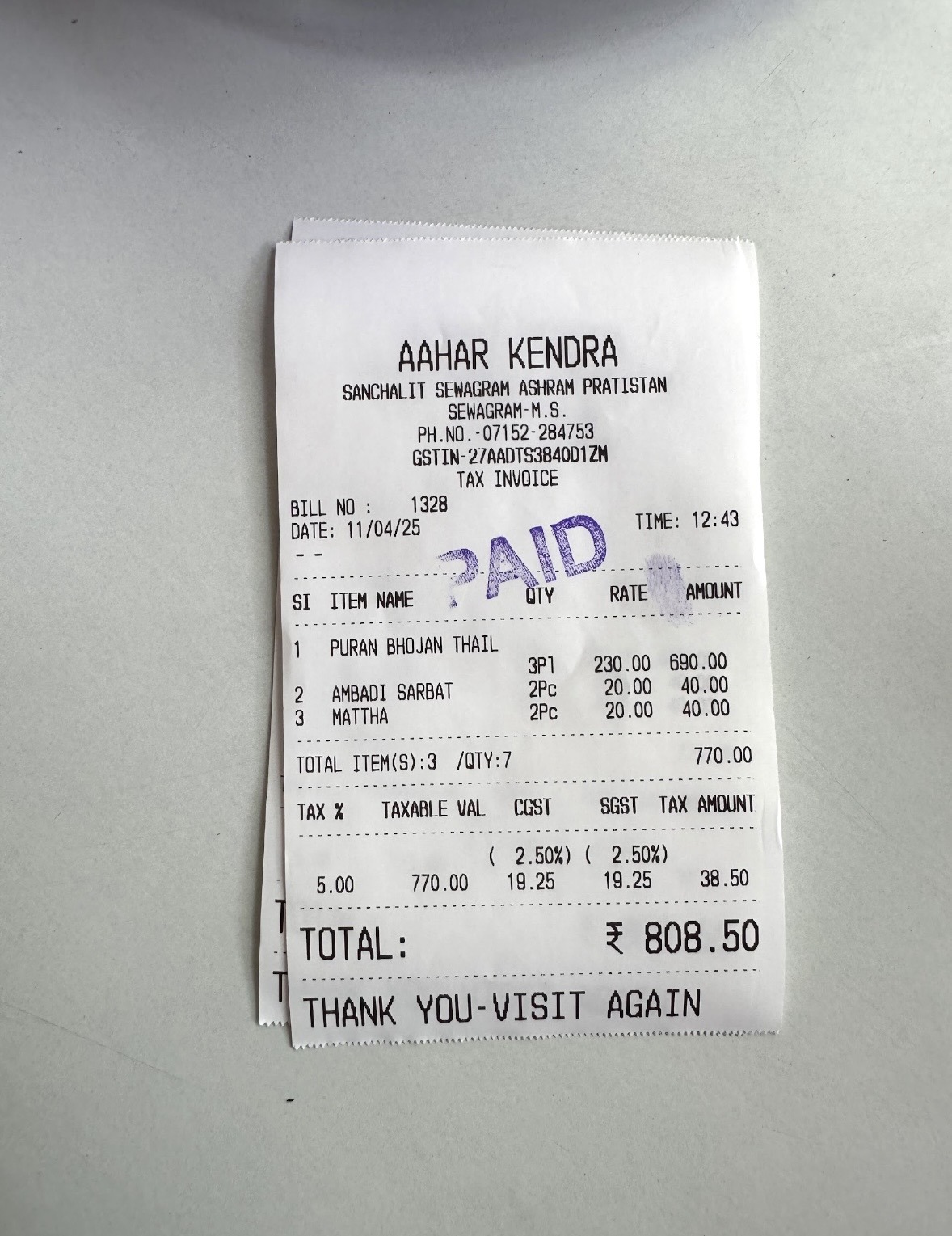
After leaving the ashram, we crossed the road to the Aahar Kendra, a place as iconic as the ashram itself. Established with the idea of providing wholesome, affordable, and traditional meals to ashram visitors, it has become a beloved stop for both locals and travelers. The philosophy behind it is similar to Gandhiji’s own — simple, nourishing food that reflects the land and culture of Maharashtra.
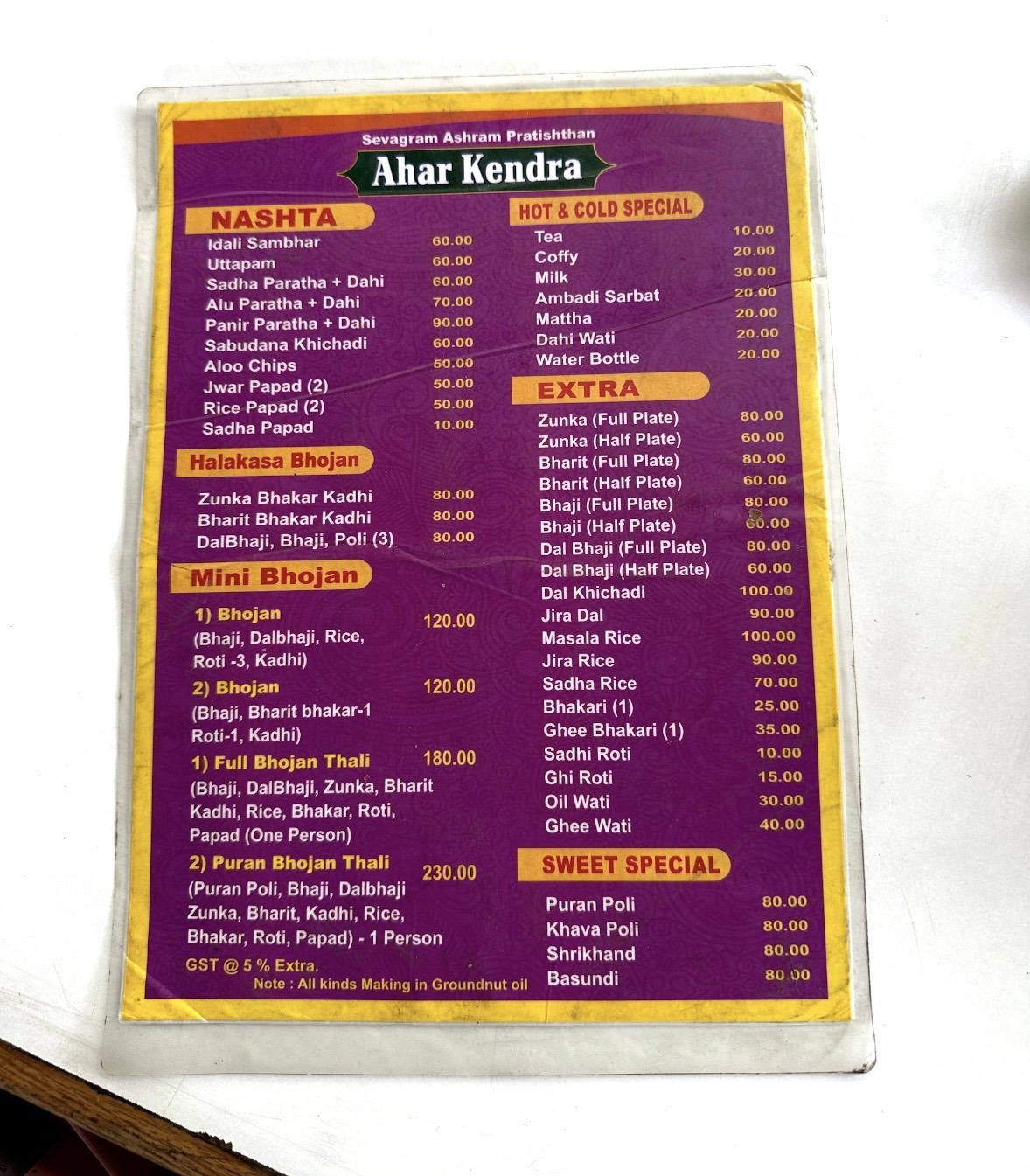
Lunch Menu at Aahar Kendra, Sevagram
We settled down for a hearty Maharashtrian set thali — complete with Bhaji, Dal bhaji, Zunka, Bhakri, Bharit, Kadhi, Rice, Roti, Papad, and the star of the meal, Puran Poli. To beat the summer heat, we tried the Ambadi Sharbat, a refreshing drink made of roselle leaves. It was so good that we bought a few bottles to take back home.
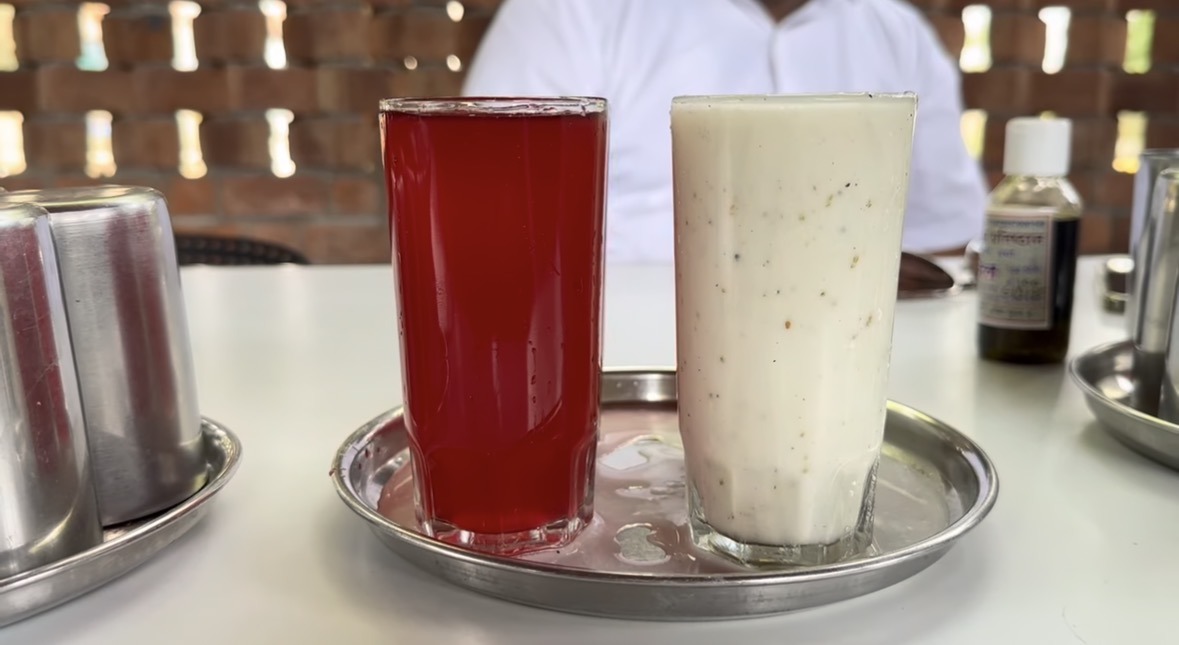
Ambadi (Roselle) sharbat and Mattha
The space itself is simple but very thoughtfully maintained — clean, green, and shaded with trees. Modern comforts are blended with old-fashioned Indian sensibilities. One touch that really stood out was the presence of a matka (earthen pot) on each table for water, instead of plastic or bottled water. Drinking cool matka water directly at the table felt both authentic and sustainable.
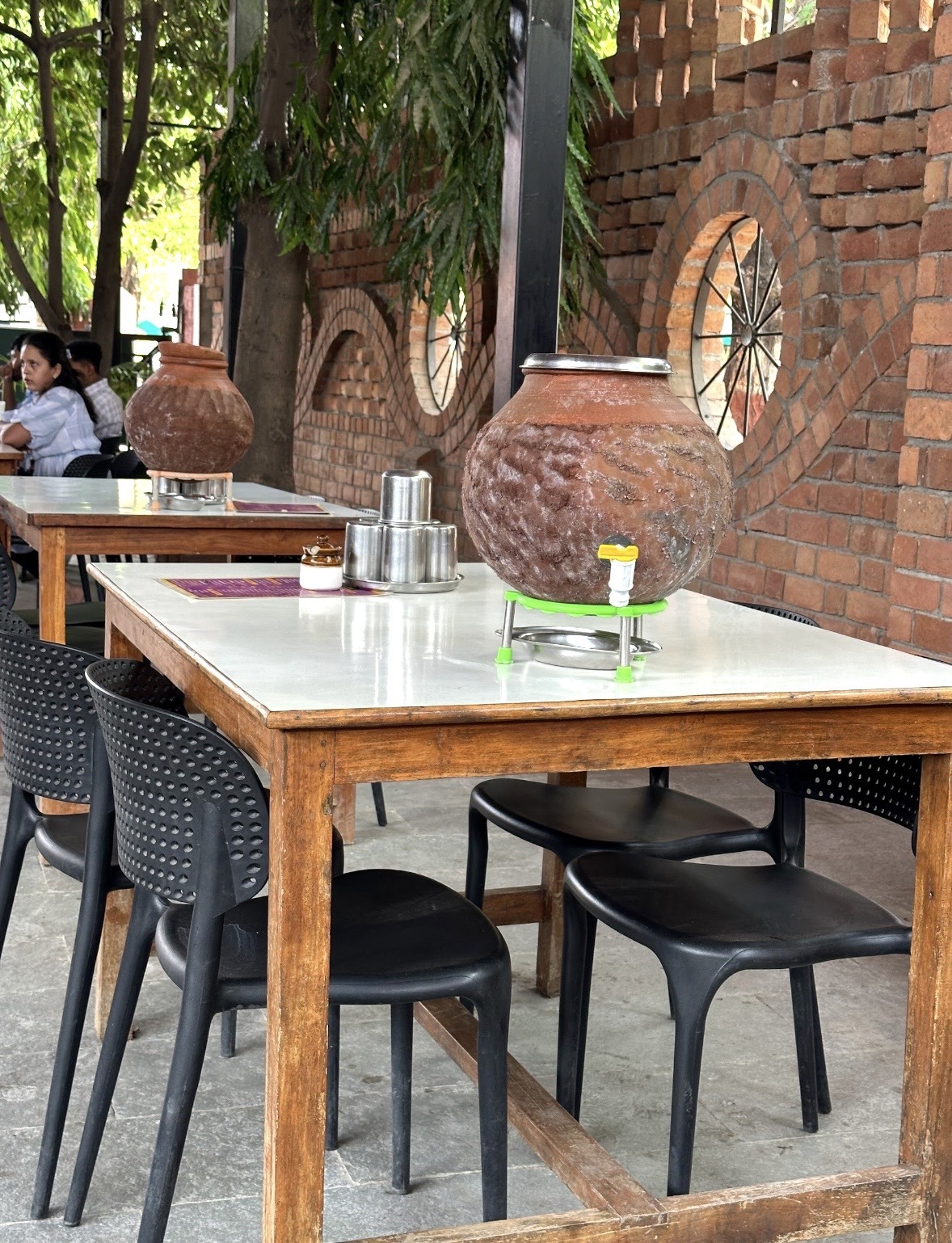
For those looking for an even simpler experience, the Aahar Kendra also has a traditional dining hall where meals are served on the floor at a lower cost.
Before leaving, we couldn’t resist a glass of ganne ka ras (sugarcane juice) from a vendor just outside the Aahar Kendra — the perfect way to end our meal before heading back.
Beyond Sevagram – Next Time on the List
On our drive back to Nagpur, we passed by Paunar Ashram, established by Vinoba Bhave, one of Gandhi’s closest associates and the founder of the Bhoodan Movement. Although we didn’t stop this time, we plan to include it on our next trip — it promises another deep dive into India’s spiritual and social history.
Final Thoughts
Our day at Sevagram Ashram was more than just a family outing; it was an immersion into history, simplicity, and values that continue to inspire even today. From the wisdom shared by volunteers in the kutis, to the hum of spinning wheels in the workshop, to the earthy taste of a Maharashtrian thali at the Aahar Kendra – everything about Sevagram reminded us that true greatness lies in living simply, meaningfully, and with purpose.
Sometimes, the most ordinary-seeming journeys turn out to be the most extraordinary — and our visit to Sevagram was exactly that.
Practical Travel Guide: Visiting Sevagram Ashram
📍 Location: Sevagram, 8 km from Wardha city, about 75 km from Nagpur (1.5–2 hours by road).
⏰ Timings: 9:00 am to 6:00 pm (closed on Mondays). Morning hours are more peaceful and less crowded.
🎟 Entry Fee: Free. Volunteers provide information at no cost — but do spend some time listening, as their insights are invaluable.
🚗 How to Reach:
-
By Air: Nearest airport is Nagpur.
-
By Train: Wardha is a major junction and well-connected by rail.
-
By Road: Taxis, buses, or private cars from Nagpur take about 1.5 hours.
🛍 What to Buy:
-
Books on Gandhi’s life and philosophy
-
Khadi clothing and hand-spun fabrics
-
Homemade pickles, oils, and eco-friendly products
🍲 Where to Eat:
-
Aahar Kendra (across the road from the Ashram): Affordable, traditional Maharashtrian thali meals. Don’t miss the Ambadi Sharbat and Puran Poli.
👨👩👧👦 Visiting with Kids:
-
Highly recommended! Volunteers often narrate Gandhiji’s habits and stories in ways children can connect with.
-
The ashram is peaceful and open, so kids can walk around freely.
🌿 Tips:
-
Carry a hat or umbrella in summer, as much of the ashram is open-air.
-
Wear comfortable footwear for walking.
-
Respect the calm, reflective environment of the ashram.
-
Combine the trip with a stop at Paunar Ashram (Vinoba Bhave’s ashram), just a short drive away.
Leave a Reply