Rice is the dish most families cook without thinking, right up until it sticks, scorches, or turns to porridge. Nine times out of ten the pot is the culprit, not the cook. A thin pan with a loose lid will fight you every single time, while a heavier, well-sealed pot does most of the work on its own.
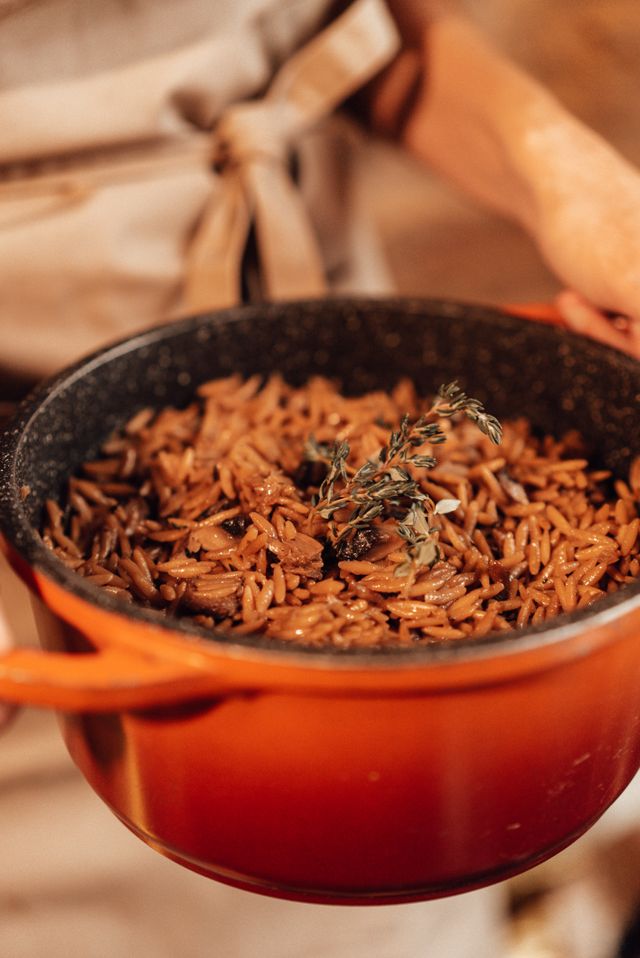
Pic – furkanfdemir
Here’s what matters when you’re choosing one.
The Lid Does Half the Cooking
Rice cooks by absorbing water and then steaming in its own trapped vapor. If steam escapes around a wobbly lid, the water leaves before the grains have finished drinking it, and you get crunchy centers with a dry top layer.
Look for a lid that sits flush and has real weight to it. Pots with a narrow opening relative to the body hold moisture better during slow cooking, which is exactly the behavior rice needs during the final quiet stretch after the heat goes off.
Glass lids with a small steam vent, common on traditional cast aluminum pots, let you watch the water level drop without lifting and releasing all that steam. That’s a small thing that saves a lot of guesswork.
Thermal Mass or Quick Response
Two different pots can both cook good rice, but they behave in opposite ways.
Earthenware and cast iron carry a lot of thermal mass. They absorb heat slowly and release it slowly, so once you drop the burner to its lowest setting, the simmer stays gentle instead of pulsing. That same steadiness is what makes them good for long braises and keeps the bottom layer of rice from catching.
Stainless steel and lightweight aluminum react fast to burner changes. On a busy weeknight that responsiveness is handy, because you can pull the heat down the second the water boils over. They’re less forgiving if you walk away.
Cast Iron, Ceramic, Aluminum, or Steel
Earthenware and Glazed Ceramic
Heats slowly, holds warmth, produces soft and evenly steamed grains. The tradeoff is fragility: moving a hot ceramic pot straight into a cold sink can crack it, so these need gentler handling than most family kitchens are used to.
Cast Aluminum
The rounded caldero shape, long used for rice, beans, and stews, heats quickly and seasons over time. The wide handles and curved interior make scooping and washing easy, which matters when you’re doing it four nights a week.
Enameled Steel and Enameled Cast Iron
Porcelain enamel over a steel core heats evenly, resists staining, and wipes clean because the surface is non-porous. Enameled cast iron goes further on heat retention and doubles as bakeware. Watch for chips in the enamel, since bare steel underneath will rust.
Stainless Steel
Nearly indestructible, dishwasher-safe, and the best choice if you live somewhere with hard water, because mineral deposits rinse off a smooth steel surface instead of staining it.
Why a Bean Pot Handles Rice So Well
The qualities that make a pot good for a long pot of beans (thermal mass, a lid that seals, a shape that limits evaporation) are the same ones that make rice behave. That’s why so many households use one vessel for both, and why a dedicated rice-only pot is usually unnecessary.
Once you’ve decided you want something heavy-bottomed and lidded rather than a thin saucepan, the next step is comparing actual pots by quart size, material, and lid design, and a buyer’s guide to the best bean pot covers those same specs in a way that transfers directly to rice night. The 3.5 to 5 quart range that suits a one-pound batch of dried beans also covers a generous family pot of rice with room for the grains to expand.
Bean pots take on soups, stews, braised meats, and bread baking too, so a pot bought for rice doesn’t have to sit idle the rest of the week.
Sizing the Pot to What You’re Feeding
A pot that’s too large spreads a thin layer of rice across a wide floor, which dries out the edges. Too small and the water boils over before anything is absorbed.
- Three to four quarts suits most families cooking a standard batch, and it stores on a normal shelf.
- Five quarts gives you headroom if you regularly cook for guests or make extra for the freezer.
- Seven quarts and up is bulk territory, useful if you batch-cook on weekends but awkward for a Tuesday side dish.
Check Your Cooktop Before Anything Else
Compatibility is the quiet dealbreaker. Cast aluminum has no magnetic base, so it won’t work on induction at all, while cast iron and stainless steel do. Glass cooktops do better with lighter pots, since a heavy cast iron piece dragged across the surface will scratch it. Gas and electric ranges handle everything.
Match the lid, the material, and the size to how often you actually cook rice, and the pot stops being something you fight with every weeknight.
[…] lettuce. Chop onions. Cook rice. Roast vegetables. Portion snacks. Make a sauce or dressing. Even 20 minutes of preparation can […]