Homeschooling has come a long way from being a relatively niche educational choice. Across the United States and many other parts of the world, more families are exploring alternatives to conventional schooling and considering whether learning at home might better suit their children’s needs.
For some families, homeschooling offers flexibility, personalised instruction and the freedom to shape a child’s education around individual interests and abilities. For others, it may not be practical – or even desirable.

Image – RDNE Stock project
The reasons parents consider homeschooling are equally varied. A child may be struggling in a traditional classroom, pursuing competitive sports, managing a medical condition or simply learning at a different pace. Some families want more time together, while others prefer an educational philosophy that places less emphasis on standardised testing and more on independent exploration.
Despite its growing popularity, homeschooling is still widely misunderstood. Some people imagine children studying alone at the dining table with little social interaction. Others assume homeschooled children outperform everyone else academically. The reality is far more nuanced.
Homeschooling is not a single educational method, nor is it automatically better or worse than attending a conventional school. It is an alternative approach that can work exceptionally well for some children and families, but requires considerable planning, commitment and parental involvement.
So, who should actually consider homeschooling? What does it involve, what are its advantages and disadvantages, and how can parents decide whether it is the right choice?
Let’s take a closer look.
What Is Homeschooling?
Homeschooling is an approach to education in which parents or guardians take primary responsibility for their child’s education rather than relying on a conventional school as the main provider of instruction.
This does not necessarily mean parents teach every subject themselves or recreate a traditional classroom at home.
Homeschooling families may use a combination of:
- Structured homeschooling curricula and textbooks
- Online courses and virtual learning programmes
- Private tutors and subject specialists
- Educational apps and digital resources
- Homeschooling cooperatives and community classes
- Libraries, museums and educational outings
- Sports clubs, music lessons and art classes
- Independent projects, experiments and practical activities
Some families follow a structured timetable similar to a traditional school. Others adopt a more flexible approach, allowing children to spend additional time exploring subjects that interest them.
The amount of parental involvement also varies. Younger children generally need more direct supervision, while older students may increasingly manage independent study, online courses and research projects.
The central idea is that education is organised around the child’s learning needs rather than being entirely determined by a school’s timetable and classroom structure.
Different Types of Homeschooling
One common misconception is that homeschooling always involves a parent teaching several subjects at home every day. In reality, families can choose from several approaches.
Understanding these differences can help parents identify an educational model that fits their circumstances.
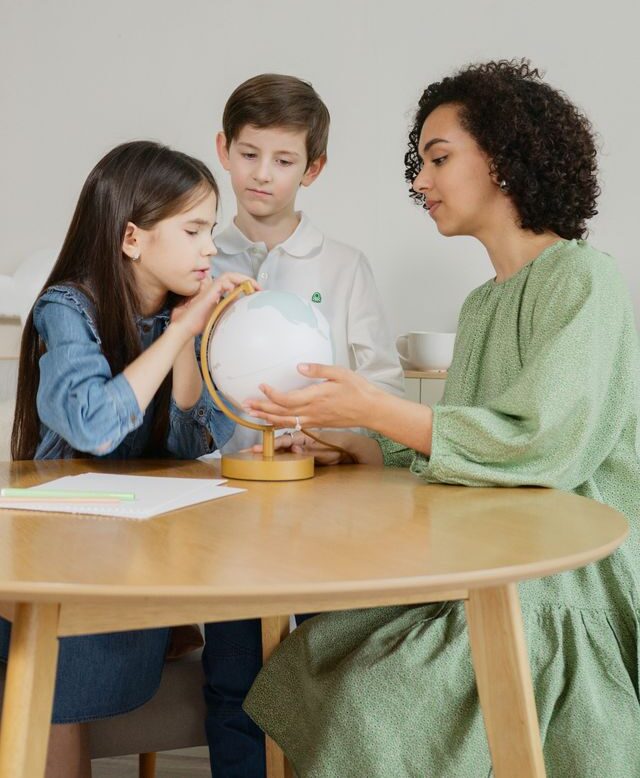
Image – Artem Podrez
1. Traditional or Structured Homeschooling
This approach most closely resembles conventional schooling.
Parents select a curriculum, textbooks and learning materials, and children study subjects such as mathematics, science, English, history and geography according to a planned schedule.
Lessons may include worksheets, assignments, tests and regular assessments.
It can be a good option for families who want greater control over their child’s education but still prefer a structured academic programme.
2. Online Homeschooling
Online homeschooling uses digital courses, virtual classrooms and educational platforms to deliver instruction.
Children may watch recorded lessons, attend live classes, complete assignments and take online assessments.
Some programmes provide a complete curriculum, while others allow parents to select individual subjects.
It can be particularly useful for families who need access to specialist teachers or want a more structured programme without depending entirely on parents to teach each subject.
However, parents should distinguish between a genuine homeschool curriculum and an online public or private school. These arrangements can have different enrolment, attendance and legal requirements.
3. Unschooling
Unschooling is a largely child-led approach to education.
Instead of following a fixed curriculum or traditional timetable, children explore subjects through their interests, questions, projects and everyday experiences.
For example, a child interested in astronomy might learn mathematics through planetary distances, physics through space exploration and writing through maintaining an astronomy journal.
Unschooling does not mean leaving children entirely to their own devices. Effective interest-led learning still requires access to resources, guidance, encouragement and opportunities to develop essential skills.
4. Classical Homeschooling
Classical homeschooling follows a structured educational philosophy that places considerable emphasis on language, literature, history, logic, reasoning and communication.
It often uses classical texts, discussion, memorisation and progressively more advanced academic work.
Families who value traditional academic disciplines and a strong foundation in reading, writing and critical thinking may find this approach appealing.
5. Montessori-Inspired Homeschooling
Montessori-inspired homeschooling emphasises independent learning, practical activities, hands-on materials and exploration.
Children are encouraged to develop independence and take an active role in their education.
Rather than relying entirely on lectures and worksheets, learning may involve practical experiments, everyday tasks, creative activities and self-directed projects.
6. Hybrid Homeschooling
Hybrid homeschooling combines home-based learning with some form of classroom or group instruction.
Children may attend a learning centre two or three days a week and complete the remaining coursework at home.
Other arrangements involve part-time school attendance, subject-specific classes or homeschooling cooperatives.
This can be an appealing compromise for families who want greater flexibility without giving up every aspect of a traditional school experience.
There is no single approach that works for everyone. Some families combine elements of several methods as their children grow and their educational needs change.

Online Homeschooling. Pic: Tima Miroshnichenko
Families Who May Benefit from Homeschooling
Homeschooling can be particularly worth considering when a child’s educational needs, family circumstances or personal interests are not being adequately accommodated by conventional schooling.
Here are some situations in which it may be a suitable option.
1. Children Who Learn at Their Own Pace
Every classroom has children who grasp concepts quickly and others who need more time.
In a conventional classroom, teachers must work within a common syllabus and timetable. Although good teachers differentiate instruction, it can be difficult to provide every child with the amount of individual attention they need.
Homeschooling allows parents to adjust the pace of learning.
Advanced learners can move ahead without waiting for the rest of the class, while children who struggle with particular concepts can spend additional time mastering them.
For example, a child who enjoys mathematics might progress to more advanced topics while continuing to work at a comfortable pace in reading or writing.
The flexibility to move at different speeds across subjects can be particularly useful for children with uneven academic strengths.
2. Children with Medical Conditions or Ongoing Health Needs
For children managing chronic illnesses, mobility challenges, frequent medical appointments or periods of recovery, attending school every day may be difficult.
Homeschooling can provide continuity in education while allowing families to organise learning around healthcare needs.
Children who experience fatigue, pain or unpredictable symptoms may benefit from a more adaptable schedule.
However, homeschooling should not automatically be viewed as a replacement for appropriate medical care, school-based services or specialised support. Some children may benefit from hospital education programmes, homebound instruction or other accommodations available through their school system.
Parents should explore these alternatives before making a permanent decision.
3. Young Athletes, Artists and Performers
Children who train seriously in sports, dance, music, gymnastics, acting or other disciplines often have demanding schedules.
Competitive athletes may need to attend morning training sessions, travel for tournaments or spend several hours practising each day. Young performers may have rehearsals, auditions and professional commitments.
Balancing these activities with a conventional school timetable can become challenging.
Homeschooling offers greater flexibility, allowing children to pursue demanding interests while continuing their education.
It is particularly useful when a child is genuinely committed to an activity and has a realistic plan for maintaining academic progress alongside it.
4. Families Who Travel Frequently or Relocate Often
Families who move frequently because of work, military service or other circumstances may find it difficult to maintain educational continuity.
Frequent changes in schools can interrupt friendships, routines and academic progress.
Homeschooling can provide a more consistent learning structure, regardless of where the family is living.
It may also appeal to families who travel for extended periods. Museums, historical sites, nature reserves, cultural experiences and visits to different countries can become opportunities for experiential learning.
However, families travelling internationally should also investigate education and residency requirements in the countries where they live or spend extended periods.
5. Children Recovering from Bullying or Difficult School Experiences
Persistent bullying, social exclusion and negative school experiences can affect a child’s confidence, emotional well-being and willingness to participate in learning.
In some situations, changing schools may resolve the problem. In others, parents may want to explore homeschooling as a temporary or longer-term alternative.
A home-based learning environment can provide time to rebuild confidence and establish a more positive relationship with education.
However, removing a child from school should not be treated as the only solution to bullying. Parents should address the underlying situation, seek appropriate support and consider whether changing schools or using other interventions might be more suitable.
Homeschooling may provide a fresh start, but children still need opportunities to build friendships and develop confidence in social settings.
6. Children with Special Educational Needs
Some children benefit from individualised instruction, a flexible timetable and learning materials adapted to their needs.
This may include children with:
- ADHD (Attention-Deficit/Hyperactivity Disorder)
- Autism spectrum disorder
- Dyslexia
- Dyscalculia
- Sensory processing difficulties
- Certain learning disabilities
- Giftedness or exceptional academic abilities
For example, a child with dyslexia may benefit from additional time, multisensory teaching methods and specialist reading support. A child with ADHD may find shorter learning sessions and planned movement breaks helpful.
Homeschooling can give parents greater control over the learning environment and the ability to adapt teaching methods.
However, it is important not to assume that homeschooling is automatically the best choice for neurodivergent children. Some children benefit enormously from specialist teachers, speech and occupational therapy, structured classroom environments and school-based support services.
Parents should consider the child’s individual needs and consult relevant professionals before making a decision.
7. Families Living in Remote Areas
In some rural or remote communities, access to quality schools may be limited. Long commutes, inadequate transport or a lack of suitable educational institutions can make conventional schooling difficult.
Homeschooling may provide a practical alternative, particularly when families have access to reliable educational resources, internet connectivity and opportunities for social interaction.
Online learning and distance education programmes can help bridge geographical gaps, although access to reliable technology and adult supervision remains important.
8. Children with Highly Individual Interests
Some children develop deep interests in subjects that may receive limited attention in a standard school timetable.
A child fascinated by robotics, coding, wildlife, astronomy, history or creative writing may want to devote considerably more time to these subjects.
Homeschooling can allow children to explore their interests through books, experiments, online courses, projects and practical experiences.
These interests can also become starting points for developing skills in mathematics, research, communication, problem-solving and independent learning.
The aim is not to replace essential academic foundations with hobbies, but to create room for both.

Image – Mikhail Nilov
The Less Obvious Reasons Families Choose Homeschooling
Not every family chooses homeschooling because of a specific educational difficulty.
For some, the decision reflects a broader preference about childhood, family life and the purpose of education.
They Want More Time Together
Many parents value the opportunity to spend more time with their children during their formative years.
Traditional schooling often means that family interactions are concentrated around mornings, evenings and weekends.
Homeschooling can create more opportunities for shared activities, conversations, outings and everyday learning experiences.
However, spending more time together also means parents and children need to establish boundaries and routines. Being together throughout the day does not automatically make family life easier.
They Prefer a Different Learning Philosophy
Some families believe children learn best through reading, discussion, projects, outdoor experiences and practical activities rather than an education centred heavily on examinations and standardised testing.
They may prefer an approach that encourages curiosity, independent thinking, creativity and exploration.
Homeschooling provides greater freedom to choose an educational philosophy and adapt it to the child’s interests.
They Want Greater Flexibility
School calendars and timetables do not always accommodate family circumstances.
Appointments, travel, family commitments and educational opportunities may be easier to manage when parents have control over the learning schedule.
This flexibility can be especially valuable for families with unusual working hours or frequent travel commitments.
They Want Less Academic Pressure
Some parents feel that their children are experiencing too much homework, testing or pressure to meet academic expectations.
They may prefer a learning environment that allows more time for play, reading, hobbies, outdoor activities and exploration.
Homeschooling can offer greater control over the pace and intensity of academic work.
However, a less conventional approach still needs to provide a meaningful education and help children develop essential skills.
Advantages and Disadvantages of Homeschooling
Homeschooling offers several potential benefits, but it also introduces responsibilities and challenges that parents should consider carefully.
| Potential advantages | Potential challenges |
|---|---|
| Personalised instruction | Significant parental involvement |
| Flexible learning schedules | Less spontaneous interaction with peers |
| Freedom to explore individual interests | Finding suitable curricula and resources |
| More opportunities for family time | Maintaining boundaries between family and school |
| Ability to adapt learning methods | Potential gaps in specialist instruction |
| Fewer daily school-related pressures | Responsibility for monitoring progress |
| Learning through travel and practical experiences | Financial and logistical demands |
| Freedom to choose an educational philosophy | Planning for examinations and future admissions |
These are possibilities rather than guaranteed outcomes. Much depends on the child’s personality, the parents’ approach, the resources available and the quality of the educational experience.
When Homeschooling May Not Be the Best Choice
Homeschooling is not automatically the right answer for every family.
In some situations, traditional schooling or another educational arrangement may provide a better environment.
1. Parents Do Not Have the Time
Homeschooling requires planning, supervision and ongoing involvement, particularly for younger children.
Parents need to organise learning materials, monitor progress, provide guidance and arrange opportunities for social interaction.
Although online curricula and tutors can help, they do not eliminate the need for adult involvement.
Families should realistically assess whether they can commit the necessary time without creating excessive stress.
2. The Child Thrives in a Classroom Environment
Some children genuinely enjoy busy classrooms, playground friendships, group projects, school sports and extracurricular activities.
They may feel motivated by competition, enjoy learning alongside peers and benefit from the structure of a school day.
If a child is happy, engaged and making good progress at school, there may be little reason to change their educational environment simply because homeschooling is becoming popular.
3. Parents Feel Uncomfortable Managing Education
Not every parent enjoys planning lessons, researching educational resources or monitoring academic progress.
Some may feel uncomfortable teaching subjects such as advanced mathematics, chemistry or foreign languages.
This is not a failure. Recognising that homeschooling may not suit your family is an important part of making an informed decision.
4. The Family Expects Homeschooling to Be Easier
Homeschooling is not a shortcut to a stress-free education.
While it offers flexibility, it also requires organisation, consistency and long-term commitment.
There may be difficult days when lessons do not go as planned, children lose motivation or parents struggle to balance teaching with other responsibilities.
Families should be prepared for the realities as well as the benefits.
5. The Child Needs Support That Is Difficult to Arrange Independently
Some children depend on specialist services, therapies, structured interventions or facilities that are readily available through their school.
If these services cannot be replicated or accessed outside the school environment, withdrawing a child may not be beneficial.
Parents should investigate available support and alternative arrangements before deciding.
What Does a Typical Homeschooling Day Look Like?
One of the biggest questions parents have is what homeschooling actually looks like on a day-to-day basis.
There is no universal timetable. A structured homeschool programme may resemble a conventional school day, while a more flexible approach may involve shorter lessons, independent reading and practical activities throughout the day.

Pic – Mikhail Nilov
Here is an example of how a homeschooling day for an elementary or middle-school child might be organised:
| Time | Activity |
|---|---|
| 8:30–9:00 AM | Reading and morning review |
| 9:00–10:00 AM | Mathematics |
| 10:00–10:30 AM | Break and outdoor play |
| 10:30–11:30 AM | Science or social studies |
| 11:30 AM–12:00 PM | Writing or language arts |
| 12:00–1:00 PM | Lunch and free time |
| 1:00–2:00 PM | Creative projects, art or practical learning |
| 2:00 PM onwards | Sports, music, hobbies and independent activities |
This is simply an illustration, not a recommended schedule for every child.
Younger children may need shorter lessons and more breaks. Older students may spend more time on independent reading, research, online courses and assignments.
Some families also spread academic work across different days rather than studying every subject daily.
The advantage of homeschooling is that the schedule can be adapted to the child’s age, concentration, learning needs and family circumstances.
How Much Time Does Homeschooling Take?
Homeschooling does not necessarily require children to sit at a desk for the same number of hours as they would spend in a conventional school.
A significant part of a traditional school day involves transitions, classroom administration, group activities and waiting for lessons to begin.
One-on-one instruction can sometimes cover academic material more efficiently.
However, the total time commitment includes more than the child’s actual lesson time.
Parents also need to account for:
- Researching and selecting educational materials.
- Planning lessons and activities.
- Reviewing assignments and monitoring progress.
- Teaching or arranging instruction in different subjects.
- Organising extracurricular activities and social opportunities.
- Maintaining educational records where required.
The time required varies considerably by age, curriculum and learning approach.
Younger children generally need more direct supervision, while older students can gradually become more independent.
Parents should also remember that independent learning does not mean leaving children without guidance or support.
Can Working Parents Homeschool?
Homeschooling is often associated with families in which one parent stays at home, but working parents can also make it work under certain circumstances.
The practical arrangements depend on the child’s age, the nature of the parent’s work and the amount of independence the child can manage.
Some possibilities include:
Flexible or remote work: Parents with flexible schedules may organise learning around working hours, particularly when older children can complete some assignments independently.
Shared responsibilities: Two parents may divide teaching responsibilities according to their strengths, availability and subject knowledge.
Online programmes: Structured online courses can provide lessons, assignments and access to teachers, reducing the amount of direct instruction parents need to provide.
Tutors and learning centres: Families can arrange subject-specific instruction or enrol children in part-time classes and homeschooling cooperatives.
Independent learning: Older students may be able to manage reading, research, projects and assignments with periodic parental supervision.
However, there is an important distinction between providing educational resources and supervising a child’s education.
Younger children generally cannot be expected to manage a full school day independently while parents work.
Families considering this arrangement should create a realistic schedule and ensure that adequate supervision is available.
How Much Does Homeschooling Cost?
Homeschooling can be relatively inexpensive, but it is not necessarily free.
The cost depends on the curriculum, learning materials, use of tutors, extracurricular activities and the amount of support parents choose to purchase.
Some families use library books, free online educational resources and inexpensive textbooks. Others invest in comprehensive curriculum packages, specialist tutors and structured online programmes.
Common expenses include:
- Curriculum packages and textbooks.
- Workbooks, stationery and educational supplies.
- Online learning subscriptions.
- Private tutors and specialist teachers.
- Computers, tablets and internet access.
- Laboratory materials and educational equipment.
- Sports, music, art and other extracurricular activities.
- Museum visits, field trips and educational outings.
- Examination fees and external assessments.
There may also be indirect costs.
If one parent reduces working hours or gives up employment to supervise homeschooling, the resulting loss of income can be substantial.
Before making a decision, families should prepare a realistic annual budget that includes both academic and extracurricular expenses.
It is also worth researching local libraries, community programmes, homeschooling cooperatives and free educational resources that can reduce costs.
Socialisation: Do Homeschooled Children Miss Out?
The belief that homeschooled children have no opportunities to socialise is one of the most common misconceptions about homeschooling.
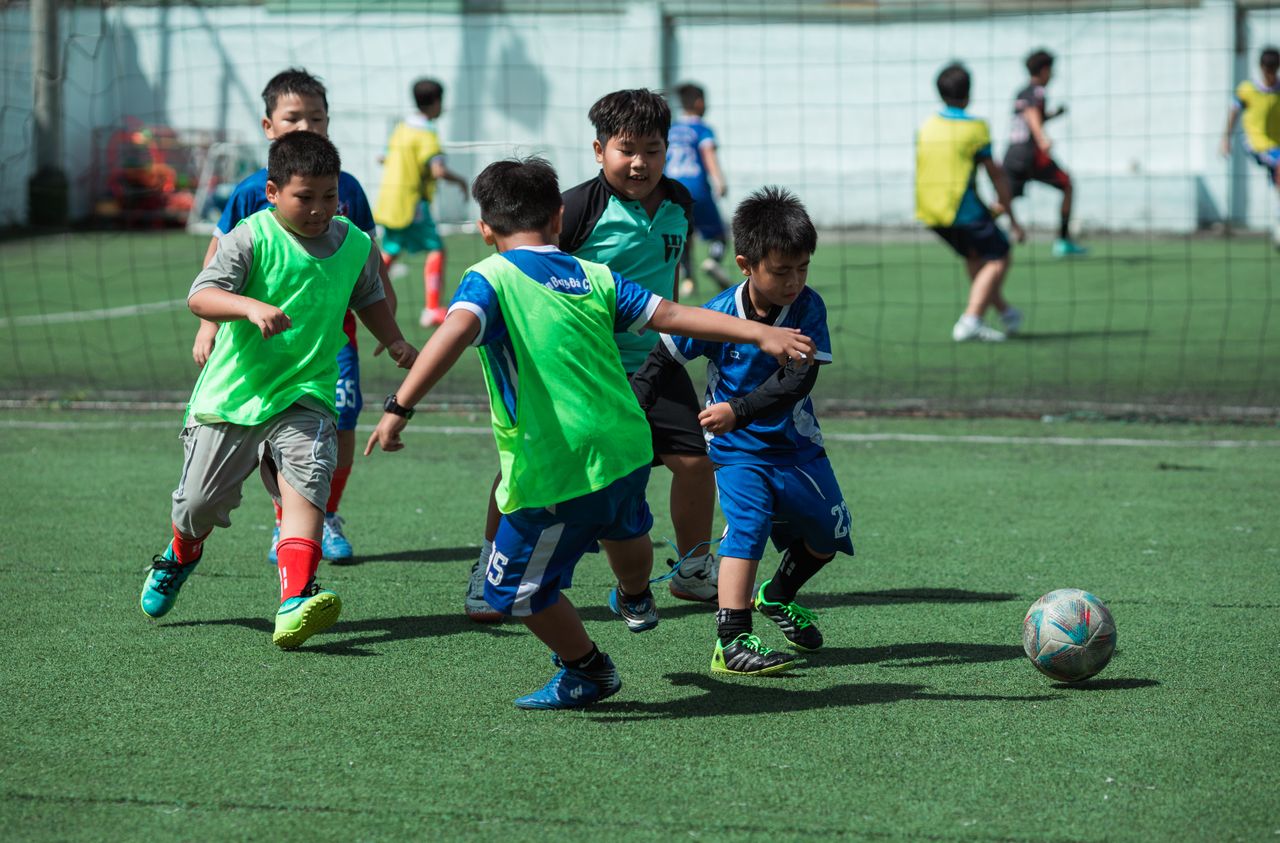
Pic – Thái Trường Giang
Children do not need to attend a traditional school to develop friendships, learn cooperation or interact with people of different ages.
Homeschooled children may participate in:
- Sports teams and athletic clubs.
- Music, dance and art classes.
- Homeschooling cooperatives.
- Scouts and youth organisations.
- Community volunteering.
- Library programmes and reading groups.
- Religious or community activities.
- Group projects and educational excursions.
- Neighbourhood activities and regular playdates.
These experiences can provide opportunities to build friendships and develop communication and teamwork skills.
Homeschooling may also expose children to people from different age groups rather than limiting most of their daily interactions to classmates of the same age.
However, socialisation should not be treated as something that happens automatically.
Parents need to make a conscious effort to arrange regular interactions and help children develop lasting friendships.
There is also a difference between occasional playdates and sustained participation in a community where children see familiar peers regularly.
The goal should be to ensure children have meaningful opportunities to develop social confidence, cooperation, independence and interpersonal skills.
What Does Research Say About Homeschooling?
Homeschooling is often discussed in terms of whether it produces better academic results than traditional schooling.
However, research does not support a simple conclusion that one educational model is universally superior.
Studies of homeschooling have reported positive academic and social outcomes in some groups. However, researchers have also identified limitations in the available evidence, including differences in how homeschooling is defined, the characteristics of participating families and the difficulty of making direct comparisons with traditionally schooled students.
A 2022 academic review published in Child Development Perspectives, titled “Homeschooling: What Do We Know and What Do We Need to Learn?”, noted that preliminary evidence suggested homeschooled students could perform as well as or better than conventionally schooled peers on some measures. The authors also cautioned that methodological limitations, particularly selection effects, made definitive conclusions premature.
This distinction matters. Families who choose homeschooling may differ from other families in terms of parental involvement, educational resources, income, motivation and other circumstances. These factors can influence educational outcomes independently of the schooling arrangement itself.
There is also no single homeschooling experience. A child following a structured curriculum with regular assessments may have a very different experience from one following an entirely child-led approach.
For parents, the more useful questions are:
- Is the child receiving a broad and appropriate education?
- Are essential academic skills developing?
- Does the child have access to suitable learning resources?
- Are social and emotional needs being addressed?
- Is the educational arrangement working for the child over time?
The quality of the learning environment matters more than assuming that one educational setting guarantees better results.
For further reading, parents can explore research published through the Institute of Education Sciences and the National Center for Education Statistics.
Homeschooling in the United States: What Parents Need to Know
Homeschooling is a recognised educational option in all 50 US states, but the rules and requirements are not uniform.
Unlike public education policy, which involves several levels of government, homeschooling regulation is primarily a state and local responsibility.
The US Department of Education does not directly regulate homeschooling or establish one national homeschooling curriculum.
Depending on the state, parents may need to:
- Submit a notice of intent or other notification.
- Follow specified subjects or educational requirements.
- Maintain attendance or instructional records.
- Arrange periodic academic assessments.
- Submit progress reports or evaluations.
- Comply with particular requirements when withdrawing a child from public school.
Some states have relatively limited requirements, while others have more detailed reporting and assessment rules.
Parents should never assume that the requirements in one state apply in another.
The US Department of Education’s State Regulation of Private and Home Schools resource provides state-specific information and comparison charts.
It is also important to consult the relevant state education department and local school district before beginning homeschooling.
What About Homeschooling Curricula in the US?
American homeschooling families can choose from a wide range of curricula.
Some follow programmes designed around state academic standards, while others use independent curricula or a combination of resources.
Parents may choose:
- Complete grade-level curriculum packages.
- Subject-specific textbooks and programmes.
- Online learning platforms.
- Classical or literature-based curricula.
- Montessori-inspired resources.
- Unschooling and interest-led learning materials.
The choice should depend on the child’s age, learning style, academic goals and any future examination or college requirements.
Can Homeschooled Children Attend College in the US?
Yes. Homeschooled students can apply to colleges and universities in the United States.
However, admission requirements differ between institutions.
Some colleges request homeschool transcripts, course descriptions, reading lists, portfolios, standardised test scores or evidence of externally assessed coursework.
For example, the University of Southern California provides specific application guidance for homeschooled applicants, including information about curriculum choices, textbooks and course syllabi.
Students who may want to attend a particular college should research its admissions requirements well before their final year of secondary education.
Those interested in competitive college sports should also investigate NCAA eligibility requirements, as homeschooled student-athletes may need additional documentation and certification.
Useful official resources include:
- US Department of Education – State Homeschooling Regulations
- University of Southern California – Homeschooled Applicants
- NCAA – Homeschool Student Eligibility
Homeschooling Around the World
Although homeschooling is widely discussed in the United States, families in other countries may also consider it.
However, the legal position, educational pathways and examination arrangements differ considerably.
Homeschooling in the United Kingdom
Home education is recognised in the UK, but the rules are not identical across all parts of the country.
In England, parents can educate their children at home, either full-time or part-time. They do not generally have to follow the National Curriculum, but they are responsible for ensuring that their child receives a suitable full-time education.
Local authorities may make enquiries about the education being provided.
Parents should consult the official UK government guidance on home education and check the rules applicable to their location.
Scotland, Wales and Northern Ireland have their own legal and administrative arrangements, so families should consult the relevant government guidance.
Homeschooling in India
Homeschooling is an educational option that some Indian families explore, although the practical arrangements and recognised examination pathways require careful research.
Parents may use private curricula, online learning programmes, tutors and independent educational resources.
For students who need a recognised examination pathway, the National Institute of Open Schooling (NIOS) is one option worth investigating.
NIOS offers open schooling programmes at secondary and senior secondary levels, providing an alternative route for eligible learners.
However, enrolling in an open schooling programme is not automatically the same as satisfying every legal requirement relating to a child’s education. Parents should check current eligibility, admission conditions, subject requirements and applicable rules before choosing a pathway.
The official National Institute of Open Schooling website provides information about its programmes and examinations.
Homeschooling in Canada
Homeschooling is permitted in Canada, but education is primarily a provincial and territorial responsibility.
Requirements can differ depending on where a family lives.
Parents may need to notify their local education authority, register their homeschooling arrangement, maintain educational records or comply with assessment requirements.
Families should consult their provincial or territorial education ministry for current information rather than relying on guidance intended for another part of Canada.
Homeschooling in Other Countries
In other parts of the world, homeschooling may be permitted with specific conditions, subject to registration or assessment, or restricted under compulsory school attendance laws.
Families living internationally, relocating or travelling for extended periods should investigate the regulations in the relevant country.
It is particularly important to distinguish between a country allowing online learning and formally recognising home education as an alternative to school attendance.
The legal requirements should always be checked before withdrawing a child from an existing school.
What Happens When Homeschooled Children Return to Traditional School?
Homeschooling does not have to be a permanent decision.
Some families homeschool for a few months or a year before returning to conventional education. Others use homeschooling during primary school and move to a traditional school for secondary education.
Children can transition between educational models, but the process may require preparation.
Schools may assess a child’s academic level before determining the appropriate grade placement.
Parents may need to provide:
- Homeschooling transcripts and academic records.
- A record of subjects studied.
- Samples of completed work.
- Assessment results, where available.
- Evidence of the child’s educational progress.
The school may also consider differences between the homeschool curriculum and its own academic programme.
Beyond academics, children may need time to adjust to classroom routines, group instruction, school rules and a larger peer environment.
Families who anticipate returning to school should maintain organised educational records throughout the homeschooling period.
It is also worth contacting potential schools in advance to understand their admission and placement procedures.
Is Homeschooling Right for Your Family? A Practical Checklist
Before deciding to homeschool, it is worth looking beyond the immediate reasons for considering it.
A child may be unhappy at school, but that does not automatically mean homeschooling is the best solution. Similarly, parents may love the idea of flexible education without fully appreciating the daily responsibilities involved.
Use these questions to evaluate whether homeschooling is a realistic option.
Consider Your Child’s Needs
- Does my child want to be homeschooled?
- What kind of learning environment helps my child thrive?
- Does my child need additional academic support?
- Would my child miss daily classroom interactions?
- Does my child have opportunities to pursue individual interests?
- Are there medical, emotional or educational considerations that need to be addressed?
Consider Your Family’s Circumstances
- Can at least one adult provide consistent supervision?
- Are both parents comfortable with the decision?
- Can we manage the financial implications?
- How will homeschooling fit around work and other responsibilities?
- Will spending more time together create additional stress at home?
- Do we have a realistic plan for maintaining routines?
Consider Your Educational Plan
- Have we researched suitable curricula?
- How will we teach subjects we are less comfortable with?
- How will we measure academic progress?
- What resources will we use?
- How will we handle examinations and future educational qualifications?
- What records will we need to maintain?
Consider Your Support Network
- Are there homeschooling groups or cooperatives nearby?
- Can my child participate in regular extracurricular activities?
- Do we have access to tutors or specialist teachers?
- Are there libraries, community programmes or educational facilities we can use?
- Who can support us when homeschooling becomes challenging?
You do not need to have every detail figured out before starting, but you should have a realistic understanding of the responsibilities involved.
It is also important to include your child in the conversation, in an age-appropriate way. Homeschooling affects their daily life, friendships and learning experience, so their feelings and preferences deserve consideration.
Can Homeschooling Be Temporary?
Absolutely.
Some families homeschool for a single year before returning to traditional school. Others homeschool during the primary years, while travelling or during a period when a child’s medical or personal circumstances make conventional schooling difficult.
Some families begin with a structured programme and gradually move towards a more flexible approach.
There is no requirement for every child to follow exactly the same educational path from kindergarten through graduation.
However, families should plan transitions carefully, particularly when examinations, grade placement or college admissions are involved.
If returning to school is a possibility, maintaining academic records and checking admission requirements in advance can make the process easier.
Frequently Asked Questions About Homeschooling
At what age can a child start homeschooling?
The answer depends on the compulsory education laws in the country or state where the family lives. Some parents begin home-based education during the preschool years, while others withdraw children from school at a later stage. Parents should check the applicable legal requirements before making arrangements.
Do parents need teaching qualifications to homeschool?
In many places, parents do not need to hold formal teaching qualifications to homeschool their children. However, requirements vary by jurisdiction. Even where qualifications are not required, parents need to provide an appropriate education and arrange additional instruction when necessary.
Do homeschooled children follow a curriculum?
Many homeschooling families use structured curricula, but there is no single curriculum followed by everyone. Some choose complete programmes, while others combine textbooks, online courses, tutors and independent projects. Certain educational approaches, such as unschooling, are more flexible and child-led.
How many hours a day do homeschoolers study?
There is no universal number of hours. Instruction time depends on the child’s age, educational approach and local requirements. Younger children often benefit from shorter lessons, while older students may spend more time on independent study, assignments and projects.
Do homeschooled children get enough social interaction?
They can, provided families create regular opportunities for interaction. Sports clubs, music classes, homeschooling cooperatives, volunteering, community activities and group projects can help children develop friendships and social skills. Parents need to plan these opportunities rather than assume they will happen automatically.
Are homeschooled children academically successful?
Some homeschooled students achieve excellent academic results, but there is no reliable basis for claiming that all homeschooled children outperform traditionally schooled students. Outcomes depend on teaching quality, learning resources, parental involvement, student motivation and many other factors.
Can homeschooled children go to college or university?
Yes. Many colleges and universities accept applications from homeschooled students. However, admission requirements vary. Students may need transcripts, course descriptions, portfolios, examination results or standardised test scores. Families should research potential institutions early.
Is homeschooling expensive?
It can be inexpensive or costly depending on the approach. Families using libraries, free resources and affordable curricula may spend relatively little. Those who employ tutors, purchase comprehensive programmes or arrange numerous extracurricular activities may have higher expenses. Parents should also consider the possibility of reduced household income.
Can parents homeschool while working full-time?
It may be possible, particularly with flexible work arrangements, online courses, tutors and older children who can study independently. However, younger children generally need substantial supervision. Parents should make sure that a realistic arrangement exists before beginning.
Is homeschooling suitable for children with ADHD or autism?
It can be suitable for some children, particularly when they benefit from a more individualised learning environment or flexible routines. However, others may need specialist support, therapies and structured social opportunities available through schools. The decision should be based on the child’s individual needs rather than a diagnosis alone.
Can a child return to traditional school after homeschooling?
Yes. Many children move between homeschooling and conventional education. Schools may require academic records, assessments or placement tests to determine the appropriate grade. Keeping organised records throughout homeschooling can make the transition easier.
What happens if parents cannot teach certain subjects?
Parents do not need to be experts in every subject. They can use structured curricula, online courses, tutors, community classes and specialist teachers. Older students may also benefit from independent learning resources and externally assessed programmes.
The Bottom Line: Is Homeschooling the Right Choice?
Homeschooling isn’t about keeping children away from school. It is about creating an educational environment that meets their individual needs.
For the right family, it can offer flexibility, personalised instruction, more time for individual interests and opportunities that conventional classrooms may not always provide.
For others, traditional schools, online schools or alternative education models may offer a better balance of academics, friendships, specialist support and daily structure.
The decision should not be based on educational trends, comparisons with other families or the assumption that one approach is universally superior.
Instead, parents should consider their child’s personality, learning needs, interests and emotional well-being alongside the time, resources and commitment their family can realistically provide.
And remember, choosing an educational path is not necessarily a once-and-for-all decision. Families can reassess their arrangements as children grow and circumstances change.
Ultimately, the goal is not simply to decide where a child should study. It is to find an environment in which they can develop essential skills, discover their interests, build meaningful relationships and grow into confident, curious and capable lifelong learners.
Leave a Reply