Growing up in a culturally rich neighbourhood can give children far more than a convenient place to live. It can shape how they see the world. In a place like London, life can be full of colour, difference, music, food, art and ideas. For families, that means childhood is not limited to school, home and the occasional weekend outing. Learning happens on the walk to the shops, in local parks, at museums, through community events and in the mix of people children meet every day.
Access to Museums and Art Spaces
One of the biggest advantages of raising children in a cultural hub is proximity to museums, galleries and creative spaces. These places help make learning feel active and memorable, whether a child is looking at ancient objects, exploring science, joining a workshop or simply discovering that art can be playful rather than intimidating.
Family-Friendly Living in Cultural Neighbourhoods
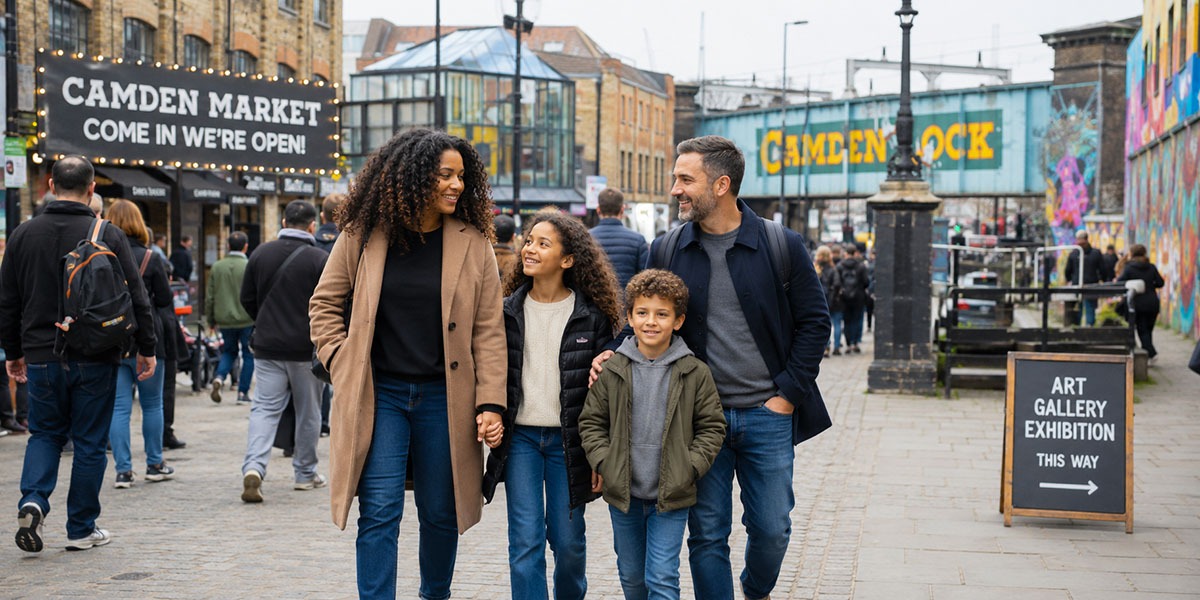
Cultural neighbourhoods can be especially appealing for families because they combine everyday convenience with a strong sense of place. Camden is a good example with music venues, markets, independent food, creative businesses, green spaces and easy connections across the capital. For families considering new build homes in places like Camden, modern comfort can sit alongside access to museums, music venues, creative spaces and the wider energy of one of London’s most recognisable cultural neighbourhoods.
Daily Exposure to Diversity
Children who grow up in diverse communities are often exposed to different languages, traditions, foods and perspectives from an early age. Camden’s own demographic data shows how varied the borough is, with 21.3% of residents recording a main language other than English in the 2021 Census, more than twice the England average of 8.9%. That kind of environment can help children understand difference as something ordinary and enriching. It encourages openness, empathy and confidence, especially when diversity is experienced through real friendships, neighbours, classmates and community life rather than as an abstract lesson.
Walkable Neighbourhoods
Walkable neighbourhoods can make family life feel easier and more active. Being close to schools, parks, shops, transport and cultural spaces means families are less dependent on the car and more able to build movement into everyday routines. This is also a priority across London. In May 2026, the Mayor of London and TfL set out plans to boost walking and wheeling, highlighting particular benefits for children, public health, high streets and the wider city economy. For parents, walkability is practical. For children, it can mean more independence, more fresh air and a stronger connection to the place they call home.
Endless Learning Opportunities
The real benefit of living in a vibrant cultural hub is that learning does not stop at the classroom door. Camden’s cultural calendar includes arts, music, performance, festivals, history, food and family activities across the borough all through the year. For children, these experiences can build confidence and imagination. They might join a workshop, hear live music, visit a gallery, try new food or take part in a local festival. Over time, those small moments become a major part of how they understand the world around them.
Leave a Reply