Screens sit at the center of modern family life. Children use them for learning, entertainment and staying in touch with friends, while parents often rely on them during busy days. At the same time, many families struggle with arguments over switching devices off and endless requests for more screen time. If you feel caught between wanting to protect your child and wanting an easier life, you are not alone.
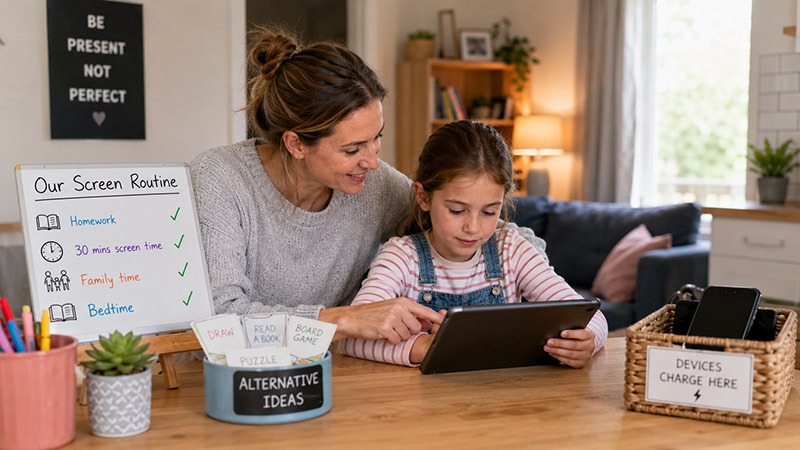
Healthy screen habits do not come from strict rules. They grow from clear expectations and consistent routines that work for your family.
Create predictable screen routines
Children cope better with limits when they know what to expect. A routine removes much of the daily negotiation because the decision no longer changes from one day to the next.
For example, your child might use screens for 30 minutes after homework on school days and for a longer period at weekends.
Create a simple schedule that links screen use to regular parts of the day rather than to your child’s requests. When children understand that screens happen at a specific time, they spend less energy asking for them throughout the day.
Use screens as tools, not fillers
Many parents hand over a device to stop boredom, avoid a public meltdown or gain a few quiet minutes. While everyone needs a practical solution occasionally, children miss opportunities to develop creativity when screens become the default answer to every spare moment.
Try matching the activity to a purpose. A child might use a tablet to practise maths skills or video call grandparents. When a screen serves a clear function, children learn that technology supports life rather than replacing it.
Keep a small list of alternative activities nearby, such as drawing materials, books or simple games, so you have options when boredom appears.
Protect your phone from kid chaos
Children often see a parent’s phone as the most exciting device in the house. Unfortunately, curious fingers can delete photos, make accidental purchases or send unexpected messages.
Set up child-friendly profiles on shared devices and use parental controls where available. Strong passwords and restricted app permissions reduce the risk of mishaps.
If your child regularly uses your device, backing up important data provides another layer of protection. Many parents also choose mobile phone insurance, especially as repairs and replacements can become expensive after drops, spills or other accidents.
Model healthy screen behaviour
If you scroll through social media during meals or constantly check notifications, your child receives a powerful message about what normal behavior looks like.
Aim for regular periods when the whole family focuses on something other than a screen. Shared meals,walks and conversations show children that technology has a place but does not need to dominate every moment.
When they see you putting your phone aside willingly, they find it easier to accept similar limits.
Keep tech out of bedrooms
Bedrooms should support relaxation and healthy sleep. Devices make that harder when notifications, games and videos encourage children to stay awake longer than intended.
Families often see the biggest improvement in sleep when devices remain outside bedrooms overnight. A central charging station in a hallway or kitchen creates a simple system that everyone can follow.
Better sleep supports concentration, mood and emotional regulation, which makes many other parenting challenges easier to manage.
Leave a Reply