Most people assume the hardest part of working out at home is staying motivated. The real problem is finding the best virtual fitness classes for working out at home that actually fit your life, your space, and your fitness level. Too many platforms dump hundreds of classes on you with no real guidance on where to start. Keeping up without an instructor in the room, matching classes to your ability, and working around limited space all make this harder than it looks. After reviewing five platforms closely, this guide breaks down which ones genuinely deliver.
The shortlist methodology
Each platform was evaluated using publicly available sources, including user reviews, official websites, and third-party rating platforms. Only options with a clear, verifiable track record in fitness and wellness made the cut.
→ See the full research breakdown
- Perspire TV – Best for independent fitness trainers and enthusiasts seeking live and on-demand streaming
- TrueCoach – Best for personal trainers, coaches, and gym owners
- Everfit – Best for fitness coaches, personal trainers, and gym owners
- Lenus – Best for fitness coaches and wellness professionals scaling online coaching businesses
- Trainerize – Best for personal trainers, gym owners, and fitness studios
The Stakes Behind Choosing Virtual Fitness Classes For Working Out At Home
Picking the wrong platform wastes time, money, and momentum. That’s a real cost when you’re trying to build a consistent routine from scratch.
Without a trainer physically present, motivation drops fast. There’s no one to correct your form, push you through a tough set, or hold you accountable when life gets busy.
The gap between beginner and advanced content is also wider than most platforms admit. A class labeled “intermediate” on one platform might crush a newcomer or bore someone with two years of training behind them.
Specialized platforms that actually think about these problems tend to deliver better results. They build around instructor quality, clear progression paths, and community tools that replace some of what you lose when you skip the gym.
The right choice shows up in how many live and on-demand classes are available each week, how consistently instructors score well on review platforms, and how active the community stays over time.
5 Virtual Fitness Classes For Working Out At Home Compared
Note: All data in this table is sourced from review platforms and the official websites of the listed companies.
| Company Name | Established | Team Size | Headquartered In |
| Perspire TV | – | – | Denver, Colorado |
| TrueCoach | 2015 | 18 | Boulder, CO |
| Everfit | 2019 | 112 | San Francisco, California |
| Lenus | 2016 | ~400 | Copenhagen, Denmark |
| Trainerize | 2012 | 114 | Vancouver, Canada |
Perspire TV – Best for Live and On-Demand Fitness Streaming With a Creator-First Model
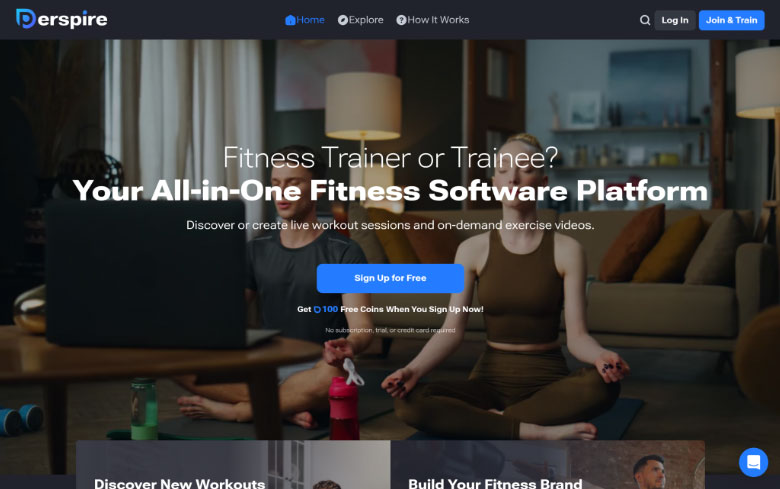
What Is Perspire TV’s Business?
The platform connects independent fitness trainers with people who want to work out, and the streaming infrastructure at Perspire.tv is built for fitness rather than adapted from general-purpose video tools. Trainers can run live classes, offer on-demand video rentals, build structured programs, and set up paid channel subscriptions. The Coins-based currency means trainers keep 80% of earnings, which is rare in this space. Content spans yoga, HIIT, strength, dance, barre, boxing, and meditation, so there’s enough variety to stay interesting across fitness levels.
Where Does Perspire TV Win for Virtual Fitness Classes For Working Out At Home?
Perspire TV solves a specific problem that generic streaming platforms can’t: giving independent fitness coaches a real home online without forcing them into a big studio’s system. The creator-first model means trainers are invested in the quality of their content, and that usually translates into better, more consistent class experiences for subscribers.
What the Reviews Show:
The platform’s free sign-up with no credit card required lowers the barrier for new users to try it out before committing. The transparent trainer compensation model appears to attract coaches who are genuinely passionate about their work, which users tend to notice in class quality.
TrueCoach – Best for Personal Trainers Managing Clients at Scale
What Is TrueCoach’s Business?
TrueCoach is a coaching management platform built for personal trainers, coaches, and gym owners who need more than just video. The platform combines client management, payment processing, program building, nutrition tracking with MyFitnessPal connections, and habit tracking in one place. There’s also a 3,000-plus video exercise library and a built-in video review feature for remote form checks (which is genuinely useful when you can’t be in the same room). It’s designed to cut down on admin time so coaches can focus on actual coaching.
Where Does TrueCoach Win for Virtual Fitness Classes For Working Out At Home?
TrueCoach addresses the accountability gap that kills most remote training relationships by giving coaches real tools to monitor client progress, check form remotely, and stay in contact between sessions. That kind of built-in structure is hard to match on platforms that treat remote coaching as an afterthought.
What the Reviews Show:
Users consistently flag the clean, easy-to-use interface as a standout quality. Coaches appreciate how quickly they can build and send programs, with at least one user reporting a jump of over $55,000 in monthly revenue after switching, which tells you something about the platform’s practical business impact.
Everfit – Best for Fitness Coaches Who Want an All-in-One Platform Without Outside Funding
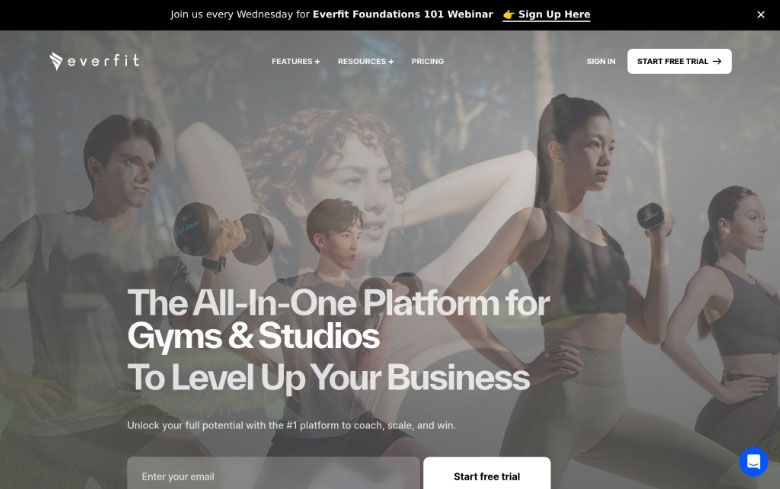
What Is Everfit’s Business?
Everfit is an all-in-one personal training platform built for coaches, trainers, and gym owners who want a clean toolkit without the bloat. The platform covers AI-assisted workout building, nutrition tracking, habit coaching, client engagement automation, billing, and access to over 1,500 exercise videos. Over 200,000 fitness coaches across 190-plus countries use it (not easy to scale to that size without external funding, but they’ve pulled it off). The white-label option is a nice touch for coaches who want to build their own branded experience.
Where Does Everfit Win for Virtual Fitness Classes For Working Out At Home?
Everfit makes it easy for coaches to personalize programs at scale, which directly addresses the problem of online classes feeling generic and one-size-fits-all. The intuitive program builder is something users bring up repeatedly, and that kind of design usually means coaches spend less time on setup and more time actually working with clients.
What the Reviews Show:
Everfit holds a 4.8-star rating from 174 verified G2 reviews, which is a strong signal in a crowded space. The most common praise points to ease of use and how quickly new coaches get up and running, suggesting the learning curve is genuinely low compared to platforms with similar feature depth.
Lenus – Best for Coaches Scaling Online Fitness and Nutrition Businesses
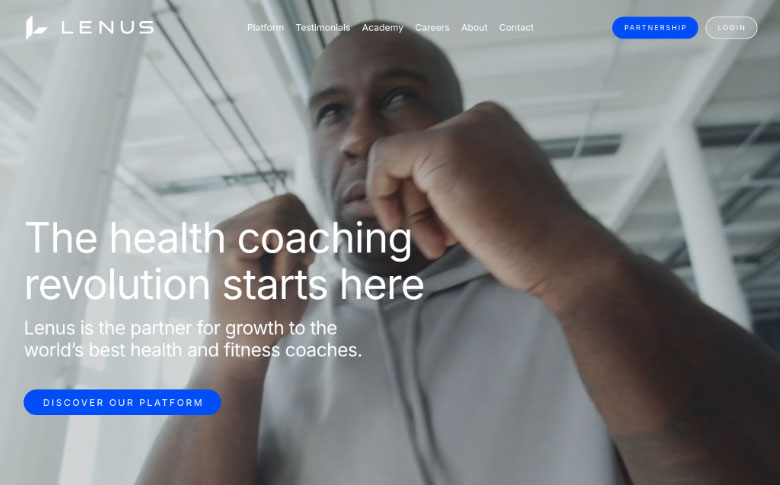
What Is Lenus’s Business?
Lenus is a health technology SaaS platform built for fitness and nutrition coaches who want to grow their businesses beyond one-on-one client work. The platform handles client management, personalized meal and exercise planning, progress tracking, and messaging. What sets Lenus apart is the Lenus Academy, a certified education program for online coaches that covers physical, mental, and social health (accredited by EREPS, Europe Active, and NASM). With 400 employees and $65.5 million in total funding, including a 52 million euro Series A, they’re clearly playing at a different scale than most competitors.
Where Does Lenus Win for Virtual Fitness Classes For Working Out At Home?
Lenus addresses the education gap that holds back a lot of online coaches by pairing its software with a formal coaching certification program, which isn’t something most platforms even attempt. That combination of business tools and structured education gives coaches a more complete foundation for delivering quality content remotely.
What the Reviews Show:
Clients coached through the Lenus platform rate their experience at 9.1 out of 10, verified by EPSI Rating. That score reflects genuine satisfaction with the coaching quality the platform enables, and the Danish EY Entrepreneur of the Year Tech Award 2023 adds credibility to the company’s broader market reputation.
Trainerize – Best for Gym Owners and Studios Running Hybrid Training Models
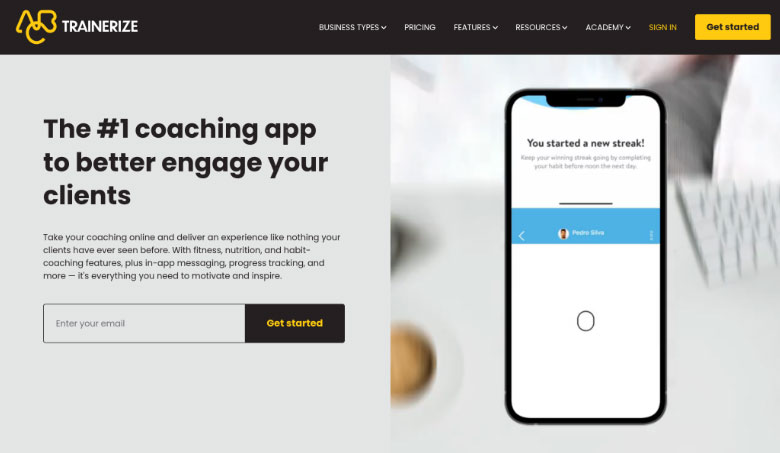
What Is Trainerize’s Business?
Trainerize is a coaching and client engagement platform built for fitness professionals, studios, and health clubs that need to manage clients both in-person and online. The platform centralizes workout programming, progress tracking, messaging, nutrition tracking (with MyFitnessPal integration), and payment processing. It connects natively with Stripe, PayPal, Shopify, Mindbody, and Zapier, which makes it easier to plug into an existing business setup. With $20 million in annually recurring revenue as of 2022, they’re not a small experiment anymore.
Where Does Trainerize Win for Virtual Fitness Classes For Working Out At Home?
Trainerize handles the demands of running online and in-person training at the same time, which is exactly what gym owners and boutique studios face as they shift toward hybrid models. That breadth of connections is rare at this price point, and platforms like FitBody Fusion and WarriorBabe have put the engagement tools to real use.
What the Reviews Show:
Coaches using Trainerize consistently mention how much time the platform saves on session prep and client follow-up. The connections with major tools mean coaches aren’t building workarounds, and users report that client adherence visibly improves when communication is centralized inside the platform.
Evaluation Criteria and Research Approach
Building a shortlist for virtual fitness platforms required a structured process rather than quick surface-level browsing. The research started broad and narrowed systematically based on what actually matters for home-based fitness users and the coaches serving them.
What Information Should Be Collected
The starting point was casting a wide net across fitness directories, app store listings, review aggregators like G2, and official platform websites. For each candidate, the goal was to collect feature data, pricing signals, content variety, instructor credentials, and anything verifiable about platform scale. Platforms were flagged if they appeared consistently across multiple independent sources, which helped distinguish well-established players from one-time mentions.
Narrowing the Field: Initial Selection Stage
Once the raw list was built, options with thin or unverifiable track records were removed first. That meant filtering out platforms with no reviewable user base, those with obvious patterns of inflated ratings, and any tool that couldn’t demonstrate sustained use in the fitness and wellness space. Review patterns were analyzed for consistency across time rather than relying on a single snapshot, because a burst of old positive reviews with nothing recent tells a different story than steady, ongoing feedback.
Validating Information Accuracy
Each platform’s stated features were cross-referenced against what actual users described in reviews. When a company claimed a specific capability, the research looked for real-world confirmation that users had experienced it. Discrepancies between marketing language and user accounts were noted. Platforms where the gap between claimed and experienced quality was large didn’t make the final list.
The Authority Layer
Beyond reviews, the research looked at external signals: industry award mentions, features in fitness publications, original platform research or data, and recognizable client names. These signals help separate platforms that are genuinely respected in the fitness community from those with polished marketing but limited reach. A platform earning an industry award (like Lenus’s EY Entrepreneur recognition) or publishing verifiable user outcome data carries more weight than self-reported claims alone.
Virtual Fitness Classes For Working Out At Home Case Files
Each shortlisted platform was then checked for specific evidence of fitness streaming or coaching relevance. That included dedicated service pages covering live classes, on-demand content, or remote coaching tools, verified user reviews from fitness professionals or home workout enthusiasts, and any case studies or outcome data tied to real client results. Platforms that could show specific fitness use cases, not just generic “online coaching” positioning, scored higher in the final evaluation. The five companies in this guide all cleared that bar with documented evidence.
Finding the Right Virtual Fitness Classes For Working Out At Home for Your Needs
Choosing between these platforms comes down to what role you’re playing: are you a coach building a business, or a fitness enthusiast looking for great classes to follow at home? Both answers point to different tools. Here’s what to weigh before committing.
- Industry and Domain Experience: Look for platforms built for fitness, not adapted from general video or e-learning tools. Fitness-native infrastructure handles live classes, form review, and workout programming in ways generic platforms simply don’t.
- Features and Services: Match the feature set to your actual needs. A solo trainer needs client management and billing. A home user needs class variety, clear difficulty levels, and reliable streaming quality.
- Pricing Structure: Check the cost per class relative to subscription price, and look at whether free trials exist before payment is required. Perspire TV’s free sign-up and Coins model is a different structure than monthly SaaS pricing, and one may suit you better than the other.
- Results Measurement: Look for platforms where progress is trackable, whether through instructor review scores, client progress dashboards, or community activity. If you can’t measure improvement, it’s harder to stay accountable.
- Industry Knowledge and Compliance: For coaches, check whether the platform meets ACE, NASM, or ACSM instructor certification standards. Platforms that take credentials seriously tend to attract higher-quality instructors, which raises the bar for everyone using them.
Final Words
The best virtual fitness platform is the one that fits your actual situation, not the one with the longest feature list. For home exercisers, the important factors are class variety, instructor quality, and content that matches your fitness level. For coaches, it’s about tools that scale without adding admin overhead. This space is growing fast, and the platforms putting real effort into live interaction and creator-driven content are the ones likely to lead it.
Leave a Reply