The development of critical thinking in children is perhaps one of the best gifts parents or educators can provide to their children. The ability to solve problems, reason, analyze, and make decisions is crucial for success not only in education but throughout life. Luckily, developing these skills doesn’t necessarily require specific lessons or complex assignments. Sometimes the most effective practice takes place when the child plays.
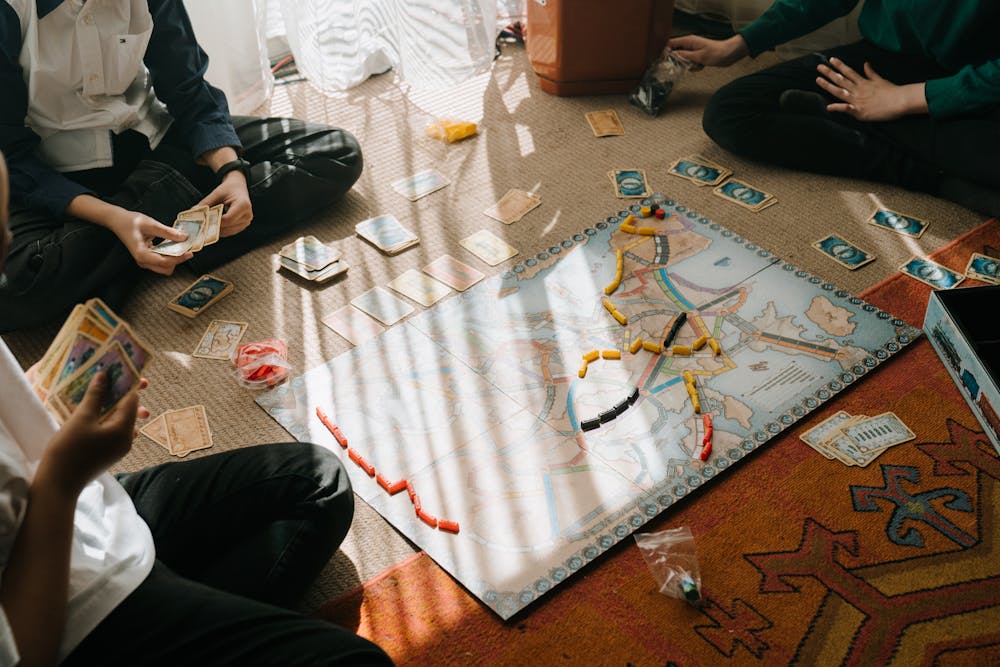
Playful activities are beneficial because, during them, the child becomes active, curious, and eager to discover new things; therefore, his brain becomes receptive to new ideas. In fact, playing can help a child transform abstract thinking into an enjoyable activity.
This article discusses nine useful tips for how you can facilitate the development of your kid’s critical thinking through playful activities.
1. Promote Problem-Solving Through Puzzles and Brainteasers
Puzzles represent one of the best methods of building critical thinking abilities. Children should learn to analyze data and find patterns.
Apart from being fun activities, puzzles teach kids how to think through problems logically. So, when doing a jigsaw puzzle, children have to learn to categorize pieces based on their shape and color, distinguish edges, and try various combinations until the whole puzzle is assembled.
Brainteasers work especially well because questions that appear simple often require careful thought to be answered correctly. The fact that children may initially fail to give the right answer and then discover it makes them feel more confident about solving problems.
2. Introduction to Role Play and Imaginative Games
The imaginative games represent the meeting point between imagination and critical thinking because, while playing role play, the children face decisions, problems, and the need to adapt to circumstances in the imaginary setting.
When the children create a setting like a restaurant, they have to:
- Decide upon the menu,
- Allocate the various roles,
- Handle “problems” such as missing ingredients or dissatisfied clients
An example of such a game would be a kids murder mystery game. This activity represents role play taken one step further, whereby the children act out roles according to a story that contains a mystery for the children to solve. They need to observe, ask questions, and put together clues logically.
3. Play Strategy-Based Board Games
Strategy games provide a wonderful opportunity for kids to learn forward planning and decision-making skills. While games such as chance alone offer little educational value, strategy-based games involve planning, forecasting, and adaptation.
During strategy games such as chess and checkers, kids need to predict their opponent’s actions and plan several moves. They develop foresight and the ability to analyze various options before taking action.
4. Building with LEGO and other construction toys
Playing with construction toys is a practical approach to foster problem-solving and spatial awareness skills. As children engage in building things, they practically get to test some aspects of engineering principles.
Increasing the complexity of the task can involve:
- Stating objectives (e.g., construct a bridge capable of supporting books)
- Restricting materials to increase creativity
- Adding time limits for additional challenge.
5. Plan Scavenger Hunts
A scavenger hunt is a great activity that combines entertainment with education. It requires kids to solve puzzles, understand data, and use logic in order to achieve their goal.
You could also organize a scavenger hunt based on a specific theme. For instance, a mystery-based scavenger hunt could be used for a kids’ party, with each clue leading them one step closer to unraveling the entire mystery.
6. Promote Open-Ended Questions While Playing
The easiest method for developing children’s critical thinking skills lies in the power of discussion. Open-ended questions will help kids to reason, analyze, and articulate their thoughts.
Gradually, children start to ask these questions to themselves, which indicates that they have acquired critical thinking skills.
7. Presenting Basic Science Experiments
Science experiments, by nature, foster an inquiring attitude and analytical skills. These experiments help children learn how to observe, predict, and reach conclusions.
Another way to incorporate scientific thinking into play is by presenting variations in science experiments. Such as floating and sinking, where children try to explain their reasoning.
The use of science in play activities teaches kids how to approach learning through observation.
8. Play Mystery and Detective Games
Mystery and detective games are some of the best ways to help people think critically since they involve logical reasoning, observation skills, and storytelling.
Murder mystery games for children are highly effective since they provide a scenario where children can solve puzzles systematically.
In such cases, children will have to think independently while collaborating with others. They will have to learn to listen to other people’s views and draw justifiable conclusions.
9. Provide Creative Problem-Solving Puzzles
Open-ended puzzles are important to nurture flexible thinking skills. There is no right answer in such tasks that encourage kids to consider many options.
Conclusion
Among various skills that children should acquire, critical thinking stands out as one of the most valuable. This type of thinking does not necessarily have to be gained through studying at school; instead, children can get this skill in a more entertaining way through the variety of activities they participate in.
Be it construction toys or puzzles, scavenger hunts, or role-playing games, children can improve their skills by getting experience in all kinds of activities. One example that goes even further includes kids’ murder mystery games, which combine all aspects of critical thinking into one activity.
By introducing such activities into your kids’ routine, you will not only entertain them but will give them the ability to make decisions on their own in the future.
Leave a Reply