Your family can receive ambulance and hospital bills before anyone agrees on who caused a bicycle crash. Missed shifts can mean a smaller paycheck for you, too.
Qualifying personal injury protection benefits (PIP) can pay first, while the at-fault driver’s liability coverage may cover the remaining losses. PIP applies under Florida Statutes § 627.736 regardless of fault, but eligibility and treatment rules decide whether it pays; a liability claim requires proof that the driver caused the crash.
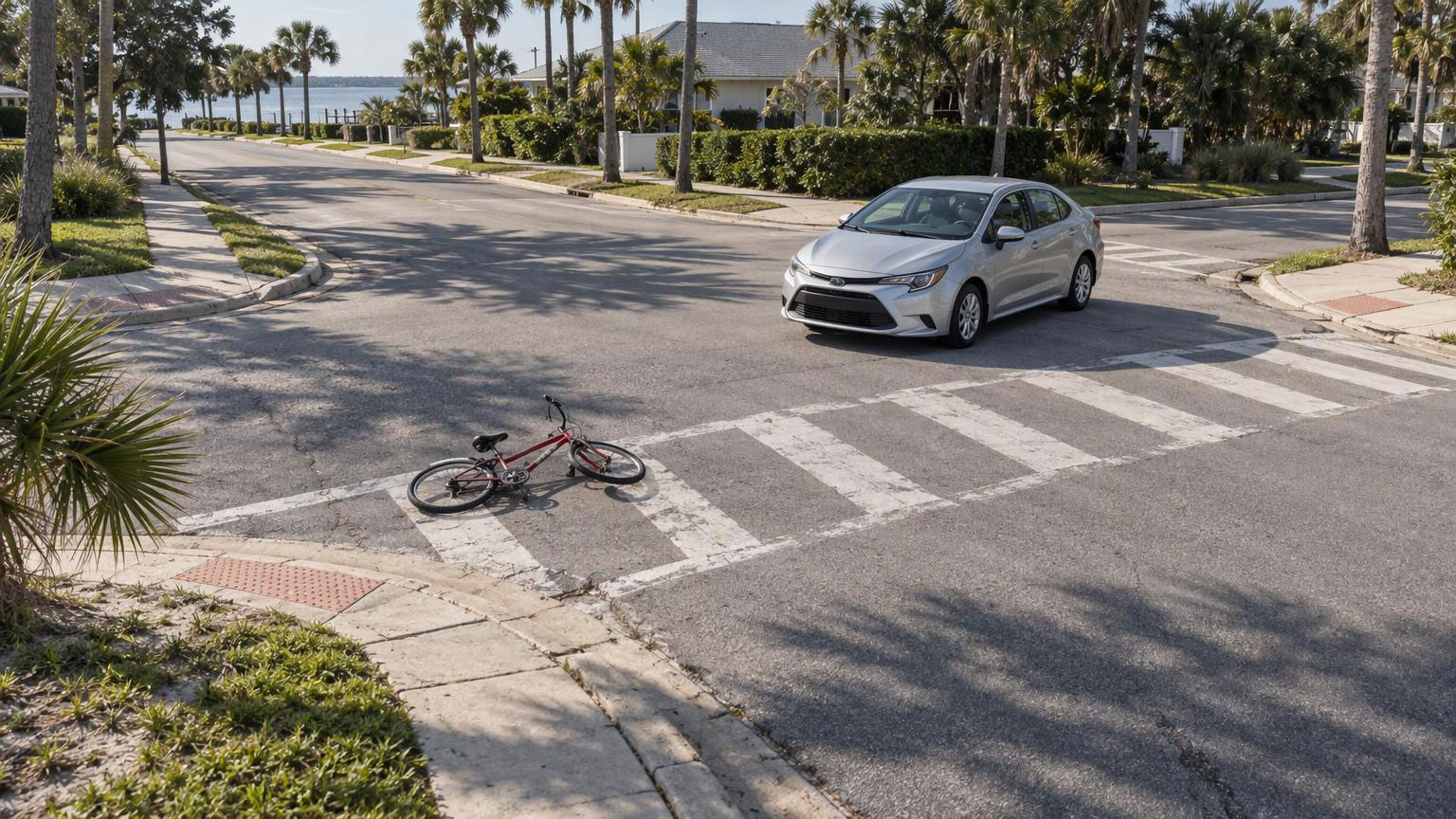
Who pays the medical bills after a Florida bicycle accident if a car hit me?
Your qualifying PIP coverage is the first source for paying eligible treatment bills. You can pursue remaining losses through a liability claim against an at-fault driver, but you’ll need to prove fault and check whether the driver has insurance that covers your injuries.
Don’t expect the driver’s insurer to pay every medical bill as soon as it arrives. Give your providers the PIP claim number and contact information for the adjuster, then ask where they’re sending your bills. Ask for itemized statements so you can separate the provider’s charges from payments already made.
How do personal injury protection benefits work for a cyclist in Florida?
Your auto policy’s PIP can cover you on a bicycle if the accident involves a motor vehicle. The policy covering the injured rider still determines their eligibility. If your child was hit, ask the household auto insurer if its policy covers your child.
The Florida Bar’s consumer guidance says you must get initial medical care within 14 days of the motor vehicle accident to qualify for PIP. It describes benefits of up to $10,000, with the policy deductible applying.
The Florida Office of Insurance Regulation explains that qualifying personal injury protection benefits pay 80% of reasonable medical expenses and 60% of income lost through accident-related disability, subject to the policy’s overall benefit limit. You can use a liability claim against an at-fault driver to seek losses PIP hasn’t paid, including damage to your bicycle.
Ask the PIP insurer how much of the available benefit it’s paid so far and which bills remain pending. A hospital charge and a rehabilitation bill can both use the same limited coverage, so keep each provider’s account balance with the insurer’s payment statements.
Does Florida PIP cover treatment and missed work?
Yes, qualifying PIP can cover ambulance services and rehabilitation, as well as income the cyclist loses when an accident-related disability prevents them from working. Covered medical services can also include surgery and care in the hospital.
The Office of Insurance Regulation notes that non-emergency cases may have a $2,500 medical limit. Ask the insurer which medical determination it’s using to support that limit, and keep its written explanation in your claim file.
| Expense or loss | Qualifying PIP coverage | Claim against an at-fault driver |
|---|---|---|
| Medical treatment | Pays a portion of eligible expenses within medical benefit limits. | May address unpaid bills and future treatment costs supported by the claim. |
| Lost income | Pays qualifying disability-related income loss within the shared benefit limit. | May address proven lost wages and reduced earning capacity. |
| Bicycle damage | Doesn’t pay for property damage. | May address bicycle repair or replacement losses. |
| Pain and suffering | Doesn’t pay noneconomic damages. | May address noneconomic losses, subject to legal eligibility. |
The lost-income benefit applies to the injured cyclist’s disability. If you miss shifts to care for your child, ask the insurer how it will handle those absences instead of counting them as your child’s PIP wage loss.
What records should a family keep after the crash?
Keep one claim file that connects each expense to the crash and records what insurers have paid. Save itemized medical bills with treatment notes, and keep ambulance and rehabilitation records alongside them.
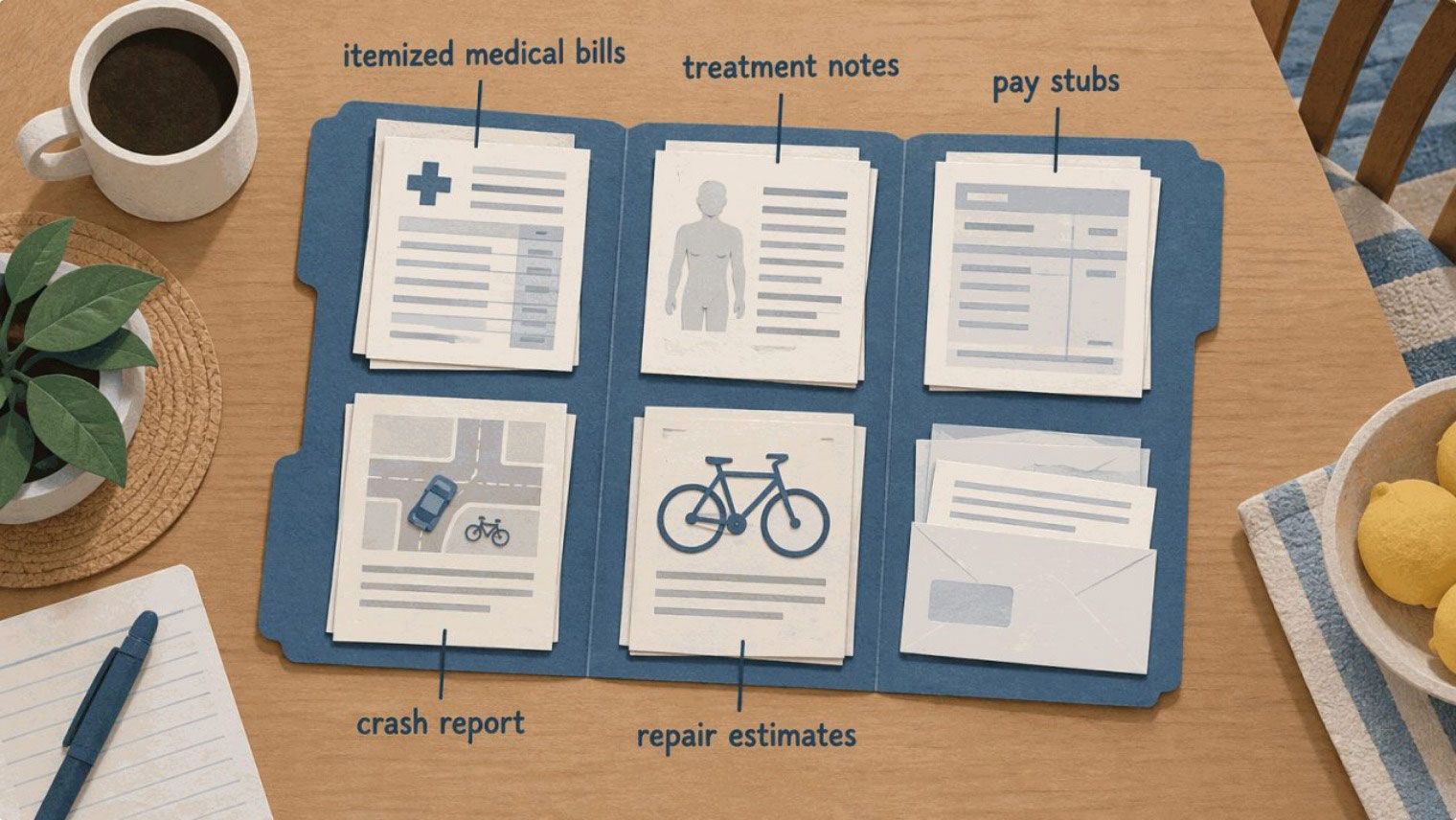
Your income records should show the earnings you actually lost. Keep pay stubs and employer statements alongside any medical work restrictions. A dated record of missed shifts can help you explain the difference between your usual earnings and the paycheck you actually received.
The crash evidence should go in that file, too. Save the crash report and photographs of the scene, along with witnesses’ names and contact information. Keep photographs and repair estimates as proof of the bicycle damage before you throw away damaged parts.
Keep your insurance correspondence, including claim emails and letters about payments or denials. After a phone call, note who you spoke with and what the insurer requested. Match each request to the document you sent, and save a copy of what you submitted.
What should you do when insurance coverage is unclear?
Get medical care promptly and alert the insurers that could cover the crash. Read the auto policy’s declarations and coverage wording, then ask the insurer to confirm in writing whether that policy covers the injured rider and where providers should send bills.
If an insurer denies payment, ask which policy provision or missing document prompted the denial. Send copies of the records the insurer requests, and keep the originals. Don’t treat an unexplained denial as the answer for every possible claim that arises from the crash.
Treatment timing is separate from deadlines for filing a lawsuit. Ask a Florida attorney which deadlines apply in your situation, especially if coverage is disputed. Don’t assume ongoing discussions with insurers extend a lawsuit deadline.
You can begin sorting out treatment payments before anyone makes a final decision about fault, while keeping a potential claim against the driver separate. Contact the insurer next with the crash date and the record of your first treatment, then ask which policy applies to the claim and what document it still needs.
Leave a Reply