Ensuring proper service in a divorce case means following your state’s legal requirements for delivering divorce documents to your spouse and providing proof that service was completed correctly. Proper service is essential because it gives the other party official notice of the case and allows the court to move forward with the proceedings.
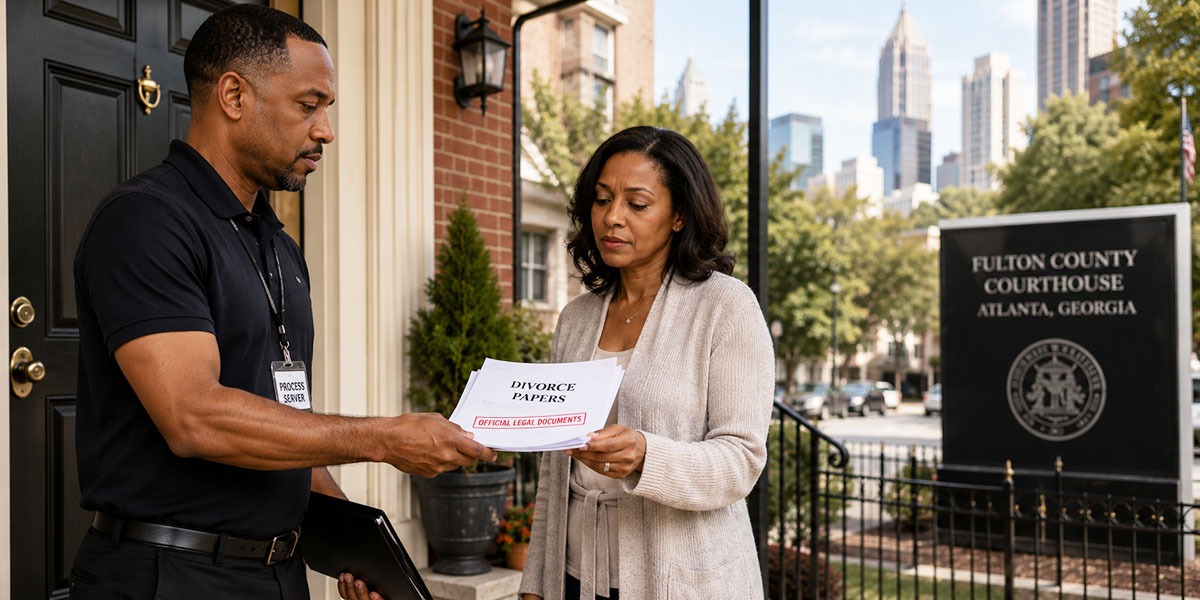
Georgia is a southeastern U.S. state known for its rich history, diverse landscapes, and major cities such as Atlanta. It is known for its well-established court system and detailed legal procedures that govern a wide range of civil and family law matters.
Failure to complete service here correctly can lead to delays, additional costs, or even the dismissal of certain requests. Many people researching how to serve divorce papers in Georgia discover that strict procedural rules must be followed to ensure the court recognizes the service as valid.
Understand What Service of Process Means
Service of process is the formal delivery of legal documents to the other spouse after a divorce case has been filed.
These documents typically include:
- The divorce petition or complaint
- Summons issued by the court
- Related notices and filings
- Any required supporting documents
The purpose of service is to provide official notice that a legal action has been initiated and to give the receiving party an opportunity to respond.
Follow State-Specific Requirements
Every state has its own rules regarding how divorce papers must be served.
Some states allow service through a sheriff, private process server, or another qualified adult who is not involved in the case. Others may permit service by certified mail under certain circumstances.
Before attempting service, review the applicable court rules to ensure compliance with local requirements. Following the correct procedure from the beginning can prevent unnecessary complications later.
Use an Authorized Process Server
One of the most reliable ways to ensure proper service is to use an authorized process server.
Professional process servers understand legal requirements and know how to document service correctly. They can also help locate individuals who may be difficult to reach.
Benefits of using a professional include:
- Accurate documentation
- Knowledge of legal procedures
- Reduced risk of service errors
- Greater efficiency
Their experience often helps avoid mistakes that could delay the case.
Obtain Proof of Service
Completing service is only part of the process. You must also provide proof to the court that service occurred.
Proof of service generally includes details such as:
- Date of service
- Time of service
- Location of service
- Identity of the person served
- Method used to complete service
The individual who served the documents typically signs an affidavit or return of service that is then filed with the court.
Without proper documentation, the court may not recognize the service as valid.
Avoid Serving the Papers Yourself
Many people are surprised to learn that they usually cannot personally serve divorce papers on their spouse.
Most states require service to be completed by an independent adult who is not a party to the case. Attempting to serve documents yourself may violate court rules and create challenges later in the proceedings.
Using an authorized individual helps maintain the integrity of the legal process.
Know What Happens if a Spouse Cannot Be Located
Sometimes a spouse cannot be found despite reasonable efforts.
When this occurs, courts may allow alternative service methods after specific requirements are met. These methods can include service by publication, posting notices, or other court-approved alternatives.
However, judges typically require proof that diligent efforts were made to locate the spouse before granting permission for alternative service.
Be Mindful of Deadlines
Divorce cases often involve deadlines related to service.
Failing to complete service within the required time frame can slow down the case and may require additional court filings. Monitoring deadlines carefully helps keep the process moving efficiently.
If difficulties arise, it may be necessary to request an extension from the court before the deadline expires.
Keep Organized Records
Maintaining organized records throughout the service process can help prevent disputes and confusion.
Important documents to keep include:
- Copies of filed court documents
- Proof of service forms
- Process server reports
- Mailing receipts, if applicable
- Court correspondence
Good recordkeeping can be valuable if questions arise regarding whether service was completed properly.
Key Takeaways
- Proper service ensures the other spouse receives legal notice of the divorce.
- Service requirements vary by state and must be followed carefully.
- Professional process servers can help avoid mistakes.
- Proof of service must be filed with the court.
- Most states do not allow spouses to serve divorce papers themselves.
- Alternative service methods may be available if a spouse cannot be located.
- Meeting service deadlines helps prevent delays.
- Organized documentation supports a smoother divorce process.
Leave a Reply