Minnesota parents should understand that front-seat safety is not determined by age alone. Children should generally remain in the back seat until they are properly suited for an adult seat belt, and child restraint requirements depend on the child’s age, height, weight, and the type of safety system being used.
Minnesota law also establishes specific requirements for child passenger restraints, so parents should follow both the legal requirements and accepted safety practices when deciding where a child should sit.
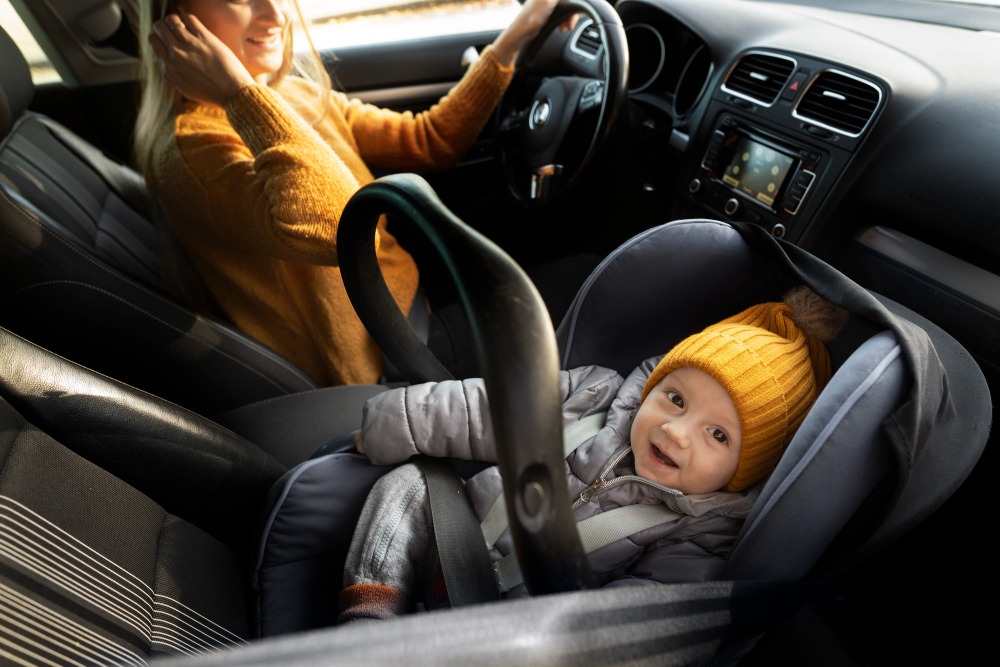
Minnesota has busy urban roads, rural highways, residential streets, and heavily traveled routes throughout the state. Families may spend significant time driving children to school, activities, appointments, and other destinations. Knowing at what age kids can sit in the front can help parents make safer transportation decisions and avoid relying on age alone when evaluating whether a child is ready for the front passenger seat.
Minnesota Law Requires Appropriate Child Restraints
Minnesota law requires children to be properly restrained while riding in a motor vehicle. Minnesota Statutes § 169.685 establishes requirements concerning child passenger restraint systems.
The law generally requires younger children to use an appropriate child restraint system that meets applicable federal standards. As children grow, the appropriate restraint may change from a rear-facing car seat to a forward-facing seat and eventually to a booster seat and regular seat belt.
Parents should check the current requirements for their child’s age and size because the correct restraint depends on more than simply reaching a particular birthday.
Children Should Usually Ride in the Back Seat
The back seat is generally considered the safer location for children, particularly younger children. One reason is the presence of front airbags.
Passenger airbags are designed to protect adults and can cause serious injuries to young children in certain circumstances. A child sitting too close to an active front airbag may face additional risk during a crash.
For this reason, parents should avoid moving a child to the front seat simply because the child reaches a certain age. Physical size, proper seat belt fit, and the vehicle’s safety system should also be considered.
Seat Belt Fit Matters More Than Age Alone
A child may be legally old enough to use a seat belt but still too small for the belt to fit correctly.
A properly fitted seat belt should cross the upper chest and shoulder rather than the neck. The lap portion should sit low across the hips and upper thighs instead of across the stomach.
The child should also be able to sit with their back against the vehicle seat, keep their knees bent comfortably at the edge of the seat, and remain properly positioned for the entire trip.
If a child cannot maintain this position, a booster seat may still be appropriate.
The Front Seat Creates Additional Safety Concerns
The front passenger seat exposes a child to risks that may be reduced in the rear seat. In addition to airbags, the child may be closer to the point of impact in certain crashes.
Parents should also consider the vehicle manufacturer’s instructions regarding airbags, seating positions, and child restraints. Some vehicles may have passenger airbag features that require specific precautions.
If a child must ride in the front seat because the vehicle has no rear seating or for another legitimate reason, parents should follow the vehicle and restraint manufacturer’s instructions carefully.
Car Seat Installation Should Be Checked Carefully
Using the correct car seat is only part of the safety equation. The restraint must also be installed properly.
Parents should follow the instructions provided by the car seat manufacturer and the vehicle manufacturer. Harness straps should be positioned correctly, and the seat should be secured according to the applicable installation method.
An improperly installed restraint may not provide the protection it was designed to provide during a collision.
Safety Recommendations May Be Stricter Than the Legal Minimum
Parents should remember that a law establishes minimum legal requirements. Safety recommendations may encourage children to remain in the back seat longer than the minimum required by statute.
This distinction is important when making decisions about a child’s transportation. A parent can comply with the law while still choosing a safer option by keeping a child in the back seat until the child is developmentally and physically ready for the front.
The safest decision should take into account the child’s size, maturity, restraint fit, and the specific vehicle.
Key Takeaways
- Minnesota child passenger rules depend on the child’s age and appropriate restraint system.
- Minnesota Statutes § 169.685 establishes requirements for child passenger restraints.
- Younger children are generally safer in the rear seat.
- Seat belt fit is an important consideration when deciding whether a child is ready for an adult seat belt.
- Active front airbags can create additional risks for young children.
- Parents should follow both state law and the vehicle and car seat manufacturer’s safety instructions.
- The legal minimum may not always represent the safest choice for a child.
Leave a Reply