Imagine standing at the edge of the ocean 100 million years ago. Instead of today’s familiar waves hiding schools of fish, the seas were filled with enormous predators. Streamlined ichthyosaurs darted like torpedoes, plesiosaurs glided with their long necks, and massive mosasaurs ruled as apex hunters. These creatures, often called sea dinosaurs, were not technically dinosaurs but marine reptiles and prehistoric giants.
For millions of years, they shaped the ecosystems of ancient oceans before vanishing during major extinction events. Fossil discoveries now give us remarkable insights into their biology, behaviors, and the environments they once dominated.
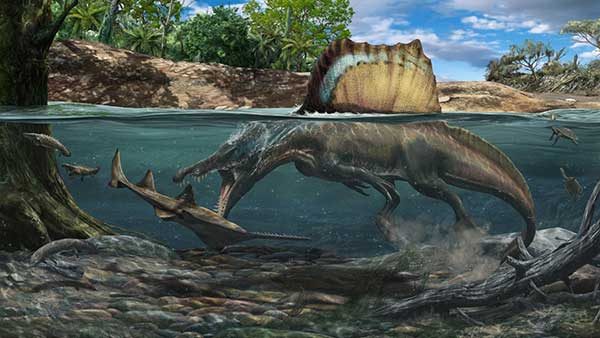
Image from My Dinosaurs
The Rise of Marine Reptiles
During the Mesozoic Era — the “Age of Dinosaurs” — Earth’s oceans were ruled by reptiles specially adapted for aquatic life. While dinosaurs stayed on land, their reptilian relatives, often referred to as sea dinosaurs, made dramatic evolutionary shifts.
- Transition from land to sea: Early reptiles like nothosaurs lived semi-aquatic lives, paving the way for fully marine creatures.
- Evolutionary adaptations: Limbs transformed into flippers, bodies became streamlined, and respiratory systems adapted for long dives.
- Different from true dinosaurs: Though closely related, marine reptiles had unique skeletal features that set them apart from land-based dinosaurs.
This transition allowed reptiles to colonize every corner of prehistoric oceans.
The Giants of the Ancient Seas
Ichthyosaurs: The Dolphin Reptiles
Ichthyosaurs resembled today’s dolphins but were reptiles through and through. They appeared around 250 million years ago and thrived for over 150 million years.
- Body structure: Sleek, torpedo-shaped bodies for speed.
- Vision: Enormous eyes adapted for deep-sea hunting.
- Reproduction: Fossils show live births, a rare trait among reptiles.
Some species grew to lengths of 70 feet, making them among the largest predators in marine history.
Plesiosaurs: The Long-Necked Hunters
Plesiosaurs are among the most iconic marine reptiles. They used four powerful flippers to “fly” through the water, much like penguins.
There were two main types:
- Long-necked plesiosaurs (such as Elasmosaurus): Their 20-foot necks allowed them to snatch fish with lightning speed.
- Short-necked pliosaurs (such as Kronosaurus): Built with massive jaws and skulls, they were formidable top predators.
Their unique anatomy and hunting strategies made them one of the most diverse groups in ancient seas.
Mosasaurs: Ocean Superpredators
The mosasaurs dominated the Late Cretaceous oceans. Related to modern monitor lizards and snakes, they could grow over 50 feet long.
- Powerful tails propelled them through the water.
- Diet: Fossilized stomachs reveal fish, turtles, and even other mosasaurs.
- Role: They were the undisputed apex predators of their time.
They were the last great marine reptiles before the mass extinction 66 million years ago.
Pliosaurs and Nothosaurs
- Pliosaurs: Short-necked cousins of plesiosaurs, known for immense bite strength and robust skulls.
- Nothosaurs: Early, semi-aquatic reptiles that lived both on land and in water, precursors to later fully marine species.
Both played important roles in shaping the food chain of ancient seas.
Other Ancient Ocean Giants
Megalodon: The Monster Shark
Though not a reptile, the megalodon deserves a place in this list. At up to 60 feet long, it was the largest shark ever recorded. Its teeth, some over 7 inches long, reveal a bite force strong enough to crush whale bones.
Living long after marine reptiles had disappeared, megalodon dominated the oceans until its extinction about 3.6 million years ago.
Dunkleosteus and Armored Fish
Before reptiles took over, armored fish like Dunkleosteus ruled during the Devonian period, over 350 million years ago.
- Size: Up to 30 feet long.
- Defenses: Armored skull plates for protection.
- Diet: Bladed jaws strong enough to slice prey.
These fish highlight how ocean dominance shifted through Earth’s history, from armored giants to reptiles, then to sharks.
Survival and Extinction
The disappearance of these giants came in waves, shaped by environmental shifts.
- Climate change: Altered sea levels and temperatures disrupted food chains.
- Competition: New predators, including sharks, adapted more efficiently.
- Mass extinction events: The Cretaceous–Paleogene extinction eliminated mosasaurs, plesiosaurs, and many others alongside land dinosaurs.
Still, their legacy lived on. Sharks, rays, and smaller marine reptiles continued to evolve, inheriting the oceans.
Legacy of the Ocean Giants
The fossils of these creatures reveal more than anatomy; they uncover stories of adaptation, survival, and collapse.
- Scientific insights: Fossilized remains show growth patterns, hunting methods, and even preserved stomach contents.
- Cultural impact: Ancient myths of sea monsters may have been inspired by fossilized plesiosaurs or ichthyosaurs.
- Modern influence: These creatures remain popular in documentaries, museums, and films, symbolizing the awe of prehistoric life.
Their enduring presence in culture shows how much they continue to shape human imagination.
Experiencing Ancient Seas Today
While fossils remain our most direct evidence, modern reconstructions help people visualize how these animals looked and moved. From museum skeletons to life-sized animatronics, educational exhibits play a key role in bringing prehistoric oceans to life.
These reconstructions:
- Make science more accessible to students and families.
- Provide museums with engaging ways to connect audiences to paleontology.
- Help researchers share accurate depictions of creatures long extinct.
Through these displays, the world of sea dinosaurs becomes more than just bones in stone — it becomes a living story of Earth’s history.
Conclusion
The oceans of the past were filled with extraordinary predators — ichthyosaurs, plesiosaurs, mosasaurs, megalodons, and even armored fish like Dunkleosteus. These ancient giants evolved unique adaptations, ruled their environments, and eventually vanished in the face of dramatic environmental changes.
Yet their story continues. Fossil evidence, scientific study, and modern reconstructions keep their legacy alive. The giants of the ancient seas remind us that Earth’s history is one of constant change, with each era producing its own rulers of the deep.
They may be gone, but the echoes of these sea dinosaurs still ripple through science, culture, and imagination — proof that the oceans once belonged to giants.





Leave a Reply