Younger generations have grown up in a world shaped by rapid technological change. Having grown up on smartphones and digital payments, they are used to tools that promise speed, flexibility, and global reach. It’s not surprising, then, that many young people are open to experimenting with cryptocurrencies and the ideas behind them. Rather than seeing crypto as a niche financial product, they often view it as a natural extension of the digital systems they already use.
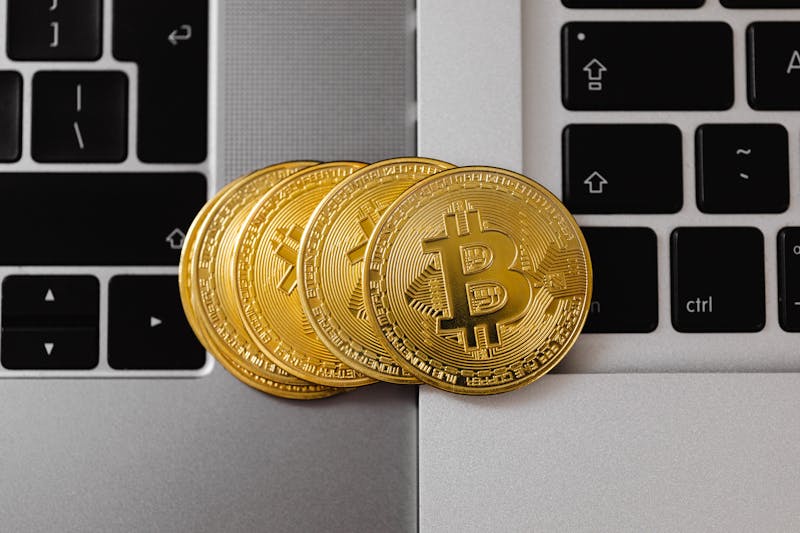
Photo by Karolina Grabowska – kaboompics.com
Now that crypto has become more visible, it is also influencing how younger generations think about money itself. Beyond price movements and headlines, crypto is shaping attitudes toward ownership, value, privacy, and financial independence. These shifts are subtle but meaningful, and they offer insights for businesses and policymakers who want to understand how money is being redefined.
1) Viewing Money as Fully Digital by Default
For many young people, money no longer feels tied to physical cash or even traditional bank branches. Crypto reinforces the idea that value can exist entirely online, without paper bills or in-person transactions. This perspective builds on years of using mobile wallets and online banking services and having contactless payment as an option.
Because of this mindset, younger generations are often comfortable managing assets through apps and digital interfaces. That means that setting up a crypto wallet, including a privacy-oriented Monero wallet, does not feel radically different from opening a new online account. For them, money is something that moves quickly across platforms and borders rather than something that must be handled physically.
2) Valuing Financial Autonomy and Self-Custody
Crypto introduces the concept of direct ownership in a way that traditional finance often does not. This is because instead of relying entirely on banks or intermediaries, crypto users can hold and manage their own assets. This idea resonates strongly with younger generations who tend to value autonomy and control.
Self-custody shifts responsibility onto the individual, which can be empowering but also educational. By managing their own money, young users learn how to be personally accountable for their security and access. This experience, in turn, can change how they think about financial independence and their role in protecting their own assets.
3) Rethinking Privacy in Financial Transactions
Privacy is another area where crypto influences younger perspectives. Growing up online has made many young people aware of how much of their personal data is collected and shared. Certain cryptocurrencies are pushing back by emphasizing privacy features, and this appeals to users who are cautious about how their financial information is tracked. This introduces the idea that financial privacy can be a deliberate choice rather than an afterthought.
4) Seeing Money as Programmable and Flexible
Traditional money is often viewed as static, but crypto introduces the idea that money can be programmable. Smart contracts and decentralized applications, in particular, show that value can move according to predefined rules without manual intervention.
Younger generations exposed to these concepts may start to see money as something that can be customized to fit specific needs. This flexibility influences how they approach budgeting, saving, and even earning, especially in digital and freelance economies where automation can simplify complex transactions.
5) Blurring the Line Between Saving, Spending, and Investing
Instead of maintaining separate accounts for different purposes, some young people experiment with platforms that allow them to move funds easily between uses. Crypto supports this practice by serving as a single digital asset with multiple purposes. Its versatility, which challenges the traditional separation between saving, spending, and investing, appeals to younger users who prefer flexible tools over rigid financial categories. The use of this digital asset also encourages a more fluid view of money management, where financial decisions are adjusted frequently based on the user’s goals and circumstances.
6) Thinking Globally About Value and Access
Because cryptocurrencies operate on global networks, they naturally encourage a borderless view of money. Younger generations who use crypto may become more aware of international markets and economic differences across countries. This global perspective can be especially relevant for students, remote workers, or digital entrepreneurs. Crypto makes it easier for them to imagine earning, saving, or transacting beyond local systems, which can influence their career choices and business models over time.
7) Questioning Traditional Financial Gatekeepers
Exposure to crypto often leads younger generations to question the role of traditional financial institutions. This does not always result in rejection, but it does encourage curiosity about alternatives. Concepts like decentralized finance, for instance, highlight that financial services can exist outside conventional structures.
As a result, young people may become more engaged and critical consumers of financial products. They are more likely to compare options, ask how systems work, and expect transparency from providers. This shift pushes businesses to communicate more clearly and offer user-centered solutions.
The way younger generations view money is evolving alongside the technologies they use. Crypto is not the sole driver of this change, but it plays a visible role in shaping attitudes toward ownership and privacy, as well as global access. As these perspectives spread, they have the potential to influence financial products, business strategies, and even economic policy. Knowledge of this shift helps organizations and communities adapt to a future where money is increasingly flexible and shaped by the values of a new generation.




Leave a Reply