After years of welcoming travelers at reception desks from Labuan Bajo to the islands themselves, I’ve noticed that one question comes up again and again, especially from parents planning a “once-in-a-lifetime” adventure: Komodo liveaboard vs day trip, which option matches your family’s energy, your comfort level on the water, and the kind of memories you want to bring home.
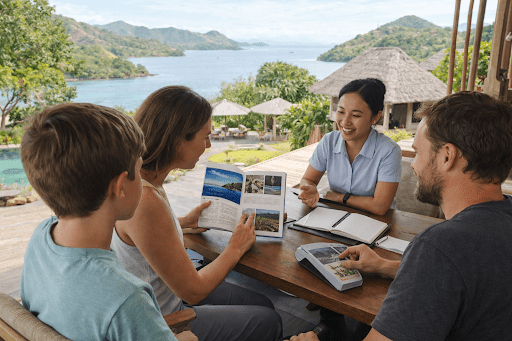
From a small-hotel manager’s perspective, this isn’t just a travel choice; it’s a planning decision that affects everything from what time you check out, what you pack, how well the kids sleep, and how relaxed you feel when you finally spot your first Komodo dragon.
Why this decision matters more than people expect
Komodo National Park is not a theme park where you can “fit it in” between lunch and sunset without consequences. Distances are real, sea conditions can change, and the best moments often happen when you’re not rushing, like a quiet sunrise over Padar Island or a calm snorkel when the water is clear, and the boats haven’t arrived in a cluster.
Whether you’re traveling as a family or hosting families at one of the Komodo Island hotels, the goal is the same: minimize stress and maximize the feeling of wonder.
The day trip experience: efficient, exciting, and time-sensitive
A day trip is usually ideal for travelers who:
- have limited time (one or two nights in the area),
- want predictable sleeping arrangements on land,
- prefer shorter exposure to boat motion,
- are traveling with very young children or older family members who need a stable routine.
What it feels like: early start, a full schedule, and a “highlight reel” of Komodo. You may hike, snorkel, see dragons, and visit one or two signature spots, often in one long day. It can be fantastic, but it’s not slow travel.
What I tell guests at check-in: if you choose a day trip, treat the day like a marathon. Lay out clothes the night before, pack snacks the kids actually eat, and keep expectations realistic. You’ll see a lot, but you won’t see everything calmly.
Best for: families who value sleeping in a proper room, consistent meal routines, and a quick taste of the park without having to change beds.
The liveaboard experience: immersive, scenic, and slower in the best way
A Komodo island liveaboard is closer to a floating mini-vacation during the trip. Instead of racing back to shore, you sleep near the park, wake up surrounded by islands, and often reach popular spots before the day boats arrive.
Liveaboards are often a better fit for travelers who:
- want multiple snorkeling or diving sessions,
- love sunrise and sunset scenery,
- enjoy a “camping-but-comfortable” vibe,
- don’t mind shared spaces and a simpler routine.
What it feels like: you trade hotel comforts for proximity and atmosphere. You might fall asleep to gentle water sounds, wake early for a hike, and squeeze in an extra snorkel stop that day-trippers usually miss.
Best for: families with older children who enjoy adventure, couples who want a deeper experience, and travelers who don’t want to spend hours commuting.
A hotel manager’s lens: what families usually underestimate
From the front desk, I can often predict which option each family will love based on one thing: how the family handles transitions.
- If your child struggles with changing environments or sleep routines, a day trip plus a steady hotel base is often calmer.
- If your child is adaptable, curious, and excited by “sleeping on a boat,” a liveaboard can become the story they tell for years.
Also consider seasickness. Some guests assume a bigger boat means no motion, but Komodo waters can still roll. If anyone in your group gets motion sick easily, plan accordingly—no shame in choosing comfort over toughness.
Diving changes the equation: when the sea becomes the main event
For travelers focused on Komodo Island diving, the liveaboard format often makes more sense because it reduces transit time and gives you access to more sites at better times of day. Even for non-divers, diving culture affects the schedule: early briefings, multiple water sessions, gear drying, and longer days on deck.
That said, day trips can still work for diving or snorkeling-oriented travelers if:
- You want fewer dives,
- You prefer to return to land each night,
- Your group has mixed interests (some dive, some stay on land).
My operational tip for small-hotel owners: keep a simple “diving day” checklist at reception. Guests appreciate reminders about early breakfast options, towel requests, dry bags, and charging devices. When you make diving logistics smooth, you become part of their good memory, even if you’re not the activity provider.
The role of Komodo Island hotels: comfort, recovery, and routine
A quality stay at one of the Komodo island hotels (whether you’re based in Labuan Bajo or elsewhere nearby) provides something a boat can’t always offer: recovery.
After a hot hike or saltwater day, many families want:
- a stable shower,
- a quiet room with air-conditioning,
- laundry options,
- a predictable breakfast,
- downtime without waves.
Hotels also allow flexibility. If a child isn’t feeling well, you can skip a day without feeling like you “wasted” an overnight boat experience. That flexibility matters more than people admit, especially parents.
Cost is not the only “value” factor (and I say this without selling anything)
Even when you’re not thinking about budgets, you’re thinking about value: comfort, time, energy, and the quality of moments.
Day trips tend to be:
- higher intensity,
- lower commitment,
- easier to recover from.
Liveaboards tend to be:
- more immersive,
- less rushed,
- better for multiple water sessions and scenic pacing.
The “best” option is the one that fits your family’s rhythm, not the one that sounds most impressive.
A simple decision framework for families (and the hosts who advise them)
Here’s what I recommend, especially for readers who plan trips with kids:
Choose a day trip if:
- You need a solid night’s sleep on land,
- You’re short on time,
- Your kids do best with routine,
- You want a straightforward adventure day.
Choose a Komodo Island liveaboard if:
- You want sunrise/sunset in the park,
- You love being on the water,
- Your kids enjoy novelty and adventure,
- You want more snorkeling/diving time with less commuting.
If you’re torn, consider a “hybrid mindset”: base yourself in a hotel for stability, then choose a shorter overnight boat trip only if your group is excited about it, not pressured into it.
How small hotel owners can add value without being promotional
For small-hotel owners reading this (especially those serving family travelers), you can support guests objectively by offering:
- a printed or digital packing checklist (reef-safe habits, sun protection, snacks),
- early breakfast options on tour days,
- clear departure-time reminders,
- a simple “what to expect” note about heat, hikes, and boat routines,
- a calm place to store luggage if guests leave early.
These are small touches, but they reduce stress, and parents remember stress reduction more than fancy words.
The takeaway: Komodo is better when you travel like a human
Komodo isn’t about ticking boxes. It’s about that hush before a hike, the surprise of seeing a manta glide beneath you, and the pride kids feel when they finish a trail and say, “I did it.”
If you choose the trip style that fits your family, whether that’s a focused day trip or a slower liveaboard, you’ll experience Komodo the way it’s meant to be: with awe, not exhaustion.




Leave a Reply